

Building Company Culture Remotely – Why It Matters
Building company culture remotely boosts engagement, trust, and productivity. Covers communication, onboarding, tech tools, and common pitfalls in startups.
Start reading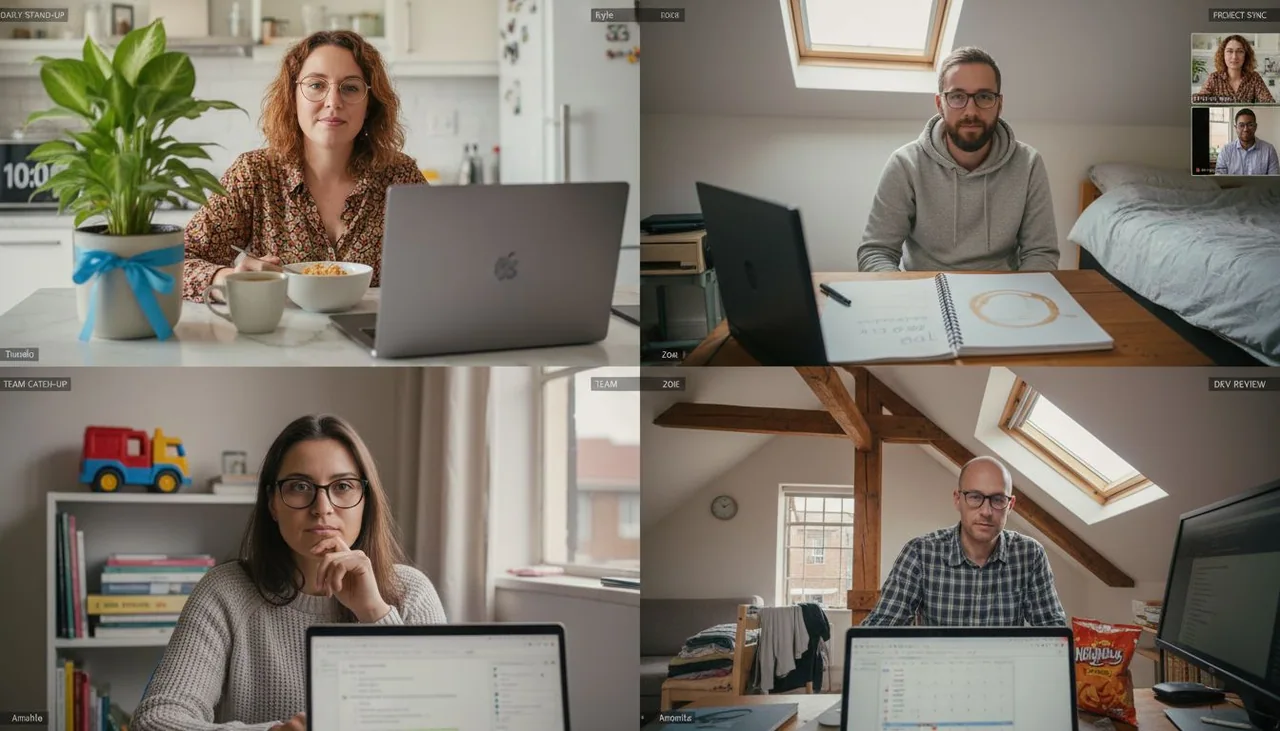
Shifting your tech startup from bustling office spaces in Johannesburg or London to fully remote teams is more than just swapping coffee breaks for video calls. Suddenly, the spontaneous chats and side-by-side learning disappear, leaving you with new challenges and opportunities. Building an intentional remote culture means designing every connection, value, and ritual. This guide explores proven strategies drawn from global research, showing how psychological safety, transparent communication, and adaptability can unify a scattered workforce and strengthen your company from anywhere.
Table of Contents
- What Is Remote Company Culture Really?
- Core Elements That Shape Remote Culture
- Effective Communication Across Distributed Teams
- Onboarding And Rituals For Remote Workers
- Digital Tools And Platforms That Enable Culture
- Risks, Pitfalls, And How To Avoid Them
Key Takeaways
Point | Details |
|---|---|
Intentional Culture Design | Remote culture requires deliberate systems and practices to maintain values, beliefs, and behaviours across distances. |
Leadership Visibility is Vital | Consistent communication from leaders strengthens trust and psychological safety, fostering collaboration and innovation. |
Structured Communication Matters | Clear norms and multiple communication channels prevent misunderstandings and keep all team members informed and engaged. |
Continuous Engagement and Feedback | Regular check-ins and anonymous surveys can identify areas needing improvement in culture, connection, and employee wellbeing. |
What Is Remote Company Culture Really?
Remote company culture is not simply the same culture you had in an office, just spread across different time zones and video calls. It’s something fundamentally different. When your team works apart, the invisible glue that holds organisations together changes shape. You lose the accidental conversations by the coffee machine, the quick desk visits, and the shared lunch breaks. What you gain instead requires intentional design and consistent effort.
At its core, remote culture is about maintaining and strengthening your organisation’s values, beliefs, and behaviours when your people cannot sit in the same physical space. Research on how remote work transforms culture shows that remote environments disrupt the natural social interactions and informal groups that traditionally held companies together. This is not a failure. It’s a reality that demands a different approach. Instead of relying on physical proximity to build trust and alignment, you must create deliberate systems and practices that reinforce your culture intentionally.
The shift to remote work also reveals something important about modern work itself. Cultural diversity and adaptability become core strengths in distributed teams. Your team members bring different backgrounds, work styles, and perspectives. Rather than seeing this as fragmentation, successful remote organisations treat it as richness. They build cultures that celebrate flexibility whilst protecting the core values that define who they are. You might have people working from Johannesburg, London, and Singapore. They may have different preferred communication styles and productivity rhythms. Yet they can still share a strong sense of purpose and belonging if the culture is intentional.
What makes remote culture distinct is this balance between looseness and tightness. You loosen the controls around when and where people work. You tighten your investment in values, communication practices, and connection rituals. You move from culture-by-proximity to culture-by-design. That requires real thought about what your organisation stands for and how you want people to experience working there, regardless of their location.
Here’s how remote and office-based cultures differ fundamentally:
Aspect | Office Culture | Remote Culture |
|---|---|---|
Main form of trust | Built through proximity | Built through systems |
Social interaction | Spontaneous, informal | Planned, intentional |
Communication style | Face-to-face, ad hoc | Structured, multi-channel |
Value transmission | Observed behaviour | Documented and modelled |
Pro tip: Start by documenting your actual values (not aspirational ones), then design three specific practices that reinforce each value in a remote setting, whether that is weekly rituals, communication guidelines, or recognition systems.
Core Elements That Shape Remote Culture
Remote culture doesn’t happen by accident. It’s built from specific, intentional elements that work together to create a cohesive experience for your distributed team. When you understand what these elements are, you can deliberately construct a culture that sticks, regardless of physical location. Think of them as the pillars holding up your organisation’s identity.
The foundation starts with leadership commitment and transparent communication. Your leaders need to show up consistently, not just in quarterly town halls but in regular, visible ways. This means one on one video calls, honest discussions about challenges, and clear explanations of decisions that affect your team. When trust and psychological safety shape remote cultures, people feel safe sharing ideas, admitting mistakes, and taking healthy risks. They’re more likely to collaborate and innovate. But trust doesn’t build itself in a remote environment. It requires deliberate actions: following through on commitments, admitting when you don’t know something, and creating spaces where people can be genuine.

Three other critical elements work alongside this foundation. Collaboration tools and communication processes give your team the infrastructure to actually connect and work together effectively. This isn’t just about having the right software. It’s about establishing clear norms around response times, meeting etiquette, and how different types of communication happen. Should urgent matters go via chat? Are certain decisions documented in shared spaces? Do you have synchronous and asynchronous options so people across time zones can participate? Second, resource planning ensures your team has what they need to succeed, whether that’s technology, training, quiet spaces, or mental health support. Remote work can be isolating if people don’t have the right setup. Finally, celebrating diversity and fostering belonging turns geographic dispersion into a strength. When team members from different backgrounds and cultures feel valued for their unique perspectives, they contribute more fully and stay longer.
These elements interact with each other. Strong leadership communication builds trust. Trust enables better collaboration. Good collaboration tools support diverse teams. When you neglect one element, the others weaken. Building remote culture means paying attention to all of them simultaneously.
Pro tip: Audit your current state against these five elements, then pick the weakest one and design one specific improvement over the next month, whether that is a new communication protocol, a trust-building ritual, or a resource upgrade.
Effective Communication Across Distributed Teams
Communication is where remote culture either thrives or falls apart. When your team is scattered across different locations and time zones, you cannot rely on hallway conversations or the natural flow of information that happens in shared offices. Instead, you need structured, intentional communication that reaches everyone fairly. This means thinking deliberately about what gets communicated, how it gets communicated, and when people need to participate.
The challenge is that modified communication patterns maintain employee engagement across distributed teams. You need multiple channels working simultaneously. Some information requires synchronous discussion, where everyone joins at the same time. Other decisions benefit from asynchronous communication, where people respond when their schedules allow. The mistake many leaders make is treating all communication as urgent and synchronous, which exhausts people across time zones and excludes those who cannot attend every meeting. Instead, establish clear norms. Strategic decisions might require a live conversation. Updates about company direction could be recorded and shared async. Quick team coordination could happen in chat. Urgent issues get flagged differently than routine questions. When people know how and where different types of information flow, they can find what they need and stay informed without constant chaos.
Transparent, frequent communication also builds trust in ways that distance cannot damage. When leaders explain decisions, admit uncertainty, and share reasoning openly, people feel respected and included even when they disagreed with the outcome. This is especially important across culturally diverse teams, where different communication styles and expectations exist. What feels direct to one person might feel harsh to another. What one culture considers appropriate formality differs from another. Document important decisions and discussions so people can review them at their own pace and in their own way. Use video when you need to convey emotion or nuance. Use written communication when precision matters. Use synchronous meetings sparingly and strategically, not as the default.
Clear, structured communication channels overcome geographic barriers that would otherwise isolate your team. The channel itself matters. Use email for formal decisions and documentation. Use chat for quick coordination. Use video for relationship building. Use shared documents for collaborative work. When your team understands which channel serves which purpose, communication becomes efficient instead of exhausting.
Pro tip: Create a simple one page communication guide that specifies which channels are used for what (decision making, updates, coordination, social connection), expected response times for each, and which meetings are truly required versus optional.
Onboarding And Rituals For Remote Workers
Onboarding a new team member remotely is fundamentally different from showing them around an office. There is no natural absorption of culture through observation. No overhearing conversations about how things work. No informal mentoring that happens when someone sits nearby. Remote onboarding must be deliberate, structured, and intentional about transferring culture alongside job skills. When done well, it creates stronger cultural alignment than office onboarding ever could, because everything is explicit and documented.
Structured onboarding processes are essential for remote engagement. Start with clarity about role expectations, team norms, and how your organisation actually operates. Too many remote teams hand new people a handbook and assume they understand. Real onboarding means assigning a mentor or buddy who meets with them regularly, not just on day one. It means scheduling one on one conversations with key team members so they understand the informal networks and how decisions actually happen. It means recording culture and values training so people can review it at their own pace. Most importantly, virtual rituals and structured onboarding programmes instil cultural values and facilitate social assimilation in ways that disconnected onboarding cannot. When new team members participate in team traditions from day one, they understand they belong and what the team values.
Rituals are how culture stays alive in remote settings. These are recurring practices that reinforce your values and create shared experience across distance. Regular check ins and recognition events foster inclusion and strengthen cultural alignment among dispersed teams. Consider what rituals might work for your team. Weekly team standups where people share one professional win and one personal update. Monthly virtual coffee chats between random pairs. Quarterly celebrations recognising achievements and milestones. Annual retreats where the whole team gathers in person if possible. Birthday shout outs in team channels. Celebrations of project completions. The specifics matter less than consistency. Your team needs to know these moments are coming and that they will be included in them. This is how distant workers feel connected to something larger than their individual tasks.
Think of onboarding as the first cultural ritual a new person experiences. Make it intentional. Make it thorough. Make it warm. The first month sets the tone for how people experience your organisation for years to come. When onboarding feels rushed or generic, people assume your culture does not really matter. When it feels thoughtful and connected, they know they have joined something real.
Pro tip: Design an onboarding checklist that includes both practical items (access, systems, passwords) and cultural items (meet five key people, attend weekly team ritual, document your first impressions, have culture conversation with manager), then track it consistently for every new hire.
Digital Tools And Platforms That Enable Culture
You cannot build remote culture without the right digital infrastructure. Tools are not culture themselves, but they are the backbone that makes culture possible. Think of them as the nervous system of your distributed organisation. Without them, communication becomes chaotic, collaboration feels disconnected, and your culture has nowhere to live. The right platforms create spaces where your values can be reinforced, where people can connect, and where work actually gets done together.
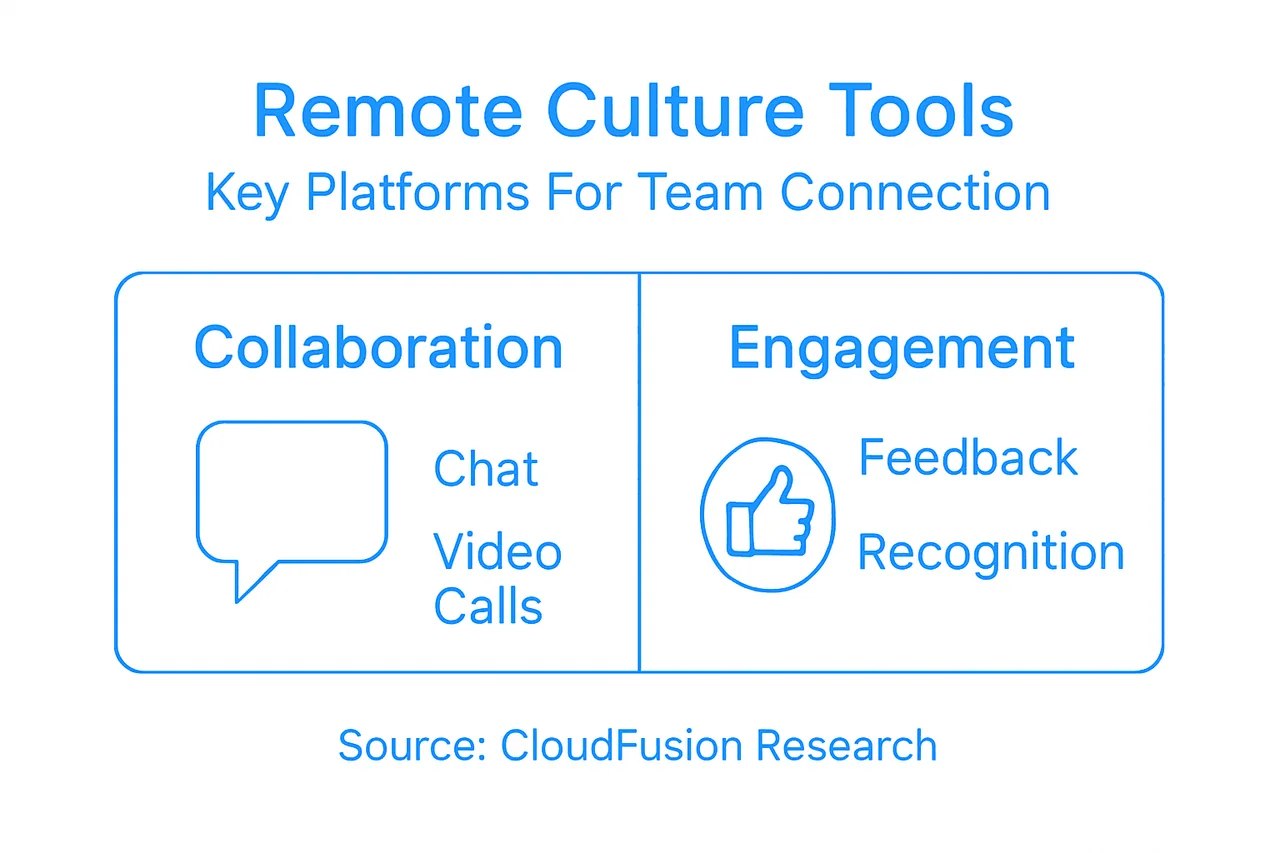
The platforms you choose shape how your team communicates and relates to each other. Digital tools and collaboration platforms are fundamental to fostering remote work culture, supporting everything from daily coordination to knowledge sharing and social interaction. You likely need a combination of tools working together. A communication platform like Slack or Microsoft Teams handles real time conversation and quick coordination. Video conferencing software enables face to face connection when it matters most. Shared document platforms like Google Workspace or Microsoft 365 create collaborative spaces where decisions get documented and knowledge stays accessible. Project management tools keep work visible and progress clear. Cloud storage keeps files organised and findable. Intranet platforms can centralise company information, values, and cultural resources. The mistake many organisations make is choosing tools first, then figuring out how to use them. Instead, identify what cultural and communication challenges you face, then find tools that solve them.
Beyond the tools themselves, how you use them matters enormously. Remote work’s success depends on digital tools enabling communication, collaboration, and cultural reinforcement, which means setting clear norms around which platform serves which purpose. If everything happens in chat, important decisions get lost. If you over rely on video calls, asynchronous team members cannot participate. If knowledge lives only in people’s heads or in random folders, new team members cannot learn your culture. Design your tool ecosystem deliberately. Create channels or spaces specifically for cultural content, celebrating wins, sharing values in action, and building connection. Use your intranet or wiki to document your culture, values, and how decisions actually happen. Use project tools to show how work aligns with company mission. Use recognition systems to reinforce what you value. Your tools should make culture visible and participation easy.
Remember that tools alone cannot create culture. They only enable it. A beautiful Slack workspace with no thoughtful use of it will not strengthen your culture. But thoughtful use of the right tools creates remarkable culture at distance. The investment in getting this right pays dividends in employee retention, engagement, and alignment, especially when you’re competing for talent globally.
Pro tip: Conduct a tool audit: map which tools you currently use, what each is actually used for, and where communication or information is falling through the cracks, then consolidate or add tools strategically based on those gaps rather than adding more tools to solve every problem.
Risks, Pitfalls, And How To Avoid Them
Remote culture does not fail because the concept is flawed. It fails because leaders underestimate what it takes to maintain it. The risks are real, and they are predictable. Isolation creeps in silently. Communication breaks down gradually. Your values start to drift because nobody talks about them anymore. Without deliberate attention, remote teams drift toward fragmentation instead of cohesion. The good news is that most pitfalls are avoidable if you see them coming.
One of the biggest risks is that isolation, reduced engagement, and communication breakdowns erode core values and productivity when deliberate management is absent. People start feeling disconnected from the organisation and from each other. They stop putting effort into alignment because they do not feel connected to anything larger than their individual work. New team members miss the informal learning that happens naturally in offices. Decisions get made without full context because people cannot grab a colleague quickly. Meetings become inefficient because not everyone can participate fully across time zones. This compounds over months. By the time you realise there is a problem, your culture has already fractured significantly. Prevention is far easier than repair.
Another critical risk is loss of social cohesion and blurred work life boundaries leading to increased workplace stress. Remote workers often feel pressure to prove they are working by staying constantly available. They struggle to disconnect because work lives in their home. They miss the natural social bonds that form through proximity. Without intentional connection, people feel disconnected even when they are technically part of a team. This leads to burnout, higher turnover, and weaker performance. The antidote is not forcing people back to offices. It is being deliberate about connection. Build in boundaries around work hours. Create genuine social moments that are not work focused. Check in on how people are actually doing, not just on what they are delivering.
Here’s a summary of key risks in remote culture and ways to prevent them:
Common Risk | Impact on Teams | Preventative Action |
|---|---|---|
Employee isolation | Low engagement and morale | Regular check-ins and social rituals |
Communication breakdown | Poor alignment, task confusion | Clear channels and meeting norms |
Value drift | Loss of cultural identity | Explicit value reinforcement |
Blurred work-life boundaries | Burnout and high turnover | Promote healthy time boundaries |
How do you avoid these pitfalls? Start with leadership visibility and transparent communication. Your leaders need to show up regularly, explain decisions openly, and admit what they do not know. Build structured rituals that keep people connected. Create psychological safety where people can speak up without fear. Measure engagement regularly and act on what you learn. Do not assume people are fine because productivity numbers look good. Ask them directly. Listen to what they say. Make changes based on what you hear. A hybrid model can help balance flexibility with collaboration, but only if you design it deliberately. Be intentional about what happens together synchronously and what happens asynchronously. Most importantly, never treat remote culture as a one time project. It requires ongoing investment and attention.
Pro tip: Run an anonymous culture survey every quarter asking about isolation, connection, engagement, and whether people feel your values are alive in daily work, then share results transparently and commit to one specific change based on feedback.
Strengthen Your Remote Company Culture with Tailored Digital Solutions
Building and sustaining a strong remote company culture means overcoming the challenges of isolation, fragmented communication, and value drift. As highlighted in the article “Building Company Culture Remotely – Why It Matters,” deliberate design, transparent communication, and reliable collaboration systems are essential to keep your team aligned and connected across distances. If you are striving to create trust and maintain cultural cohesion in a remote or hybrid workforce, having the right digital tools and a structured online presence is critical.
A portal may help a remote team share requests, documents or onboarding information, but it cannot create a company culture on its own. Discuss the specific software task before deciding whether a new platform is needed.
Frequently Asked Questions
What is remote company culture?
Remote company culture refers to the values, beliefs, and behaviours that an organisation maintains when its teams are not in the same physical space. It requires intentional design and effort to establish connections and trust among remote team members.
How can leaders build trust in a remote team?
Leaders can build trust in a remote team by committing to transparent communication, engaging in regular one-on-one video calls, and creating an environment of psychological safety where team members feel comfortable sharing ideas and admitting mistakes.
What are the key elements of a successful remote culture?
The key elements of a successful remote culture include leadership commitment, transparent communication, effective collaboration tools, resource planning, and the celebration of diversity to foster belonging among team members.
How does onboarding differ for remote employees compared to in-office staff?
Onboarding remote employees requires a structured and intentional approach to transferring culture and job skills, as there are no informal interactions. This includes assigning mentors, scheduling regular check-ins, and integrating virtual rituals to create a sense of belonging.