Over 80 percent of South African businesses are now embracing cloud solutions to modernise their operations. As digital demands surge, integrating systems is no longer optional but crucial for staying competitive in today’s fast-paced environment. Cloud integration transforms the way South African enterprises manage data, connect workflows, and streamline daily processes, giving teams the flexibility and real-time insight needed to succeed in a rapidly evolving market.
Table of Contents
- Defining Cloud Integration in Modern Business
- Types of Cloud Integration Approaches
- Key Drivers and Benefits of Integration
- Security and Compliance Risks Explained
- Common Pitfalls and Cost Implications
Key Takeaways
| Point | Details |
|---|---|
| Cloud Integration Enables Efficiency | By connecting diverse systems, cloud integration streamlines operations and facilitates real-time data access, enhancing overall organisational performance. |
| Strategic Assessment is Crucial | Conducting thorough evaluations of current technological landscapes can inform the choice of the most suitable integration approach for your business. |
| Security Risks Demand Attention | Proactive management of security risks, such as data breaches and compliance issues, is essential to safeguard integrated environments. |
| Hidden Costs Can Impact Budgets | Understanding and planning for potential hidden costs associated with integration, such as training and maintenance, can mitigate financial strain. |
Defining Cloud Integration in Modern Business
Cloud integration represents a strategic approach for businesses to connect and synchronise various technological systems, enabling seamless data flow and operational efficiency. Cloud integration involves connecting on-premises and cloud-based applications, transforming how organisations manage their digital infrastructure.
At its core, cloud integration is about creating a unified technological ecosystem where different software platforms, applications, and data sources communicate effectively. The process of linking various cloud services and on-premises systems allows businesses to break down traditional technological silos, facilitating more responsive and adaptive operational frameworks.
Modern cloud integration strategies typically encompass several key components:
- Seamless data synchronisation across multiple platforms
- Real-time information sharing between different business systems
- Standardised communication protocols
- Robust security measures to protect integrated systems
- Scalable infrastructure that can adapt to changing business needs
Pro Tip for Smart Integration: Start by mapping your current technological landscape and identifying potential integration points before implementing any cloud solution. This strategic assessment will help you design a more effective and efficient cloud integration approach that truly meets your business’s unique requirements.
To better understand the real-world business relevance of cloud integration, here’s how it can impact different organisational functions:
| Department | Cloud Integration Example | Resulting Advantage |
|---|---|---|
| Finance | Automated invoice data sharing | Faster financial reporting |
| HR | Cloud-based onboarding tools | Improved employee experience |
| Operations | Integrated supply chain apps | Reduced production delays |
| Sales | Real-time CRM updates | Enhanced customer interaction |
Types of Cloud Integration Approaches
Businesses today have multiple strategies for implementing cloud integration, each with unique advantages and considerations. Gartner identifies five primary cloud integration approaches that organisations can leverage to streamline their technological ecosystems and enhance operational efficiency.

The five main cloud integration approaches include integration platform software, integration platform as a service (iPaaS), SaaS vendor tooling, custom integration, and hybrid integration platforms. Each approach offers distinct capabilities that cater to different organisational needs, technological landscapes, and strategic objectives.
Key characteristics of these integration approaches include:
- Integration Platform Software: Provides comprehensive tools for connecting various cloud and on-premises systems
- iPaaS: Offers cloud-based integration solutions with scalable and flexible architectures
- SaaS Vendor Tooling: Utilises native integration capabilities provided by specific software-as-a-service platforms
- Custom Integration: Develops bespoke integration solutions tailored to unique business requirements
- Hybrid Integration Platforms: Enables seamless connectivity between cloud and legacy systems
Comparative Features:
| Approach | Scalability | Complexity | Cost | Customisation |
|---|---|---|---|---|
| Integration Platform Software | High | Medium | Medium | High |
| iPaaS | Very High | Low | Low | Medium |
| SaaS Vendor Tooling | Low | Low | Low | Limited |
| Custom Integration | High | High | High | Very High |
| Hybrid Integration Platforms | Medium | High | Medium | Medium |
Pro Tip for Strategic Integration: Conduct a comprehensive assessment of your current technological infrastructure before selecting an integration approach. Evaluate your specific business needs, existing systems, and future scalability requirements to choose the most appropriate cloud integration strategy.
Key Drivers and Benefits of Integration
Cloud computing accelerates business application integration, fundamentally transforming how organisations approach technological innovation and operational efficiency. The strategic adoption of cloud integration represents a critical pathway for businesses seeking to enhance their digital capabilities, streamline processes, and maintain competitive advantage in an increasingly dynamic technological landscape.
The core benefits of cloud integration extend far beyond simple technological connectivity. Cloud integration enables real-time data access, improved collaboration, and operational efficiency, driving substantial business innovation and competitive positioning. By breaking down traditional technological silos, organisations can create more responsive, agile, and interconnected business environments.
Key drivers for cloud integration include:
- Enhanced scalability of technological infrastructure
- Improved data accessibility and sharing
- Reduced operational complexity
- Significant cost optimisation
- Accelerated digital transformation capabilities
- Greater flexibility in technological adaptation
- Seamless cross-platform communication
Strategic Impact of Cloud Integration:
| Driver | Business Outcome | Technological Benefit |
|---|---|---|
| Real-time Data Access | Faster Decision Making | Immediate Information Flow |
| Collaborative Platforms | Enhanced Team Productivity | Unified Communication |
| Infrastructure Scalability | Reduced IT Overhead | Elastic Resource Allocation |
| Process Standardisation | Operational Consistency | Reduced Technological Friction |
Pro Tip for Strategic Integration: Conduct a comprehensive audit of your existing technological ecosystem before implementing cloud integration. Identify potential integration points, assess compatibility, and develop a phased approach that minimises disruption and maximises strategic alignment.
Security and Compliance Risks Explained
Cloud integration introduces significant security and compliance risks that demand comprehensive understanding and proactive management. As businesses increasingly adopt cloud technologies, the potential vulnerabilities in data transmission, storage, and access become more complex and nuanced.
The primary security challenges in cloud integration encompass multiple critical dimensions. These include potential data breaches, unauthorised access points, inadequate encryption protocols, regulatory non-compliance, and the inherent risks associated with distributed technological ecosystems. Understanding these risks requires a multifaceted approach that combines technological safeguards, strategic planning, and continuous monitoring.
Key security and compliance risks include:
- Unprotected data transmission channels
- Inadequate authentication mechanisms
- Potential regulatory violations
- Vulnerability to cyber attacks
- Inconsistent security standards across platforms
- Risk of unintentional data exposure
- Complex multi-platform security management
Comparative Risk Assessment:
| Risk Category | Potential Impact | Mitigation Complexity |
|---|---|---|
| Data Breach | High Financial Loss | Very High |
| Regulatory Non-Compliance | Legal Penalties | High |
| Unauthorised Access | Operational Disruption | Medium |
| Encryption Failures | Confidential Data Exposure | High |
| Cross-Platform Vulnerabilities | Systemic Security Weakness | Very High |
Pro Tip for Security Management: Conduct regular comprehensive security audits, implement multi-factor authentication, and develop a robust incident response plan that addresses potential vulnerabilities across your entire cloud integration ecosystem.
Common Pitfalls and Cost Implications
Cloud integration presents a complex landscape of potential financial and operational challenges that can significantly impact an organisation’s digital transformation strategy. Businesses must navigate a nuanced terrain of direct and indirect costs, understanding that seemingly minor technological decisions can result in substantial long-term financial implications.
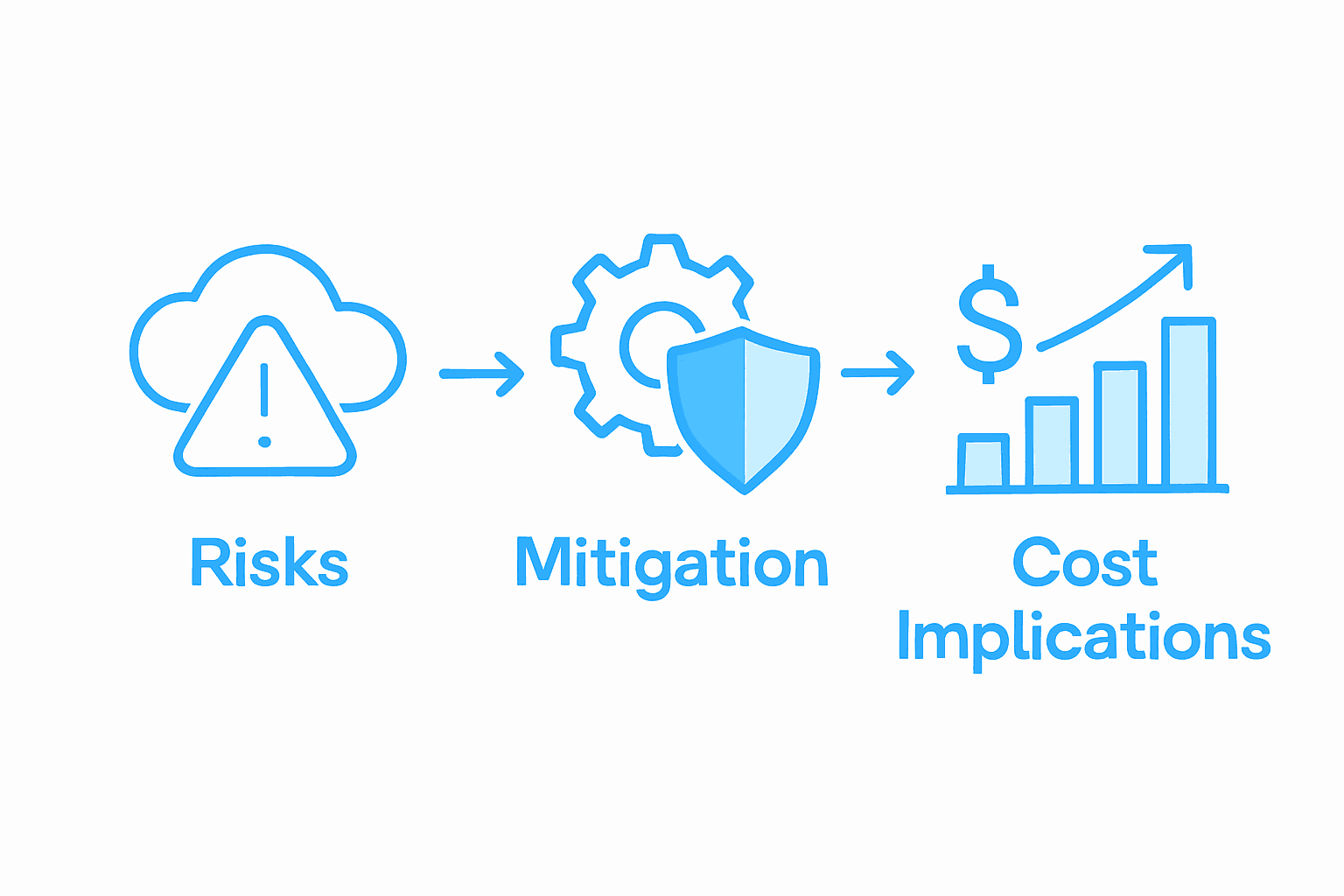
The hidden expenses of cloud integration extend far beyond initial implementation costs. These include infrastructure reconfiguration, staff training, potential productivity disruptions, ongoing maintenance, security upgrades, and the often-overlooked expenses associated with compatibility issues and system migrations. Each of these factors contributes to a comprehensive cost profile that requires meticulous strategic planning.
Common financial and operational pitfalls include:
- Unexpected infrastructure modification expenses
- Underestimating migration complexity
- Inadequate skills training budgets
- Inefficient resource allocation
- Overlooking long-term scalability costs
- Compliance and security investment requirements
- Performance optimization expenditures
Cost Implication Analysis:
| Pitfall | Potential Financial Impact | Mitigation Complexity |
|---|---|---|
| Unplanned Migration | High Unexpected Costs | Very High |
| Skills Gap | Productivity Loss | High |
| Security Vulnerabilities | Potential Legal Expenses | High |
| Inefficient Architecture | Ongoing Operational Overhead | Medium |
| Scalability Limitations | Restricted Growth Potential | Medium |
Pro Tip for Cost Management: Develop a comprehensive total cost of ownership (TCO) model that accounts for direct implementation expenses, potential productivity disruptions, ongoing maintenance, and future scalability requirements before committing to any cloud integration strategy.
Here’s a summary of how to proactively address hidden costs in cloud integration projects:
| Cost Category | Preventative Measure | Long-term Benefit |
|---|---|---|
| Migration expenses | Detailed project scoping | Fewer surprise costs |
| Training investment | Ongoing digital skills development | Greater staff adoption |
| Security upgrades | Regular risk assessments | Lower chance of future breaches |
| Maintenance fees | Scheduled performance audits | Consistent platform reliability |
Overcome Cloud Integration Risks with Tailored Digital Solutions
Navigating the complex security and compliance risks in cloud integration requires more than just awareness. Businesses face challenges such as data breaches, regulatory non-compliance, and operational disruptions that can threaten their digital transformation journey. At CloudFusion, we understand these critical pain points and the importance of customised, scalable solutions to reduce hidden costs and enhance your technology ecosystem.
Leverage our expertise in web design and development to build secure, integrated platforms that align with your unique business needs. Whether you require seamless cloud connectivity or a fully bespoke digital presence, our comprehensive services empower you to mitigate risks effectively and accelerate your business growth. Act now to secure your organisation’s future with solutions that combine technological innovation and strategic insight. Visit CloudFusion today to request a personalised development quotation and start transforming your cloud challenges into competitive advantages.
Frequently Asked Questions
What are the main challenges of cloud integration in businesses?
Cloud integration challenges include potential security risks, data breaches, system compatibility issues, and compliance with regulations. It’s crucial for businesses to proactively manage these risks to ensure a seamless integration process.
How can businesses mitigate security risks associated with cloud integration?
Businesses can mitigate security risks by implementing strong encryption protocols, regular security audits, multi-factor authentication, and a comprehensive incident response plan to address potential vulnerabilities.
What are the hidden costs associated with cloud integration?
Hidden costs can include unexpected infrastructure modifications, staff training, ongoing maintenance, potential productivity disruptions, and compliance-related expenses. Strategic planning is essential to manage these costs effectively.
How does cloud integration impact operational efficiency?
Cloud integration enhances operational efficiency by allowing seamless data synchronization across platforms, enabling real-time information sharing, and breaking down technological silos, which leads to more responsive and agile business operations.
Recommended