More than 60% of South African enterprises cite digital transformation as their top priority, yet navigating the shift to cloud-based systems remains a complex challenge. For decision-makers, selecting the right migration strategy can determine whether their business leads or lags in a competitive market. This guide sheds light on enterprise cloud migration essentials and helps South African organisations make informed choices for greater efficiency and lasting growth.
Table of Contents
- What Is Enterprise Cloud Migration?
- Public, Private And Hybrid Cloud Models
- Planning And Executing A Migration Strategy
- Common Pitfalls And Risk Mitigation
- Costs, ROI And Long-Term Implications
- Real-World Cloud Migration Experiences
Key Takeaways
| Point | Details |
|---|---|
| Strategic Transformation | Enterprise cloud migration is a comprehensive process that redefines how organisations manage their digital resources, focusing on agility and cost-effectiveness. |
| Holistic Planning | A successful migration requires meticulous planning that considers existing infrastructure, business objectives, and organisational culture. |
| Cost Benefits | Cloud migration can lead to significant long-term cost reductions and increased operational efficiency, transforming it into a strategic financial decision. |
| Balance and Flexibility | Organisations must adopt a balanced approach in selecting cloud models and maintain flexibility to adapt strategies throughout the migration journey. |
What Is Enterprise Cloud Migration?
Enterprise cloud migration represents a strategic transformation where businesses move their digital infrastructure, applications, and operational data from traditional on-premises systems to cloud-based platforms. This process goes beyond simple technological relocation and constitutes a comprehensive redesign of how organisations manage computational resources, data storage, and technological scalability.
The core objective of cloud migration is to enhance enterprise technological frameworks through more flexible, efficient, and cost-effective technological ecosystems. By transitioning critical business systems to cloud environments, organisations can achieve significant operational advantages such as:
- Improved scalability of computational resources
- Enhanced data accessibility and collaboration
- Reduced infrastructure maintenance costs
- More rapid deployment of technological solutions
- Greater organisational agility and responsiveness
Businesses undertaking cloud migration typically progress through several critical stages. Understanding cloud adoption strategies involves comprehensive planning that assesses current technological infrastructure, identifies potential migration pathways, evaluates risk factors, and develops a structured implementation roadmap. This methodical approach ensures minimal disruption while maximising the transformative potential of cloud technologies.
Successful enterprise cloud migration requires more than technological implementation. It demands a holistic approach that integrates technological capabilities with strategic business objectives, organisational culture, and long-term digital transformation goals. By recognising cloud migration as a strategic initiative rather than merely a technical project, businesses can unlock substantial competitive advantages in an increasingly digital marketplace.
Public, Private And Hybrid Cloud Models
Cloud computing has evolved to offer organisations multiple deployment models, each designed to address specific business requirements and technological challenges. Comparative analysis of cloud models reveals three primary approaches: public, private, and hybrid cloud infrastructures, each with distinct characteristics and strategic implications for enterprise technological ecosystems.
Public Cloud Models represent shared computational resources managed by third-party providers, offering businesses scalable and cost-effective solutions. Key features include:
- Low initial infrastructure investment
- Rapid scalability
- Flexible resource allocation
- Pay-as-you-use pricing structures
- Minimal maintenance responsibilities
Private Cloud Models provide dedicated infrastructure exclusively for a single organisation, delivering enhanced security and customisation capabilities. These environments offer granular control over computational resources, making them ideal for industries with stringent regulatory requirements such as finance and healthcare.
Hybrid Cloud Models combine the strengths of public and private cloud infrastructures, enabling organisations to strategically balance performance, security, and cost-efficiency. This approach allows businesses to maintain sensitive workloads on private infrastructure while leveraging public cloud resources for less critical operations, creating a flexible and adaptive technological framework.

Choosing the appropriate cloud model requires comprehensive evaluation of organisational objectives, technological capabilities, budgetary constraints, and security requirements. Successful cloud strategy demands a nuanced understanding of how different deployment models can be tailored to support specific business processes, ensuring optimal performance, cost-effectiveness, and technological resilience.
Planning And Executing A Migration Strategy
Comprehensive cloud migration frameworks demonstrate that successful enterprise cloud migration is a systematic process requiring meticulous planning, strategic assessment, and structured implementation. Organisations must approach migration as a holistic transformation rather than a simple technological transfer, considering multiple interdependent factors that influence overall technological performance and business outcomes.
The migration strategy typically encompasses several critical stages:
- Assessment Phase
- Evaluate current technological infrastructure
- Identify potential migration challenges
- Determine compatibility with cloud environments
- Analyse security and compliance requirements
- Planning Phase
- Develop detailed migration roadmap
- Select appropriate cloud deployment model
- Establish performance benchmarks
- Create risk mitigation strategies
- Execution Phase
- Implement phased migration approach
- Monitor system performance continuously
- Validate data integrity
- Minimise operational disruptions
Businesses can leverage cloud adoption toolkits to streamline decision-making processes, providing structured methodologies for examining deployment options and conducting comprehensive cost-benefit analyses. These tools help organisations make informed choices about technological investments, ensuring alignment between cloud migration strategies and broader business objectives.
Successful migration demands a balanced approach that considers technical capabilities, organisational culture, and strategic vision. By treating cloud migration as a transformative journey rather than a mere technological upgrade, businesses can unlock substantial operational efficiencies, enhanced scalability, and competitive advantages in an increasingly digital marketplace.
Common Pitfalls And Risk Mitigation
Cloud migration introduces complex challenges that can significantly impact organisational performance and technological infrastructure. Managing security and performance risks represents a critical aspect of successful cloud transformation, requiring organisations to develop comprehensive strategies that address potential technological and operational vulnerabilities.
Key Potential Pitfalls Include:
-
Insufficient Planning
- Lack of comprehensive migration roadmap
- Inadequate assessment of existing infrastructure
- Unrealistic expectations about migration complexity
-
Security Vulnerabilities
- Incomplete data protection strategies
- Weak authentication mechanisms
- Insufficient compliance monitoring
-
Cost Management Challenges
- Unexpected infrastructure expenses
- Inefficient resource allocation
- Overprovisioning or underutilisation of cloud resources
Enterprise IT system migration studies emphasise the critical importance of understanding organisational implications beyond technical considerations. Risk mitigation requires a multifaceted approach that balances technological capabilities with strategic business objectives, ensuring that cloud adoption does not compromise overall operational effectiveness.
Successful risk mitigation demands proactive strategies such as:
- Conducting thorough pre-migration infrastructure assessments
- Implementing robust security protocols
- Developing comprehensive disaster recovery plans
- Establishing continuous monitoring and performance evaluation mechanisms
- Creating flexible adaptation strategies
Organisations must view cloud migration as a dynamic, ongoing process rather than a single technological event. By maintaining flexibility, investing in comprehensive planning, and developing adaptive risk management frameworks, businesses can transform potential challenges into opportunities for technological innovation and operational resilience.
Costs, ROI And Long-Term Implications
Enterprise cloud migration cost analysis reveals that strategic technological investments can generate substantial long-term financial benefits, with potential infrastructure cost reductions of up to 37% over five years. This significant economic advantage transforms cloud migration from a mere technological upgrade to a critical strategic financial decision for businesses seeking operational efficiency.
Cost Considerations Include:
- Initial migration expenses
- Infrastructure transformation costs
- Ongoing technological maintenance
- Potential productivity gains
- Reduced hardware investment requirements
Return on Investment (ROI) Factors:
- Operational efficiency improvements
- Reduced technological maintenance overhead
- Enhanced scalability capabilities
- Increased organisational agility
- Accelerated digital transformation potential
Cloud adoption toolkits provide sophisticated cost modeling mechanisms that enable organisations to conduct comprehensive financial assessments. These tools help businesses examine resource usage variations, predict potential expenses, and develop nuanced financial strategies that align technological investments with broader economic objectives.
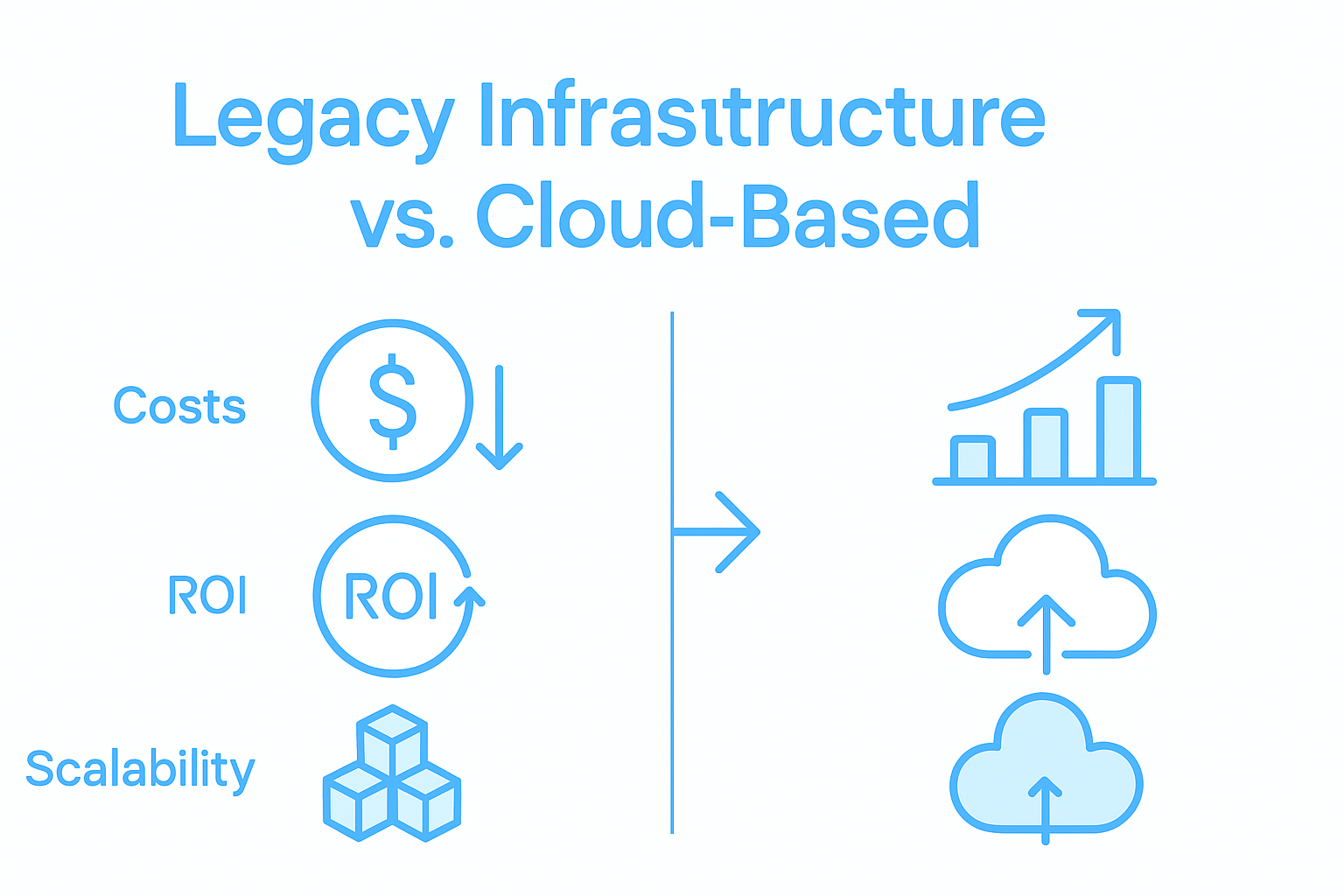
Successful cloud migration transcends immediate financial considerations, representing a strategic transformation of organisational technological capabilities. By approaching cloud adoption as a holistic investment in digital infrastructure, businesses can create adaptive, scalable technological ecosystems that generate sustained competitive advantages and support long-term strategic growth. The key lies in viewing cloud migration not as an expense, but as a strategic opportunity to reimagine technological potential and organisational performance.
Real-World Cloud Migration Experiences
Enterprise IT system migration case studies demonstrate the transformative potential and complex challenges organisations encounter when transitioning to cloud infrastructure. Real-world experiences reveal that successful cloud migration extends far beyond technological implementation, requiring comprehensive strategic planning and nuanced organisational adaptation.
Typical Migration Challenges Encountered:
- Cultural resistance to technological change
- Complex data integration complexities
- Unexpected performance variations
- Skills gap in cloud technologies
- Legacy system compatibility issues
Key Learning Insights:
- Gradual, phased migration approaches work best
- Comprehensive staff training is crucial
- Continuous performance monitoring is essential
- Flexibility in technological strategy matters
- Alignment with business objectives is paramount
Cloud adoption decision support tools have emerged as critical resources, enabling organisations to model potential migration scenarios, assess financial implications, and develop robust implementation strategies. These sophisticated frameworks help businesses navigate the intricate landscape of technological transformation, providing structured methodologies for managing complex migration processes.
Successful cloud migration narratives consistently emphasise that technological transformation is fundamentally a human endeavour. By prioritising organisational learning, maintaining adaptable strategies, and viewing cloud migration as a continuous journey of technological evolution, businesses can effectively leverage cloud technologies to drive innovation, enhance operational efficiency, and create sustainable competitive advantages.
Transform Your Enterprise Cloud Migration Journey with Expert Digital Solutions
Enterprise cloud migration presents challenges like ensuring seamless scalability, managing security risks, and aligning technology with your long-term business goals. If you are facing the complexity of migrating your infrastructure while maintaining agility and cost-effectiveness, you are not alone. Cloud migration is more than just moving data it requires strategic planning, robust implementation, and ongoing support to truly unlock operational advantages.
At Cloud Fusion we understand these pain points. Our customised web and mobile development services offer scalable, industry-specific digital solutions tailored to your unique cloud adoption journey. By combining expert web design with cloud-based tools and proactive support, we help you bridge technological gaps and accelerate your digital transformation.
Ready to take the next step in boosting your business agility and ensuring a smooth enterprise cloud migration Discover our comprehensive web design and development quotation service. Partner with us at Cloud Fusion to build a resilient cloud-ready infrastructure that supports your strategic goals. Do not wait to seize the benefits of innovation and scalability act now to enhance your enterprise’s technological future.
Frequently Asked Questions
What is enterprise cloud migration?
Enterprise cloud migration is the process of transferring an organization’s digital infrastructure, applications, and data from on-premises systems to cloud-based platforms, enhancing efficiency and scalability.
What are the benefits of cloud migration for businesses?
Cloud migration can improve scalability, enhance data accessibility, reduce infrastructure maintenance costs, accelerate technological solutions deployment, and increase organizational agility.
What are the different cloud deployment models available?
The main cloud deployment models are public, private, and hybrid clouds, each catering to specific business needs regarding security, scalability, and cost-effectiveness.
What are some common challenges faced during cloud migration?
Common challenges include cultural resistance, data integration complexities, unexpected performance fluctuations, skills gaps in cloud technologies, and compatibility issues with legacy systems.
Recommended