

How to Improve SEO for E-Commerce Sites Effectively
Discover how to improve SEO step by step for your e-commerce website, boost organic traffic, and drive more sales using proven digital marketing strategies.
Start reading
Nearly 80 percent of south-african e-commerce businesses face stagnant organic traffic despite increased marketing budgets. For digital marketing managers determined to drive measurable sales growth, tackling SEO performance is no longer optional. This guide delivers proven steps to audit, structure, and advance your site’s visibility, giving you practical strategies trusted by successful Australian, Canadian, and British retailers.
Table of Contents
- Step 1: Assess Current SEO Performance
- Step 2: Optimise On-Page Content Structure
- Step 3: Enhance Technical SEO Elements
- Step 4: Strengthen Off-Page SEO And Backlinks
- Step 5: Monitor Results And Refine Strategies
Quick Summary
Key Point | Explanation |
|---|---|
1. Assess Current SEO Performance | Use analytics tools to gather data on search rankings, traffic, and keyword performance for improvement insights. |
2. Optimise On-Page Content Structure | Create a clear content hierarchy with strategic keyword placement for better SEO and user experience. |
3. Enhance Technical SEO Elements | Focus on site speed, mobile usability, and structured data to improve indexing and search visibility. |
4. Strengthen Off-Page SEO Strategies | Build high-quality backlinks through exceptional content and strategic outreach to increase site authority. |
5. Monitor Results and Refine Strategies | Regularly track SEO performance metrics, set measurable goals, and adjust strategies based on data insights. |
Step 1: Assess current SEO performance
Assessing your e-commerce site’s SEO performance requires a systematic approach to understand current strengths and identify improvement opportunities. This foundational step will help you create a targeted strategy for boosting your website’s search visibility.
Start by gathering comprehensive performance data using professional analytics tools. Analyse search engine metrics through detailed research methods to gain insights into your current search ranking, traffic patterns, and keyword performance. Key metrics to examine include organic traffic volume, bounce rates, average session duration, and conversion rates from search results. Use Google Analytics and specialist SEO platforms to track these indicators and generate detailed reports.
Next, conduct a technical SEO audit by examining critical elements like site speed, mobile responsiveness, URL structure, meta descriptions, and internal linking. Check for broken links, crawl errors, and page loading times that might negatively impact your search rankings. Compare your website’s performance against top competitors in your industry to benchmark your current position and identify potential gaps in your SEO strategy.
Expert tip: Perform a comprehensive SEO audit quarterly to stay ahead of algorithm changes and maintain optimal search engine performance.
Step 2: Optimise on-page content structure
Optimising your e-commerce site’s on-page content structure is crucial for improving search engine visibility and user engagement. This step will help you create a strategic content framework that enhances both SEO performance and user experience.

Develop a robust content structure using pillar page strategies that establish clear topical authority and improve search engine crawlability. Begin by creating a comprehensive main page that covers your primary topic in depth, then develop supporting cluster pages that explore related subtopics in detail. This approach signals to search engines that your content provides comprehensive and authoritative information about your subject area. Ensure your content is logically organised with clear headings, subheadings, and a hierarchical structure that guides both users and search engine crawlers through your information.
Implement strategic keyword placement within your content, focusing on natural integration rather than keyword stuffing. Use primary keywords in your main headings, first paragraph, and strategically throughout the content. Optimise meta descriptions, title tags, and image alt text to provide clear context for search engines. Break up text with bullet points, short paragraphs, and relevant multimedia elements to improve readability and keep users engaged. Pay special attention to your site’s navigation structure, ensuring that users can easily find and move between related content sections.
Expert tip: Create a content map that visually represents your site’s topic clusters to ensure logical and comprehensive coverage of your subject matter.
Step 3: Enhance technical SEO elements
Technical SEO is the backbone of your e-commerce site’s search engine performance, focusing on improving website infrastructure to boost crawlability, indexing, and overall search visibility. This step will help you systematically address critical technical elements that directly impact your site’s search engine ranking.
Conduct a comprehensive site audit to identify and resolve technical SEO issues that could hinder your search performance. Start by examining your website’s loading speed, mobile responsiveness, and overall site architecture. Ensure your site uses secure HTTPS connections, as search engines prioritise secure websites. Remove or fix broken links, implement proper redirects, and create a clear XML sitemap that helps search engines understand and navigate your site’s structure. Pay special attention to your site’s mobile usability, as Google uses mobile first indexing, meaning your mobile site’s performance directly influences your search rankings.
Optimise your technical infrastructure by improving site speed through image compression, leveraging browser caching, and minimising server response times. Implement structured data markup to help search engines better understand your content and potentially generate rich snippets in search results. Verify that your robots.txt file is correctly configured to guide search engine crawlers, and use canonical tags to prevent duplicate content issues. Regularly monitor your site’s performance using tools like Google Search Console to identify and quickly address any emerging technical SEO challenges.
Expert tip: Schedule monthly technical SEO audits to catch and resolve potential issues before they significantly impact your search engine rankings.
Here’s a summary of essential technical SEO elements and their business impact:
Technical Element | Purpose | Business Impact |
|---|---|---|
Site speed | Faster page loading | Reduces bounce, improves sales |
Mobile responsiveness | Adapts content for mobile devices | Increases reach and usability |
HTTPS security | Encrypts user data | Builds trust, boosts ranking |
XML sitemap | Guides search engine crawling | Improves site discoverability |
Structured data markup | Enables rich search snippets | Enhances visibility in results |
Step 4: Strengthen off-page SEO and backlinks
Off-page SEO represents a critical strategy for boosting your e-commerce site’s search engine credibility and organic visibility. This step focuses on developing a robust external linking strategy that signals your website’s authority and relevance to search engines.
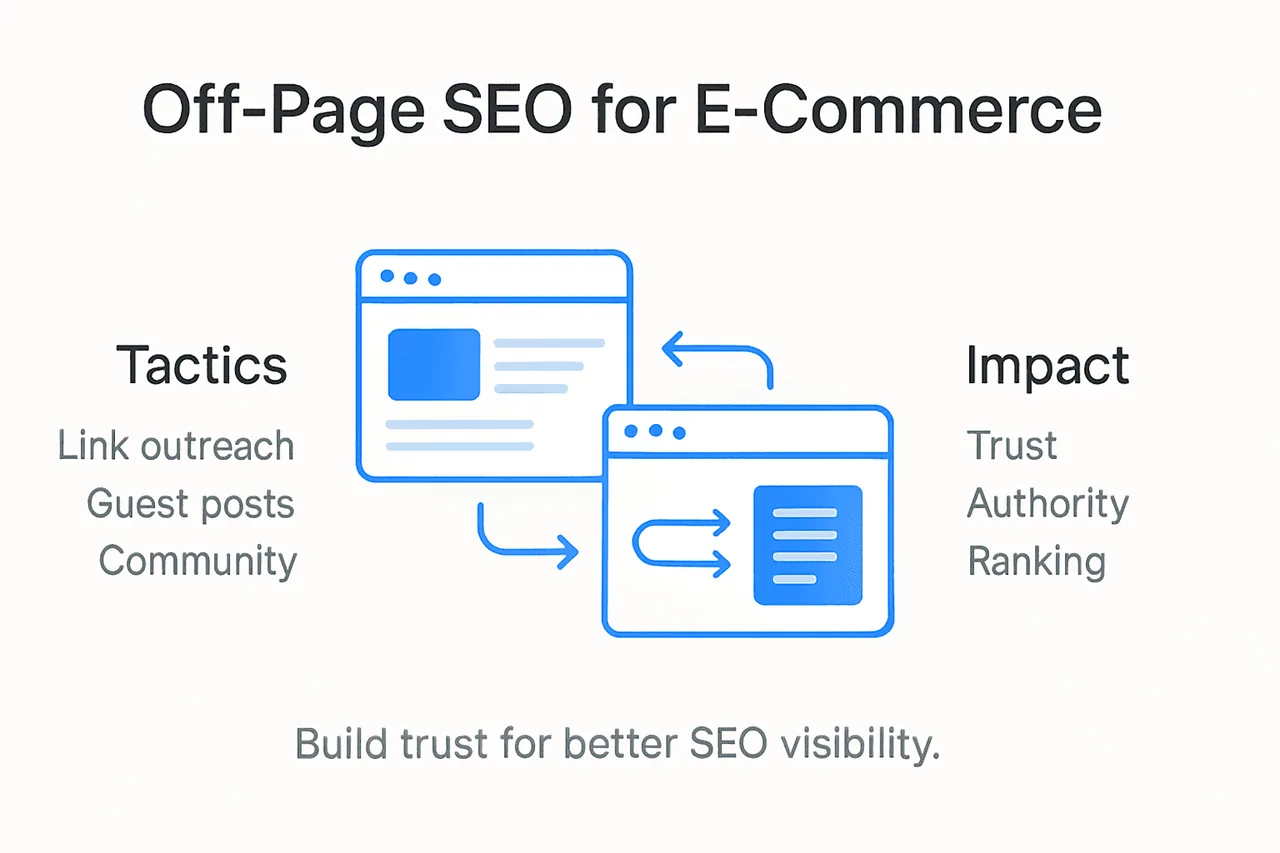
Develop a comprehensive link building approach that enhances your website’s search engine authority through strategic and high quality backlink acquisition. Focus on obtaining editorial links from reputable websites in your industry, prioritising quality over quantity. Create exceptional content that naturally attracts backlinks, such as in depth guides, original research, or interactive resources that provide genuine value to your target audience. Engage in strategic outreach to industry publications, blogs, and professional networks to secure meaningful backlink opportunities.
Expand your off-page SEO efforts by participating in relevant online communities, contributing guest articles to authoritative websites, and leveraging social media platforms to increase your digital footprint. Monitor your backlink profile regularly using tools like Ahrefs or SEMrush to assess link quality, identify potential toxic links, and track your domain authority progress. Implement a diversified link building strategy that includes resource link building, broken link replacement, and collaborative content marketing to create a natural and comprehensive backlink ecosystem.
Expert tip: Prioritise building relationships with industry influencers and thought leaders who can provide authentic and valuable backlink opportunities.
Compare these common backlink strategies used for off-page SEO:
Strategy | Key Action | Typical Outcome |
|---|---|---|
Editorial links | Secure links from articles | Strong authority signal |
Guest posting | Publish on external blogs | Expands audience, gets links |
Broken link building | Replace dead links | Gains links from fixes |
Social outreach | Share on social platforms | Increases brand awareness |
Step 5: Monitor results and refine strategies
Successfully improving your e-commerce site’s SEO requires continuous monitoring and strategic refinement. This step focuses on transforming raw data into actionable insights that drive ongoing website performance and search engine visibility.
Implement a systematic approach to tracking SEO performance metrics using comprehensive analytics tools and platforms. Set up detailed tracking in Google Analytics and Google Search Console to capture essential data points including organic search traffic, keyword rankings, user engagement rates, and conversion metrics. Analyse these metrics regularly to understand how your SEO strategies are performing and identify specific areas requiring improvement. Pay close attention to trends in user behaviour, such as bounce rates, time on page, and click through rates, which provide deeper insights into content effectiveness and user experience.
Develop a structured process for iterative SEO improvement by conducting regular performance reviews and implementing targeted experiments. Create baseline performance benchmarks and set specific measurable goals for organic traffic growth, keyword ranking improvements, and conversion rate enhancements. Use A/B testing to experiment with different content approaches, meta descriptions, and page layouts. Be prepared to make data driven adjustments quickly, understanding that SEO is a dynamic process requiring continuous learning and adaptation. Regularly audit your website’s technical performance, content relevance, and backlink profile to ensure sustained search engine visibility.
Expert tip: Schedule quarterly comprehensive SEO performance reviews to maintain a proactive and strategic approach to search engine optimization.
Elevate Your E-Commerce SEO with Custom Web Solutions
Improving SEO for e-commerce sites is a complex challenge that involves optimising your on-page content, enhancing technical infrastructure, and building strong backlinks. You may find it difficult to balance these elements while maintaining a seamless user experience and driving meaningful sales conversions. Key goals include faster site speeds, mobile responsiveness, secure connections, and clear, authoritative content that search engines trust. These SEO fundamentals can feel overwhelming without the right technical expertise and strategic approach.
At CloudFusion, we specialise in delivering custom web development tailored to elevate your e-commerce platform’s search engine performance and user engagement. Our experienced team focuses on creating scalable, industry-specific websites that integrate sound SEO structure from the ground up. Whether you need a comprehensive site audit or a fully optimised site built with pillar page strategies and advanced technical SEO elements, we have you covered. Explore our Web Design and Development Quotation service to learn how we craft solutions that address your SEO pain points directly.
Don’t let technical hurdles or content structure limit your organic growth. Take control now by partnering with a provider that understands the dynamic nature of SEO and e-commerce. Visit our main website today to request your personalised web solution quote and start transforming your online presence into a powerful selling platform.
Frequently Asked Questions
How can I assess my e-commerce site’s current SEO performance?
Start by using professional analytics tools to gather data on search ranking, traffic patterns, and keyword performance. Focus on key metrics such as organic traffic volume and bounce rates to identify strengths and weaknesses within your current SEO strategy.
What are the key elements to optimise on-page content for SEO?
To optimise on-page content, implement strategic keyword placement and create a clear content structure. Use primary keywords in headings and ensure your site features logically organised sections with appropriate meta descriptions, which can improve both SEO performance and user engagement.
How do I perform a technical SEO audit on my e-commerce site?
Conduct a comprehensive technical SEO audit by examining site speed, mobile responsiveness, and URL structure. Identify any broken links or crawl errors and rectify them, ensuring your website follows technical best practices to improve search rankings.
What strategies can I use to strengthen off-page SEO and build backlinks?
Develop a link-building strategy focused on obtaining high-quality backlinks from reputable industry sites. Engage in content creation that naturally attracts backlinks and actively participate in online communities to enhance your website’s authority and relevance.
How can I monitor SEO results and refine my strategies?
Implement a systematic approach to tracking essential SEO metrics using analytics tools. Regularly analyse data such as keyword rankings and user engagement to identify areas for improvement and adjust your strategies accordingly to achieve better results, ideally reviewing your performance every quarter.