Every south-african business owner knows how quickly a great product can get lost in the crowd. With thousands of options online, even standout items need more than just clever packaging to gain attention. In fact, studies show that over 80 percent of shoppers make purchase decisions based on product descriptions alone. Learning how to define your audience and craft tailored descriptions helps south-african brands connect with buyers and drive real results.
Table of Contents
- Step 1: Define Your Target Audience And Product Goals
- Step 2: Research Key Features And Unique Benefits
- Step 3: Structure Descriptions For Clarity And Impact
- Step 4: Optimise Language For Relevance And SEO
- Step 5: Verify Accuracy And Test User Engagement
Quick Summary
| Key Point | Explanation |
|---|---|
| 1. Define Target Audience Thoroughly | Understanding your audience helps craft product descriptions that resonate, driving more effective marketing messages and ultimately increasing sales. |
| 2. Highlight Unique Product Benefits | Clearly articulating what sets your product apart ensures potential customers see its value and solves their specific problems. |
| 3. Organise Content for Clarity | A well-structured product description makes it easier for potential buyers to read and understand essential information quickly. |
| 4. Optimise Language for SEO | Incorporating relevant keywords naturally not only helps your content rank better on search engines but also appeals to your target audience. |
| 5. Validate and Test Descriptions | Regularly verifying the accuracy of your descriptions and testing user engagement enhance credibility and effectiveness in communication. |
Step 1: Define your target audience and product goals
Crafting a successful product description starts with understanding precisely who will buy your product and what specific goals you want to achieve. Your target audience is the foundation for creating compelling marketing messages that resonate and drive sales.
To effectively define your target audience, begin by researching detailed demographic and psychographic information. This means going beyond basic age and gender categories and diving deep into understanding your potential customers interests, behaviours, challenges, and motivations. Analyse characteristics like lifestyle, activities, and personal preferences that will help you create a comprehensive audience profile.
Start by creating a detailed buyer persona that represents your ideal customer. Consider factors such as their professional background, income level, education, buying habits, and pain points. The more specific and nuanced your understanding, the more effectively you can tailor your product descriptions to speak directly to their needs and desires. This targeted approach ensures your marketing messages feel personal and compelling.
Pro tip: Create a customer empathy map that visualises not just what your target audience says, but what they think, feel, see, and hear. This will give you profound insights into crafting product descriptions that truly connect with potential buyers.
Step 2: Research key features and unique benefits
Understanding your product’s key features and unique benefits is crucial for creating compelling product descriptions that differentiate your offering in a competitive marketplace. This step involves deep research and strategic analysis to highlight what makes your product truly special.

Begin by leveraging comprehensive research resources that provide high quality market insights to understand your product landscape. Look beyond surface level characteristics and dig into detailed market research that reveals substantive information about your product’s strengths. Identify unique benefits that establish a meaningful point of difference which will set your product apart from competitors.
Focus on developing a clear understanding of how your product solves specific customer problems. Map out each feature and translate it into a tangible benefit that resonates with your target audience. Ask yourself key questions like What makes this product unique? How does it improve the customer’s life? What pain points does it address? The more precisely you can articulate these elements, the more powerful your product description will become.
Pro tip: Create a feature benefit matrix that systematically breaks down each product feature and directly links it to a specific customer benefit. This structured approach ensures your product description communicates value with crystal clarity.
Use this table to distinguish features from benefits when writing product descriptions:
| Aspect | Product Feature | Customer Benefit |
|---|---|---|
| Nature | What the product does | How it improves life |
| Focus | Technical specification | User experience gain |
| Example | Waterproof material | Peace of mind in rain |
| Impact | Distinguishes product | Motivates purchase decision |
Step 3: Structure descriptions for clarity and impact
Crafting a product description that captures attention and communicates value requires strategic structuring and thoughtful organisation. Your goal is to create a clear, compelling narrative that guides potential customers through the most important aspects of your product.
Segment your description carefully to ensure maximum audience comprehension by breaking down complex information into digestible sections. Start with a powerful opening statement that immediately highlights the core benefit or solves a key customer problem. This initial hook should be concise yet impactful capturing the reader’s interest within the first few seconds.
Organise your description using a logical flow that moves from the most critical information to supporting details. Begin with the primary benefits that directly address customer needs, then elaborate on specific features that substantiate those benefits. Use clear headings, short paragraphs, and strategic formatting like bold text to draw attention to key points. Ensure your language is conversational and accessible avoiding technical jargon that might confuse or alienate potential buyers.
Pro tip: Create a description template with predetermined sections such as Key Benefits, Technical Specifications, and Unique Selling Points to maintain consistency and make information easy to scan.
Step 4: Optimise language for relevance and SEO
Crafting product descriptions that resonate with search engines and potential customers requires a strategic approach to language selection and keyword integration. Your goal is to create content that speaks directly to your audience while simultaneously satisfying search engine algorithms.
Develop a deep understanding of your target audience’s specific demographic and psychographic characteristics to inform your language choices. This means selecting keywords and phrases that not only match search intent but also reflect the precise language your potential customers use when discussing products like yours. Anticipate customer needs by creating descriptions that speak directly to their desires and pain points ensuring your content feels personalised and relevant.
Integrate strategic SEO approaches to enhance your product description visibility by focusing on natural keyword placement, semantic variations, and user intent. Use primary keywords in your title, first paragraph, and strategically throughout the description. Avoid keyword stuffing by maintaining a conversational tone that prioritises readability and value over search engine manipulation. Remember that modern search algorithms reward content that genuinely helps users.
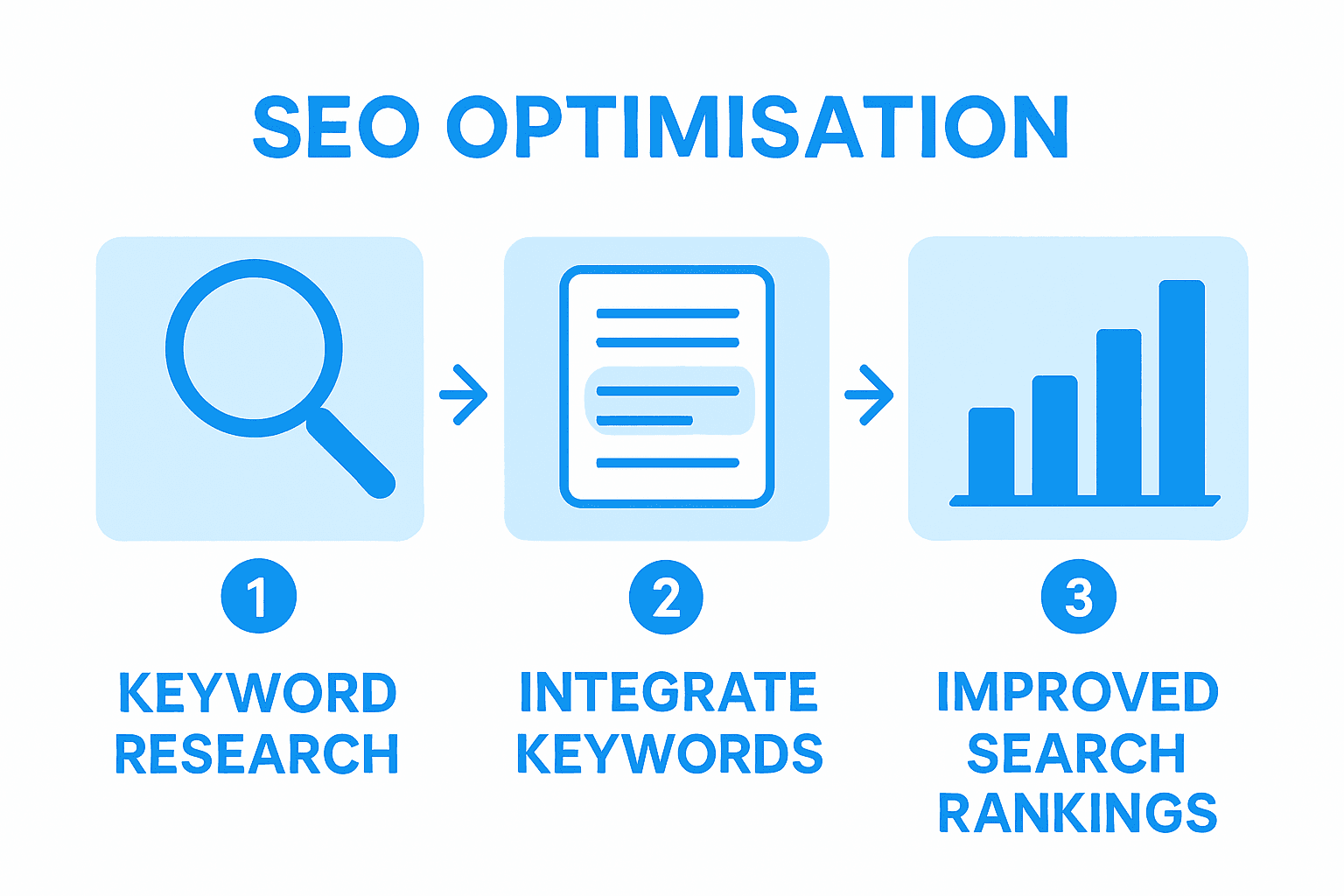
Pro tip: Create a keyword matrix that maps search terms to specific product benefits, ensuring your descriptions are both search engine friendly and customer focused.
Step 5: Verify accuracy and test user engagement
Ensuring your product descriptions are not only compelling but also accurate and engaging requires a systematic approach to validation and testing. Your goal is to create descriptions that resonate with customers and provide genuine value through precise information and user insights.
Conduct thorough research to enhance problem-solving skills and validate the accuracy of your product information by cross-referencing technical specifications, consulting product experts, and reviewing manufacturer documentation. This meticulous approach helps eliminate potential errors that could mislead customers or damage your brand’s credibility. Build confidence in your product descriptions by understanding how research experiences can improve overall perception and create more engaging content that speaks directly to your target audience.
Implement user testing methodologies to gauge the effectiveness of your product descriptions. This might involve creating multiple versions of descriptions and running A/B tests to determine which language and structure generate the most engagement. Pay attention to metrics like click-through rates, time spent reading, and conversion rates. Gather feedback from actual customers through surveys or user interviews to understand how well your descriptions communicate product value and address potential questions or concerns.
Pro tip: Create a feedback loop where you regularly update product descriptions based on user insights, ensuring your content remains dynamic and responsive to customer needs.
Here is a summary comparing key elements for crafting an effective product description:
| Step | Key Focus | Critical Outcome |
|---|---|---|
| Define Audience | Understand buyers deeply | Tailored, resonant messaging |
| Research Features | Identify unique benefits | Clear differentiation |
| Structure Content | Organise for clarity | Easy, impactful reading |
| Optimise Language | Align with SEO and audience | Higher visibility, relevance |
| Test & Verify | Ensure accuracy and engagement | Reliable, effective descriptions |
Elevate Your Product Descriptions with Expert Web Solutions
Crafting product descriptions that truly resonate requires more than just words. The article highlights crucial steps like defining your target audience, researching features and benefits, and optimising language for clarity and SEO. Many businesses struggle with transforming these insights into a digital presence that amplifies their product messaging effectively online. If you are facing challenges like unclear product narratives, weak customer engagement, or poor search visibility then these are exactly the pain points that demand a strategic web development and digital marketing approach.
At Cloud Fusion we understand how important it is to structure your product stories with precision and impact. Our bespoke web design and development solutions are tailored to boost your brand’s unique selling points while improving user experience. With expert integration of SEO best practices and strategic content placement you can ensure that your product descriptions capture attention and convert visitors into customers. Don’t let poorly crafted descriptions hold your business back. Discover how a professionally built website combined with targeted digital marketing can transform your online product presentation.
Are you ready to give your product descriptions the powerful platform they deserve Visit web design and development quotation today to explore custom solutions that align with your business goals and deliver measurable results. Take the next step now and partner with Cloud Fusion to turn your product narratives into business success.
Frequently Asked Questions
How do I define my target audience for product descriptions?
To define your target audience, conduct in-depth research on their demographics and psychographics. Create detailed buyer personas to understand their interests, behaviours, and pain points, which will help you tailor your product descriptions effectively.
What key features should I focus on when writing product descriptions?
Focus on identifying unique features that set your product apart from competitors. Highlight how these features translate into specific benefits for customers, ensuring that your descriptions address their needs and challenges directly.
How can I structure my product descriptions for better clarity?
Segment your product descriptions into digestible sections, starting with a powerful opening statement that highlights a core benefit. Organise your content logically, moving from critical information to supporting details, while using clear headings and short paragraphs for easy scanning.
What should I include to optimise my product descriptions for SEO?
Optimise your product descriptions by incorporating relevant keywords naturally throughout the text, especially in titles and the first paragraph. Ensure that the language used matches the way your target audience searches for products like yours, enhancing both visibility and relevance.
How can I test the effectiveness of my product descriptions?
To test the effectiveness, implement A/B testing by creating multiple versions of your descriptions. Monitor engagement metrics such as click-through rates and conversion rates to identify which version resonates most with your audience and adjust accordingly.
Why is validating my product description’s accuracy important?
Validating accuracy is crucial as it enhances your credibility and builds trust with potential customers. Verify all product information by cross-referencing technical specifics and earning insights from user feedback to ensure your descriptions provide genuine value.
Recommended
- 8 Steps to Write an Effective Meta Description for SEO
- How to Write Website Copy That Converts in 2025
- An Ultimate Guide to Writing a Strong Branding Statement
- 8 Effective Email Copywriting Tips
- Master the Gaming Product Shopping Workflow Step-by-Step – Moonlight Dreams
- Understanding the Importance of Technical Documentation – My WordPress