

SaaS vs Traditional Software – Impact on Enterprise Growth
SaaS vs traditional software: compare deployment, costs, security, and scalability. Learn practical implications for business IT strategy and digital growth.
Start reading
Nearly 60 percent of global enterprises have shifted critical workloads from traditional setups to SaaS platforms, including leading south-african firms. The move away from static, on-premise software reflects growing demand for speed, flexibility, and lower overhead. Understanding these models matters because the right choice directly impacts your ability to scale, secure data, and control costs as business needs evolve.
Table of Contents
- Understanding SaaS and Traditional Software Models
- Key Differences in Deployment and Maintenance
- Financial Impact: Costs, Licensing and Upgrades
- Security, Compliance and Data Control Issues
- Scalability, Integration and Future Readiness
Key Takeaways
| Point | Details |
|---|---|
| Cost-Effectiveness | SaaS eliminates substantial upfront costs associated with traditional software, allowing predictable monthly expenditures. |
| Maintenance Efficiency | SaaS providers manage software maintenance and updates, reducing the burden on internal IT resources. |
| Scalability and Flexibility | SaaS platforms enable instant scaling of resources to meet dynamic business needs without significant infrastructure investments. |
| Enhanced Security Considerations | Organisations must navigate shared responsibility models for security in SaaS environments, requiring robust data protection strategies. |
Understanding SaaS and Traditional Software Models
Enterprise technology has undergone significant transformation with the emergence of Software as a Service (SaaS), which fundamentally challenges traditional software deployment models. Unlike conventional software requiring complex installations and local server management, SaaS represents a cloud-based approach to application delivery that streamlines technological infrastructure for businesses.
Traditional software models typically involve purchasing perpetual licensing, installing applications directly on company hardware, and managing ongoing maintenance internally. In contrast, SaaS operates through a subscription-based framework where providers host, maintain, and update software remotely. This shift means enterprises no longer need substantial upfront investments in physical infrastructure, software licenses, or dedicated IT personnel for system management.
The key distinctions between these models extend beyond technical implementation. SaaS environments introduce greater complexity in software transparency and risk management, requiring organisations to adopt more dynamic approaches to software evaluation. SaaS platforms offer continuous updates, scalable resources, and accessibility across multiple devices - characteristics that fundamentally differentiate them from traditional software’s static, localised deployment.
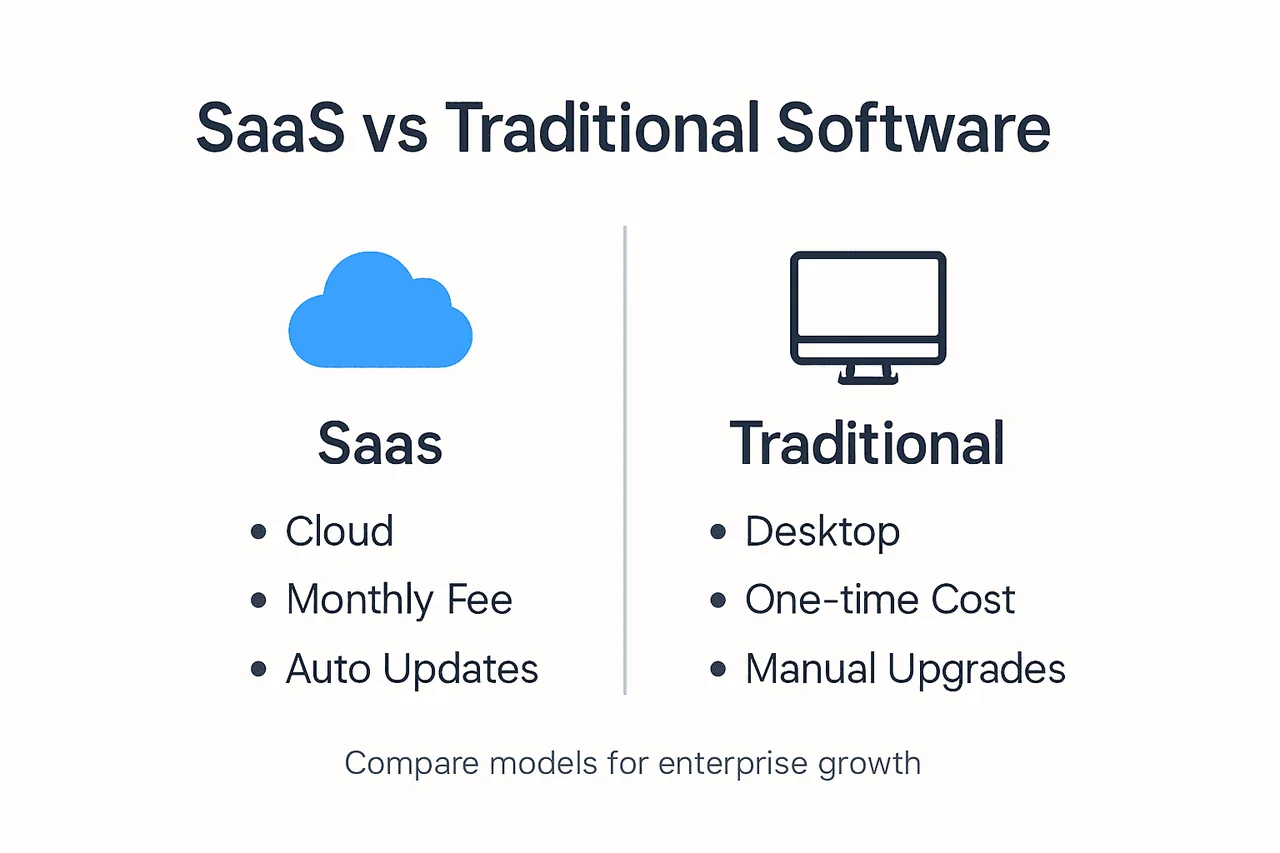
To clarify the core distinctions, here’s a summary comparing SaaS and traditional software models:
| Aspect | SaaS Model | Traditional Software |
|---|---|---|
| Licensing Approach | Subscription-based, flexible terms | Perpetual, upfront purchase required |
| Maintenance | Provider handles updates and patches | Organisation manages all maintenance |
| Accessibility | Access via internet on any device | Installed locally on company hardware |
| Upgrades | Automatic and included in cost | Manual, often costly and infrequent |
| Initial Investment | Minimal hardware investment | Significant infrastructure expenditure |
This table highlights typical business impacts when choosing between SaaS and traditional deployment.
Pro Tip: When evaluating software solutions, calculate total cost of ownership beyond initial pricing, considering factors like implementation time, maintenance requirements, and potential productivity gains.
Key Differences in Deployment and Maintenance
Software deployment represents a critical differentiator between traditional software and Software as a Service (SaaS) models. Traditional software deployment requires extensive internal infrastructure and manual management processes, demanding significant technical resources and specialised personnel to maintain system functionality.
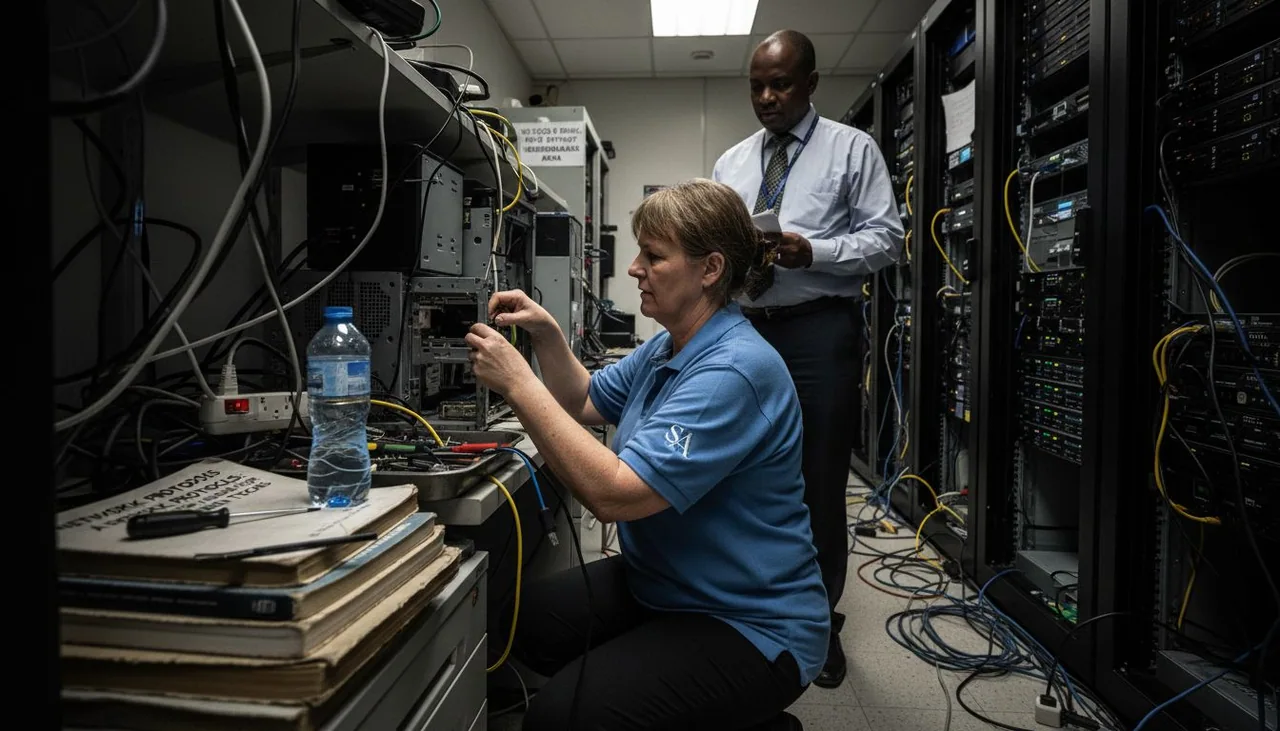
In contrast, SaaS platforms revolutionise deployment by eliminating complex installation procedures. SaaS providers handle application delivery through internet-based subscription models, removing end-user management responsibilities. This approach enables businesses to rapidly implement technological solutions without substantial upfront investments in hardware, software licenses, or dedicated IT infrastructure.
The maintenance paradigm further distinguishes these models. Traditional software necessitates organisations to manage upgrades, security patches, and version control independently. SaaS platforms, however, provide automatic updates, continuous security monitoring, and centralised maintenance, ensuring all users simultaneously access the most current software version. This approach significantly reduces technological overhead and minimises potential system vulnerabilities that often emerge from fragmented update processes.
Pro Tip: When transitioning between software models, conduct a comprehensive audit of existing infrastructure and potential integration challenges to ensure smooth technological migration.
Financial Impact: Costs, Licensing and Upgrades
Enterprise software expenditure has undergone a radical transformation with the emergence of Software as a Service (SaaS) models. Traditional software licensing frameworks required substantial upfront capital investments, with organisations purchasing perpetual licenses and expensive infrastructure, creating significant financial barriers for smaller businesses.
SaaS introduces a revolutionary financial approach by replacing capital expenditure with predictable operational costs. The recurring subscription model shifts economic emphasis from one-time purchases to continuous service value, allowing businesses to scale technology expenses dynamically. This approach enables companies to convert massive upfront investments into manageable monthly or annual payments, dramatically reducing initial financial risk and improving budgetary flexibility.
The upgrade ecosystem further distinguishes these models. Traditional software demands expensive, infrequent version upgrades that often require additional licensing fees and complex implementation processes. SaaS platforms, conversely, provide automatic updates included within subscription costs, ensuring businesses always access the latest features without supplementary expenses. This continuous improvement model eliminates the financial unpredictability associated with legacy software maintenance, offering transparent, predictable technological investment strategies.
Pro Tip: Conduct a comprehensive total cost of ownership analysis comparing SaaS and traditional software models, considering not just initial expenses but long-term operational and maintenance costs.
Security, Compliance and Data Control Issues
Enterprise security landscapes have fundamentally transformed with the emergence of Software as a Service (SaaS) platforms, introducing complex challenges in data protection and governance. Advanced security control frameworks now require sophisticated risk management strategies that differ dramatically from traditional software deployment models, demanding unprecedented levels of technological vigilance and strategic planning.
The multi-tenant architecture of SaaS environments creates unique security vulnerabilities that traditional software models never encountered. Cloud-based platforms introduce intricate governance challenges, particularly around data access, integration, and compliance management, necessitating robust security protocols that extend far beyond conventional perimeter defence strategies. Enterprises must now navigate complex shared responsibility models where security responsibilities are distributed between service providers and internal teams.
Unlike traditional software where organisations maintained complete infrastructural control, SaaS platforms require businesses to implement nuanced security strategies. These strategies must address potential risks such as data breaches, unauthorised access, and cross-tenant vulnerability exploitation. Comprehensive security approaches now demand continuous monitoring, advanced encryption techniques, granular access controls, and proactive threat detection mechanisms that can adapt to rapidly evolving technological landscapes.
Pro Tip: Develop a comprehensive security assessment framework that evaluates potential SaaS providers across multiple dimensions, including data protection protocols, compliance certifications, and incident response capabilities.
Scalability, Integration and Future Readiness
Enterprise technology evolution demands adaptive software architectures capable of responding rapidly to changing business requirements. Modern software systems are transitioning from rigid monolithic structures to more flexible microservices architectures, enabling organisations to achieve unprecedented levels of technological agility and operational responsiveness.
Cloud computing models fundamentally transform scalability by providing on-demand resource allocation and seamless integration capabilities. Unlike traditional software that requires substantial manual infrastructure investments, SaaS platforms allow businesses to dynamically adjust computational resources, scale operations instantaneously, and integrate across diverse technological ecosystems. This approach eliminates traditional barriers of technological expansion, enabling companies to rapidly deploy new functionalities without significant capital expenditure.
The future readiness of software architectures now hinges on their ability to adapt, integrate, and evolve continuously. SaaS platforms offer modular design principles that support rapid feature development, cross-platform compatibility, and seamless third-party integrations. Organisations can now leverage technology as a strategic asset, quickly responding to market changes, customer demands, and emerging technological trends without being constrained by legacy system limitations.
Below is a quick reference on how SaaS and traditional software impact security, integration, and scalability:
| Dimension | SaaS Impact | Traditional Software Impact |
|---|---|---|
| Security Management | Shared between provider and client | Fully managed by organisation |
| Compliance | Provider holds certifications, but client must assess fit | Organisation responsible for compliance strategy |
| Scalability | Instantly scale resources as needed | Scaling requires infrastructure investment |
| Integration | Easier connection to cloud services | Limited by local architecture |
This overview helps evaluate suitability based on enterprise needs.
Pro Tip: Develop a comprehensive technology roadmap that prioritises modular, cloud-native solutions capable of supporting flexible, scalable business strategies.
Drive Enterprise Growth with Tailored SaaS Solutions from Cloudfusion
Navigating the complex shift from traditional software to SaaS presents unique challenges in deployment, security and scalability. If you are grappling with issues such as managing ongoing maintenance, controlling operational costs, or ensuring future-ready, flexible software architectures Cloudfusion offers bespoke digital solutions tailored to your enterprise needs. We combine expert web development with industry-specific, scalable technology so you can achieve seamless integration, continuous updates and enhanced security without heavy upfront investment.
Discover how our custom approach aligns perfectly with SaaS principles by exploring our Web Design and Development Quotation. Empower your business with cutting-edge digital transformation that delivers predictable costs and agile scalability. Don’t let legacy systems hold you back—partner with Cloudfusion today and take the next step toward innovation and growth at Cloudfusion Digital Solutions. Your enterprise’s future-ready software journey starts now.
Frequently Asked Questions
What is the main difference between SaaS and traditional software?
SaaS operates on a subscription basis and is hosted remotely, allowing for quick access and updates. In contrast, traditional software requires local installation and management, often involving significant upfront costs and manual updates.
How does SaaS impact the cost of enterprise software?
SaaS models typically reduce upfront costs by offering predictable monthly or annual subscriptions, while traditional software requires substantial one-time investments for licensing and infrastructure.
What are the security differences between SaaS and traditional software models?
SaaS platforms often employ shared security models where responsibilities are divided between the service provider and the customer, whereas traditional software provides complete control to the organisation over security measures and compliance.
Can SaaS applications scale more easily than traditional software?
Yes, SaaS applications can scale resources on-demand to meet fluctuating business needs without requiring major infrastructure investments, unlike traditional software which may take significant time and cost to scale.