TL;DR:
- Mobile optimization is essential for e-commerce because mobile devices generate 60% of global web traffic and affect search rankings. Improving mobile performance leads to higher conversions, better Google rankings, and reduced bounce rates, especially in markets like South Africa with variable networks. Ongoing, targeted improvements focusing on speed, user experience, and local preferences deliver measurable revenue and visibility benefits.
Mobile optimization is defined as the process of ensuring your website delivers a fast, readable, and easy-to-use experience on smartphones and tablets. For e-commerce businesses, this is not optional. Mobile accounts for 60% of global web traffic, and 58% of Google searches now happen on smartphones. Google’s mobile-first indexing means your mobile site determines your search ranking, not your desktop version. Sites that meet mobile standards see conversion rates up to 64% higher than those that do not. Understanding why e-commerce needs mobile optimization is the first step toward capturing that revenue.
Why is mobile optimization essential for e-commerce visibility and rankings?
Google’s mobile-first indexing is the single most important ranking factor most e-commerce businesses underestimate. Google ranks the mobile version of your site first, which means a poorly performing mobile experience directly suppresses your organic visibility, regardless of how well your desktop site performs.
The ranking gap between mobile and desktop is wider than most marketers expect. 79% of keywords rank differently between mobile and desktop searches. That difference means your product pages may rank on page one for desktop users but fall to page three for the smartphone shoppers who make up the majority of your audience.
Mobile performance also feeds directly into Google’s Core Web Vitals, which measure loading speed, visual stability, and interactivity. Sites that fail Core Web Vitals thresholds lose ranking positions to competitors who meet them. The practical consequence is lower click-through rates, fewer product page visits, and reduced revenue from organic search.
Mobile-friendly e-commerce sites also benefit from richer search engine results page features, including AI-generated previews and product carousels. These features appear more frequently for sites that pass mobile performance benchmarks. Ignoring mobile performance means missing these visibility gains entirely.
Key visibility risks of poor mobile performance:
- Lower organic rankings due to failed Core Web Vitals
- Reduced click-through rates from non-optimised search snippets
- Exclusion from AI-powered SERP features
- Keyword rankings that differ significantly from desktop, reducing reach
- Higher cost-per-click in paid search as quality scores drop
How does mobile optimization improve user experience and reduce bounce rates?
Mobile shoppers have less patience than desktop users, and the data confirms it. 53% of mobile site visits are abandoned if a page takes longer than three seconds to load. That is more than half your potential customers leaving before they see a single product.

The friction points that drive abandonment are predictable and fixable. Small text that requires pinching to read, buttons too small to tap accurately, intrusive pop-ups that block the screen, and checkout forms that do not adapt to mobile keyboards all create unnecessary barriers. Each barrier reduces the likelihood of a completed purchase.
Effective mobile UX requires responsive design that adapts layouts to screen size, touch-friendly navigation with adequately spaced tap targets, and content that reads clearly without zooming. These are not design preferences. They are functional requirements for retaining mobile shoppers.
The business impact of smooth mobile UX compounds over time. Lower bounce rates signal to Google that your site satisfies user intent, which supports better rankings. Higher time-on-site increases the probability of cross-selling and upselling. A shopper who stays on your site long enough to browse three product pages is far more likely to convert than one who bounces after ten seconds.
Pro Tip: Test your checkout flow on an actual mid-range Android device on a standard mobile data connection. Most performance problems that kill conversions are invisible on a fast desktop emulator.
Common mobile UX improvements that reduce bounce rates:
- Compress images to reduce page weight without sacrificing visual quality
- Use large, clearly labelled tap targets for buttons and navigation links
- Eliminate or delay pop-ups until after the user has engaged with content
- Simplify checkout to the fewest possible steps and fields
- Display prices and calls to action prominently above the fold on small screens
What mobile optimization strategies deliver the best ROI for e-commerce sites?
The most effective approach is phased optimization focused on your highest-traffic customer journeys, not a full site rebuild. A phased approach targeting high-impact journeys delivers faster return on investment than redesigning everything at once. Use an impact-effort-risk matrix to prioritise which pages and templates to fix first: product listing pages, product detail pages, and checkout flows typically deliver the highest return.
Speed improvements produce the most immediate gains. Excess JavaScript and third-party scripts degrade mobile performance significantly. Audit every third-party script on your site, remove those that are not business-critical, and defer the rest. Compress and convert images to modern formats like WebP. Reduce render-blocking resources so the page displays content before all scripts have finished loading.
Design decisions matter as much as technical ones. Building mobile-first rather than adapting a desktop layout for smaller screens produces fundamentally better results. A mobile-first design approach forces you to prioritise the content and actions that matter most, which benefits all device types.
Pro Tip: Test on real mid-range devices under real network conditions, not just desktop browser emulators. Emulators miss CPU throttling and network latency that reveal the actual experience your customers have.
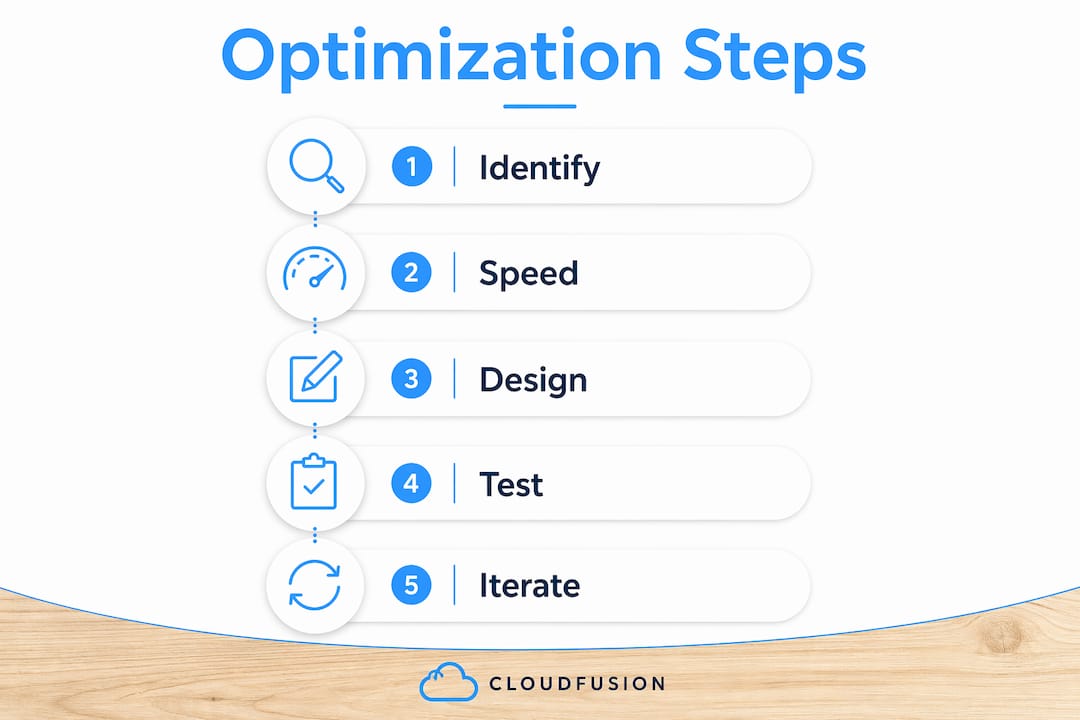
A practical phased optimization sequence for e-commerce sites:
- Audit current performance using Google PageSpeed Insights and Core Web Vitals reports to identify the worst-performing pages.
- Fix speed bottlenecks by compressing images, removing unused JavaScript, and auditing third-party scripts.
- Improve navigation and tap targets on product listing and detail pages to reduce friction.
- Simplify the checkout flow to the minimum number of steps, with mobile-friendly input fields and payment options.
- Measure and iterate against Core Web Vitals and conversion metrics monthly, treating mobile optimization as an ongoing data-driven process rather than a completed project.
What are the specific benefits of mobile optimization for South African e-commerce businesses?
South African consumers are predominantly mobile-first shoppers. Smartphone penetration continues to grow, and for many customers, a mobile device is their primary or only means of accessing the internet. An e-commerce site that performs poorly on mobile is effectively invisible to a large portion of the local market.
Variable network quality across South Africa makes speed optimization more critical here than in markets with consistent high-speed connectivity. A site that loads acceptably on fibre in Cape Town may time out for a customer on a standard mobile data connection in a smaller town. Reducing page weight and optimising for slower connections directly expands your addressable market.
Local adaptations that improve mobile conversion for South African businesses include:
- Payment options: Displaying locally preferred payment methods prominently on mobile checkout, including instant EFT and mobile wallet options
- Contact and support: Making WhatsApp contact or click-to-call buttons immediately accessible on mobile, since South African customers frequently prefer messaging for support
- Data-light modes: Offering image-reduced or simplified page versions for customers on limited data plans
- Localised content: Displaying prices in Rands clearly and using locally relevant product descriptions and imagery
The competitive advantage from mobile performance is measurable. Faster load times reduce bounce rates, which improves organic rankings, which drives more qualified traffic. That cycle compounds. A business that invests in mobile performance today builds a ranking and conversion advantage that becomes harder for competitors to close over time.
| Business benefit | Practical outcome |
|---|---|
| Faster load times | Lower bounce rates and higher time on site |
| Responsive design | Consistent experience across all device types |
| Touch-friendly UX | Higher add-to-cart and checkout completion rates |
| Local payment integration | Reduced cart abandonment at checkout |
| Improved Core Web Vitals | Higher organic search rankings |
Cloudfusion works with South African e-commerce businesses to build mobile-friendly web solutions that address these local market realities directly, from performance architecture to payment integration.
Key takeaways
Mobile optimization is the single most direct lever e-commerce businesses control for improving search rankings, reducing bounce rates, and increasing sales conversions across all devices.
| Point | Details |
|---|---|
| Mobile-first indexing | Google ranks your mobile site first, so poor mobile performance suppresses all organic rankings. |
| Speed is non-negotiable | 53% of mobile visits are abandoned after three seconds, making load time a direct revenue factor. |
| Phased optimization wins | Targeting high-impact journeys delivers faster ROI than rebuilding the entire site at once. |
| Local market context matters | South African shoppers need fast, data-light experiences with locally relevant payment options. |
| Ongoing testing is required | Core Web Vitals and real-device testing must be continuous, not a once-off exercise. |
Mobile optimization is a moving target, not a milestone
From my experience working with e-commerce businesses across different sectors, the most common mistake I see is treating mobile optimization as a project with a finish line. A business invests in a responsive redesign, ticks the box, and moves on. Six months later, a new device category emerges, Google updates its Core Web Vitals thresholds, or a third-party script quietly doubles the page load time. The gains erode, and nobody notices until rankings drop.
The businesses that consistently outperform their competitors on mobile are the ones that treat it as an ongoing discipline. They measure Core Web Vitals monthly. They test on actual devices, not just emulators. They review their e-commerce SEO performance regularly and connect ranking changes to specific technical decisions.
There is also a widespread misconception that meaningful mobile improvement requires a full redesign. It rarely does. Targeted fixes to your three or four highest-traffic templates, combined with image compression and JavaScript auditing, frequently deliver more measurable impact than a complete rebuild at ten times the cost. The key is knowing which fixes to prioritise, and that requires data, not guesswork.
My honest advice: start with a Core Web Vitals audit on your product listing and checkout pages. Fix what you find there before spending a rand on anything else. The ROI from those targeted improvements will fund and justify whatever comes next.
— Anton
How Cloudfusion helps e-commerce businesses get mobile right
Getting mobile optimization right requires more than a checklist. It requires a development partner who understands both the technical requirements and the local market context. Cloudfusion builds custom web development solutions for South African e-commerce businesses, with a focus on performance, responsive design, and phased optimization that delivers measurable results without unnecessary rebuilds. From mobile app development to fast, reliable hosting, the full-service approach means your mobile experience is built to perform from the ground up. Give us a shout to chat about your mobile optimization needs and where to start.
FAQ
Why is mobile optimization critical for e-commerce in 2026?
Mobile accounts for 60% of global web traffic, and Google’s mobile-first indexing means your mobile site determines your search rankings. An unoptimised mobile experience directly reduces visibility and sales.
How does mobile site speed affect e-commerce conversions?
53% of mobile visits are abandoned when a page takes longer than three seconds to load. Faster load times reduce bounce rates and increase the probability of completed purchases.
What is the most cost-effective mobile optimization strategy?
A phased approach targeting your highest-traffic pages, such as product listings and checkout, delivers faster ROI than a full site rebuild. Start with speed fixes and Core Web Vitals improvements.
How does mobile optimization affect Google search rankings?
Google uses mobile-first indexing, meaning it evaluates your mobile site to determine rankings. Additionally, 79% of keywords rank differently between mobile and desktop, so poor mobile performance reduces your reach significantly.
What makes mobile optimization different for South African e-commerce businesses?
Variable network quality across South Africa means page speed has a greater impact on user experience than in markets with consistent high-speed connectivity. Local payment options and data-light design also directly affect conversion rates.
Recommended