More than 95 percent of shoppers research companies online before making a decision, so your digital reputation can make or break your success as a South-African business owner. Even a handful of negative reviews or comments can influence buyer trust and shape future opportunities. This step-by-step guide helps South-African businesses assess, monitor, and strengthen their online presence to attract more customers and stand out in a crowded digital landscape.
Table of Contents
- Step 1: Assess Current Online Reputation
- Step 2: Establish Monitoring and Alert Tools
- Step 3: Respond Strategically to Reviews and Mentions
- Step 4: Amplify Positive Content and Feedback
- Step 5: Verify Results and Refine Reputation Strategy
Quick Summary
| Key Insight | Explanation |
|---|---|
| 1. Assess Your Online Reputation | Conduct a systematic search to evaluate your business’s online presence and customer sentiment across various platforms. |
| 2. Implement Monitoring Tools | Set up alerts and monitoring dashboards to track your digital presence, enabling timely responses to customer feedback and reviews. |
| 3. Respond to Customer Feedback | Develop a response strategy for positive and negative reviews to enhance customer satisfaction and showcase your commitment to service. |
| 4. Amplify Positive Content | Curate and display customer testimonials prominently to build trust and enhance your brand’s image across digital platforms. |
| 5. Regularly Review and Refine Strategy | Continuously evaluate your online metrics and adapt your reputation management strategies based on feedback and industry insights. |
Step 1: Assess Current Online Reputation
Understanding your business’s digital footprint starts with a comprehensive online reputation assessment. Over 95% of shoppers research businesses online, which means your online presence directly impacts customer perception and purchasing decisions.
To effectively evaluate your current online reputation, begin by conducting a systematic search across multiple platforms. Start with Google search results using your business name and variations like branded keywords. Check review sites such as Google Reviews, Hellopeter, and industry specific platforms relevant to your sector. Tracking social media mentions and investigating search engine results provides crucial insights into public sentiment.
Pro tip: Create a spreadsheet documenting all findings including the platform, review content, rating, and date. This structured approach allows you to identify patterns and potential areas for reputation management. By understanding your current digital landscape, you can develop targeted strategies to enhance and protect your online brand image.
Next, you will analyse the insights gathered to develop a strategic reputation management plan.
Step 2: Establish Monitoring and Alert Tools
Building a robust online reputation management strategy requires implementing effective monitoring systems that provide real time insights into your digital presence. Creating a reputation monitoring dashboard helps track trends across multiple platforms, enabling proactive reputation management.

Start by setting up comprehensive alert systems across key digital channels. Use Google Alerts to track mentions of your business name and relevant keywords. Configure alerts on platforms like Facebook, Google, and customer review sites to capture customer feedback and emerging conversations. Social media monitoring tools such as Hootsuite or Mention can help you track brand mentions and sentiment in real time, providing immediate visibility into public perception.
Pro tip: Consolidate your monitoring tools into a single dashboard or spreadsheet. This centralised approach allows for easier tracking and quicker response times when addressing potential reputation issues. By systematically monitoring your online presence, you can swiftly identify and mitigate potential challenges before they escalate.
Next, you will learn how to analyse and respond to the insights gathered through these monitoring tools.
Step 3: Respond Strategically to Reviews and Mentions
Managing your online reputation requires a thoughtful and proactive approach to addressing customer feedback and digital mentions. Staying on top of reviews and tracking social media interactions is critical for maintaining a strong online presence and demonstrating your commitment to customer satisfaction.
Develop a structured response protocol for different types of online feedback. For positive reviews, express genuine appreciation and highlight specific aspects of their experience. When addressing negative reviews, respond promptly and professionally. Aim to take the conversation offline by providing contact information or requesting more details to resolve the issue. Show empathy and a willingness to understand the customer’s perspective. Consider creating a company video that showcases your professionalism and personality to complement your written responses and humanise your brand interactions.
Pro tip: Always maintain a consistent tone that reflects your brand values. Responses should be personalised, solution oriented, and demonstrate that you take customer feedback seriously. By transforming potentially negative experiences into opportunities for demonstrating excellent customer service, you can potentially turn critical reviews into powerful testimonials for your business.
Next, you will learn how to develop a comprehensive strategy for ongoing reputation management.
Step 4: Amplify Positive Content and Feedback
Defining a clear brand identity and strategically showcasing your business’s strengths is crucial for building a powerful online reputation. This step focuses on transforming positive feedback into a compelling narrative that attracts potential customers and reinforces your professional image.
Begin by curating and highlighting your best customer testimonials across multiple platforms. Create a dedicated testimonials section on your website that features detailed success stories. Consider producing a company video that showcases your professionalism and unique personality and share it across your social media channels and website. Leverage social media platforms to share positive reviews and client experiences, using engaging graphics or short video clips to make the content more shareable and visually appealing.
Pro tip: Implement a systematic approach to collecting and displaying customer feedback. Encourage satisfied clients to share their experiences by making the review process simple and providing multiple channels for feedback. By consistently amplifying positive content, you create a powerful digital narrative that builds trust and credibility with potential customers.
Next, you will learn advanced strategies for proactively managing your online reputation.
Step 5: Verify Results and Refine Reputation Strategy
Auditing your digital presence requires a systematic approach to understanding how your online reputation impacts your business performance. This final step focuses on evaluating the effectiveness of your reputation management efforts and making data driven adjustments.
Begin by conducting a comprehensive review of your online metrics. Create a reputation monitoring dashboard that tracks reputational trends across various platforms, collecting data on customer sentiment, review scores, social media engagement, and search engine visibility. Compare your current online presence against initial benchmarks and analyse the impact of your reputation management strategies. Look for patterns in customer feedback, identify areas of improvement, and assess how your digital reputation aligns with your brand objectives.
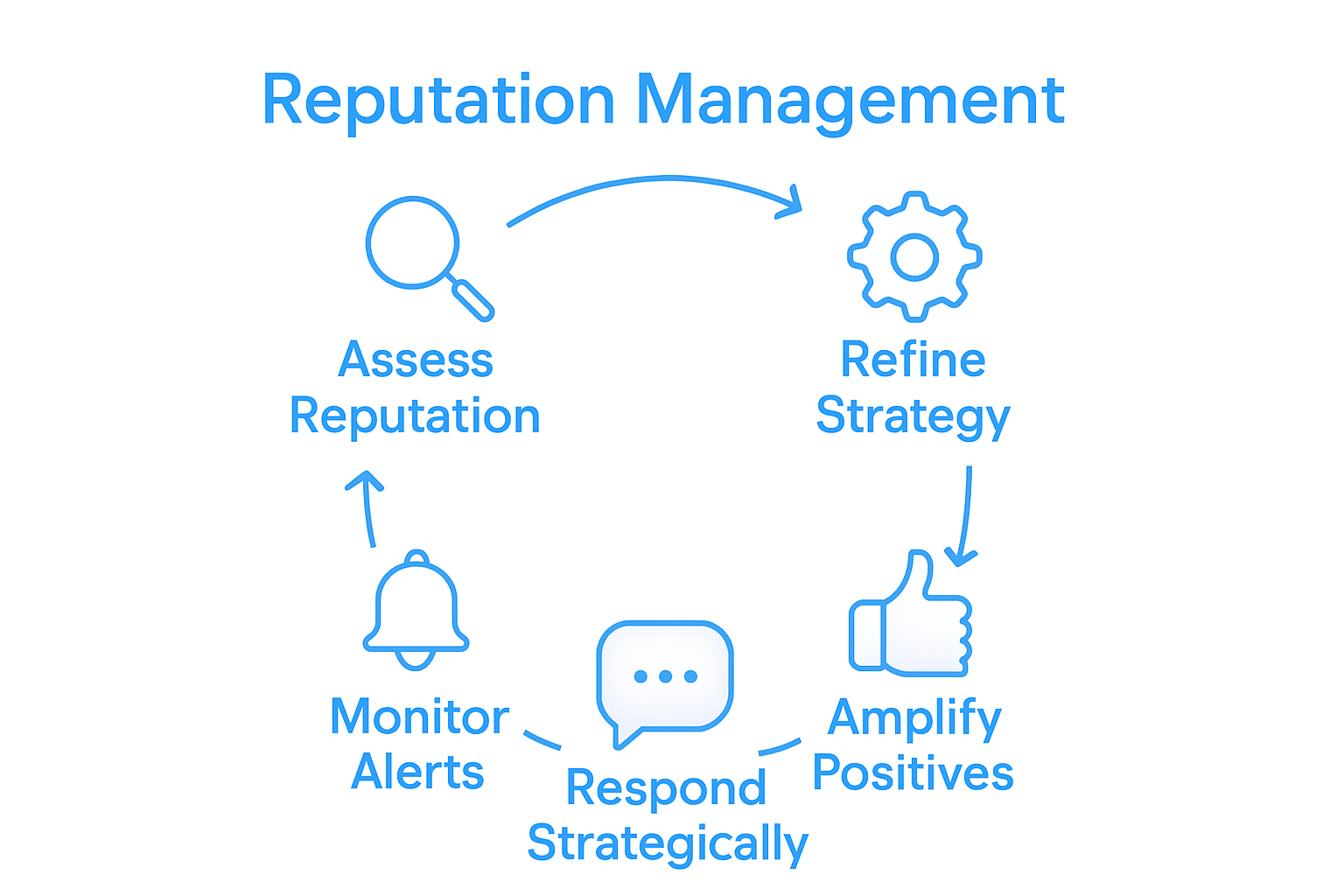
Pro tip: Develop a quarterly review process that allows for agile strategy refinement. Conduct a competitive analysis to understand how your online reputation compares to industry peers, using these insights to continuously evolve your approach. Remember that online reputation management is an ongoing process requiring consistent attention and adaptation.
Congratulations on completing your comprehensive online reputation management strategy.
Elevate Your Online Reputation with Tailored Digital Solutions
Managing your online reputation effectively requires more than just monitoring reviews and responding promptly. It hinges on having a strong, professional online presence that reflects your brand values and builds trust with customers. If your business struggles with inconsistent digital identity or wants to amplify positive feedback systematically the challenges outlined in “How to Manage Online Reputation for Business Success” are exactly where specialised web design and strategic digital branding come into play.
At Cloudfusion, we understand the emotional weight of maintaining a trustworthy reputation in today’s competitive market. Our bespoke web design and development services create dynamic, scalable websites tailored for your industry that enhance search engine visibility and showcase your unique value propositions. By integrating strategic branding and cloud-based tools you can turn every customer interaction into a powerful testimonial that advances your business goals.
Don’t wait for your reputation challenges to escalate. Take control now by exploring how our customised solutions can support your ongoing reputation management. Discover the difference a professional digital presence can make by visiting web design and development quotation. Start building a credible online image that converts visitors into loyal customers today.
Frequently Asked Questions
How can I assess my current online reputation?
To assess your current online reputation, conduct a thorough search using your business name and variations. Create a spreadsheet to document findings from review sites and social media mentions, allowing you to identify patterns and areas for improvement.
What tools can I use to monitor my online reputation?
Implement Google Alerts and various social media monitoring tools to track mentions of your business. Set up alerts across key platforms to stay informed about customer feedback and emerging conversations in real time.
How should I respond to negative online reviews?
Respond to negative reviews promptly and professionally. Take the conversation offline by providing contact information, and show empathy to resolve the issue, transforming potential negatives into positive customer experiences.
What is the best way to amplify positive content?
Curate and highlight your best customer testimonials across multiple platforms. Consider creating a testimonials section on your website and share positive feedback on social media using engaging formats like graphics or video clips.
How often should I review my online reputation strategy?
Conduct a quarterly review of your online reputation strategy to assess what’s working and what needs adjustment. Analyze customer feedback and online metrics to ensure you stay aligned with your brand objectives and adapt as needed.
Recommended
- Managing your Online Reputation Amid COVID-19: 7 Pro Tips
- Brand Credibility: a Key Ingredient to Improved Conversion Rates
- The Importance of Online Presence for Business Growth
- Complete Guide to Building Trust Online
- Emotional Awareness in Business: Complete Guide - Wisdom
- How to Set Business Goals for Measurable Growth Success - Projector Display