

How to Measure Brand Awareness for E-Commerce Success
Learn how to measure brand awareness with a proven step-by-step guide tailored for marketing managers seeking actionable results in growing e-commerce brands.
Start reading
Measuring how customers truly recognise and recall your brand can feel challenging for even the most resourceful marketing manager. Clear, measurable brand awareness objectives are essential for connecting day-to-day marketing efforts with long term strategic growth. Defining specific, achievable targets and choosing the right metrics helps you cut through noise and assess not just visibility, but whether your brand is building meaningful connections and sustained customer loyalty.
Table of Contents
- Step 1: Define Measurable Brand Awareness Objectives
- Step 2: Select Relevant Metrics And Tracking Tools
- Step 3: Gather Data From Targeted Sources
- Step 4: Analyse Findings For Actionable Insights
- Step 5: Validate Results Against Strategic Goals
Quick Summary
Key Point | Explanation |
|---|---|
1. Set measurable brand objectives | Use the SMART framework to define clear objectives that track brand awareness effectively. |
2. Choose relevant metrics and tools | Implement tools like Google Analytics and social media insights to gauge performance accurately. |
3. Gather diverse data sources | Use online surveys and social media analytics for comprehensive insights into consumer perceptions. |
4. Analyse data for insights | Map findings to objectives and identify actionable improvements for brand strategy. |
5. Validate against strategic goals | Ensure brand awareness improvements align with broader business objectives to drive impact. |
Step 1: Define measurable brand awareness objectives
Defining clear and actionable brand awareness objectives is your strategic starting point for understanding how customers perceive and interact with your brand. Brand awareness fundamentals require precise measurement approaches that go beyond vague impressions.
To create meaningful objectives, start by identifying specific metrics that align with your business goals. Setting measurable objectives involves using the SMART framework: Specific, Measurable, Achievable, Relevant, and Time-bound. This means transforming broad concepts like ‘increase brand recognition’ into concrete targets such as ‘increase unaided brand recall by 20% among target demographic within six months’.
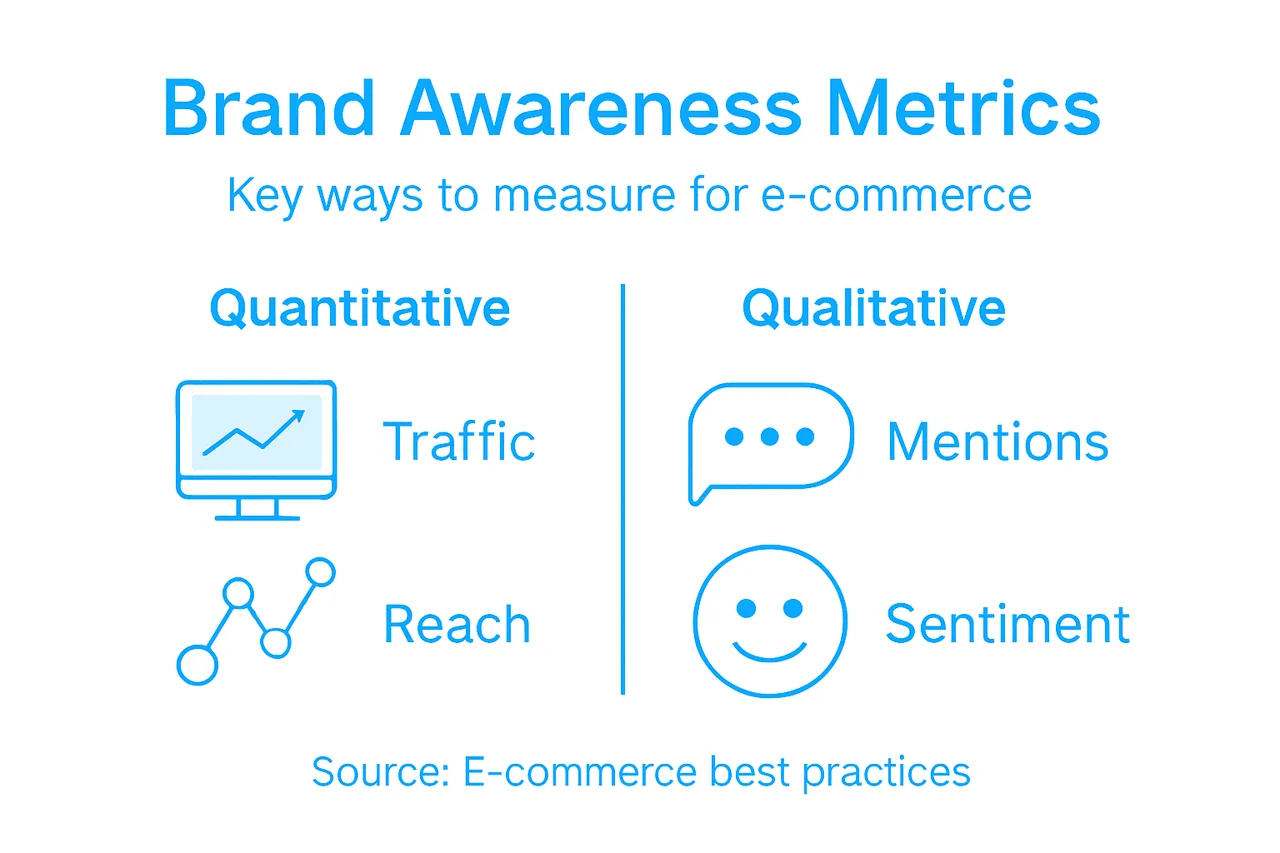
Your objectives should capture both quantitative and qualitative dimensions of brand awareness. Consider metrics like spontaneous recall rates, social media mentions, website traffic from branded search terms, and customer surveys measuring brand familiarity. By establishing these benchmarks, you create a clear pathway for tracking your brand’s mental real estate and marketing effectiveness.
Here’s a comparison of common brand awareness metrics and their business relevance:
Metric Type | Example Metric | Business Impact |
|---|---|---|
Quantitative | Website traffic from branded search | Measures reach of marketing efforts |
Quantitative | Social media mentions | Gauges online brand presence |
Qualitative | Customer sentiment surveys | Informs brand perception analysis |
Qualitative | Unaided brand recall rates | Assesses spontaneous recognition |
Pro tip: Conduct an initial baseline measurement before implementing any brand awareness strategies to ensure you can accurately track and validate your progress.
Step 2: Select relevant metrics and tracking tools
Selecting the right metrics and tracking tools is crucial for understanding your brand’s true performance in the digital marketplace. Digital metrics and analytics platforms offer comprehensive insights into how customers perceive and interact with your brand across multiple channels.
Start by identifying key performance indicators that align directly with your brand awareness objectives. These should include both quantitative metrics like website traffic and social media engagement and qualitative measures such as brand recognition scores and customer sentiment. Marketing performance metrics require a holistic approach that combines multiple data sources to provide a comprehensive view of your brand’s market position.
Consider implementing a mix of tracking tools including web analytics platforms like Google Analytics, social media insights tools, customer survey platforms, and brand tracking software. Each tool offers unique perspectives on brand awareness from different angles such as reach, engagement, recall, and overall brand perception. By diversifying your measurement approach, you can build a more nuanced understanding of how your brand resonates with your target audience.

Pro tip: Integrate multiple tracking tools and cross reference their data to create a more comprehensive and accurate brand awareness assessment.
Below is a summary of recommended data collection tools and their unique contributions:
Tool/Platform | Data Collected | Strategic Use |
|---|---|---|
Google Analytics | Website user behaviour | Identifies traffic trends |
Social media insights | Engagement and mention trends | Monitors brand conversation |
Survey platforms | Customer opinions and recall | Measures awareness and sentiment |
Brand tracking software | Ongoing brand KPI scores | Tracks long-term brand shifts |
Step 3: Gather data from targeted sources
Gathering comprehensive and reliable data is the cornerstone of understanding your brand’s true market presence. Data collection strategies encompass a wide range of methods that help capture nuanced consumer perceptions and interactions with your brand.
Implement a mixed methods approach that combines quantitative and qualitative data sources. This means leveraging online surveys, social media analytics, customer interviews, and research methodology techniques that capture both numerical insights and deeper contextual understanding. Focus on collecting data from multiple touchpoints including website interactions, social media engagement, customer feedback channels, and direct survey responses to build a comprehensive view of your brand awareness.
Ensure your data collection methods are representative and unbiased by using diverse sampling techniques and triangulating information from different sources. This approach helps validate your findings and provides a more robust understanding of how your target audience perceives your brand across various platforms and interactions.
Pro tip: Cross validate data from different sources to identify consistent patterns and eliminate potential sampling biases in your brand awareness research.
Step 4: Analyse findings for actionable insights
Transforming raw data into meaningful strategies requires a thoughtful approach to analysis that goes beyond surface level interpretation. Brand research methodologies emphasise the importance of integrating both quantitative metrics and qualitative insights to uncover deeper understanding of your brand’s market position.
Begin by mapping your findings against your original brand awareness objectives and identifying clear patterns and trends. Look for correlations between different data points that reveal how customers perceive and interact with your brand. Actionable insight development requires moving beyond simple data presentation to create a narrative that highlights specific opportunities for strategic improvement. This might involve understanding which marketing channels generate the most brand recognition, identifying demographic segments with the highest engagement, or uncovering potential messaging refinements.
Prioritise insights that directly connect to tangible business outcomes. Focus on findings that can inform concrete actions such as adjusting target audience segmentation, refining brand messaging, or reallocating marketing resources to more effective channels. The goal is to translate data into a clear roadmap for enhancing your brand’s market presence and customer perception.
Pro tip: Create a visual dashboard that highlights key insights and recommended actions to make your analysis more digestible and actionable for stakeholders.
Step 5: Validate results against strategic goals
Validating your brand awareness measurement results requires a systematic approach that connects your findings directly to your broader organisational objectives. Strategic planning frameworks emphasise the importance of periodic reviews that assess whether awareness improvements translate into meaningful business outcomes.
Begin by mapping your brand awareness metrics against your original strategic goals. This involves critically examining whether increased brand recognition correlates with tangible results such as market share growth, customer engagement, or revenue generation. Strategic alignment techniques help bridge the gap between marketing activities and long term business strategy by ensuring that your brand awareness efforts are not just generating visibility but driving substantive business impact.
Conduct a comprehensive review that goes beyond surface level metrics. Consider using tools like SWOT analysis to understand how your brand awareness results fit into the broader competitive landscape. Look for nuanced connections between awareness improvements and strategic priorities such as customer loyalty, market positioning, and long term brand equity. The goal is to create a holistic understanding that demonstrates how brand awareness efforts contribute to your organisation’s overarching mission and strategic direction.
Pro tip: Create a scorecard that directly links brand awareness metrics to key strategic indicators for easier communication with leadership and stakeholders.
Measure Your Brand Awareness with Precision and Custom Digital Solutions
Understanding how to accurately measure brand awareness is essential for e-commerce success and effective marketing strategies. The challenge most businesses face is translating data from multiple channels into actionable insights that drive growth and improve customer engagement. If you are striving to define measurable objectives, select the right tracking tools, and analyse findings for meaningful impact, your digital presence needs to align perfectly with these goals.
At Cloudfusion, we specialise in creating custom, scalable web platforms that empower your brand to capture and track valuable customer interactions across all touchpoints. Our expertise in Web Design and Development ensures your website not only attracts traffic but integrates smoothly with analytics tools to measure and enhance brand recognition. Take advantage of a technology partner who understands the importance of strategic branding combined with technical innovation. Ready to transform your brand awareness data into growth? Discover how our tailored solutions can put you ahead by visiting Cloudfusion Web Solutions and start building a powerful platform that delivers measurable results now.
Frequently Asked Questions
How can I define measurable brand awareness objectives for my e-commerce business?
To define measurable brand awareness objectives, start by using the SMART framework: Specific, Measurable, Achievable, Relevant, and Time-bound. For instance, target a specific metric such as increasing unaided brand recall by 20% within six months.
What metrics should I track to measure brand awareness effectively?
Focus on a mix of quantitative and qualitative metrics, such as website traffic from branded search, social media mentions, and customer sentiment surveys. Prioritise tracking metrics that align with your brand objectives to evaluate your marketing impact accurately.
How do I gather data from targeted sources for brand awareness measurement?
Gather data by combining quantitative methods, like online surveys and social media analytics, with qualitative approaches, such as customer interviews. Ensure that you collect data from multiple touchpoints to create a comprehensive view of brand awareness.
What steps should I follow to analyse brand awareness findings?
Start by mapping your findings against your defined brand awareness objectives to identify trends and patterns. Look for correlations that highlight opportunities for improvement, such as adjusting messaging or reallocating marketing resources.
How can I validate my brand awareness results against my strategic goals?
Validate your brand awareness results by mapping the metrics to your broader organisational objectives. Conduct a thorough review to understand how improvements in brand recognition correlate with tangible outcomes, such as increased market share or customer loyalty.
What tools can help me track brand awareness metrics for my e-commerce site?
Utilise a combination of analytics platforms like web analytics tools and customer survey software to track various metrics. By integrating these tools, you can gain insights into different aspects of brand awareness, including engagement and recall.