Finding sustainable packaging that satisfies both business demands and rising customer expectations can feel like chasing a moving target. As the surge in online shopping generates massive volumes of plastic packaging waste in retail environments, e-commerce businesses across Europe and North America are under pressure to rethink everything from material choices to logistics. Understanding the real definition of sustainable packaging helps you move beyond greenwashing and create solutions that strengthen your brand while genuinely reducing environmental impact.
Table of Contents
- Defining Sustainable Ecommerce Packaging Today
- Popular Eco-Friendly Packaging Types Explained
- How Sustainable Materials Reduce Impact
- Legal Requirements In Europe And North America
- Costs, Pitfalls And Best Practice Strategies
Key Takeaways
| Point | Details |
|---|---|
| Sustainable Packaging Definition | It prioritises product protection while minimising environmental impact throughout its life cycle. |
| Consumer Expectations | Customers increasingly expect brands to demonstrate environmental responsibility via their packaging choices. |
| Regulatory Compliance | Understanding and adhering to strict packaging regulations in Europe and North America is essential to avoid penalties. |
| Cost Considerations and Risks | Transitioning to sustainable packaging may incur higher initial costs and risks of greenwashing if not substantiated. |
Defining Sustainable Ecommerce Packaging Today
Sustainable ecommerce packaging isn’t just a buzzword for environmentally conscious brands. It’s a fundamental shift in how businesses approach the physical materials that connect their products to customers. At its core, sustainable packaging protects products while minimising environmental harm throughout its entire life cycle, from sourcing through manufacture to delivery and beyond.
The definition has real teeth. Sustainable packaging must be beneficial and safe for communities, meet actual market performance standards, and use renewable or recycled materials wherever possible. It’s not about choosing the greenest option if it costs three times more or falls apart during transit. The balance between environmental responsibility and practical business needs is exactly where the definition sits.
What’s driving this shift right now? The explosive growth of e-commerce has created a packaging crisis. Online shopping generates massive volumes of plastic packaging waste in retail environments, turning sustainability from a nice-to-have into a necessity. European and North American retailers face mounting pressure from consumers, regulators, and competitors to rethink their entire packaging strategy.
Today’s sustainable packaging aims to reduce plastic dependency whilst maintaining the protection and efficiency that logistics demands. This means exploring alternatives such as compostable materials, recycled content, minimal packaging designs, and innovative solutions that actually scale. The catch? These alternatives need to be competitively priced. Your competitors are moving in this direction too.
The real opportunity lies in recognising that sustainable packaging connects directly to brand perception. Customers in developed markets increasingly expect businesses to demonstrate environmental responsibility. When your packaging reflects that commitment, it becomes part of your brand story. Many ecommerce leaders are integrating sustainable business practices throughout their operations, and packaging design sits right at the centre of that transformation.
What separates today’s sustainable packaging from yesterday’s greenwashing is measurability and real-world impact. You can now quantify material usage, track recycled content percentages, and demonstrate actual waste reduction to your customers with concrete data.
Pro tip: _Start by auditing your current packaging waste streams and material costs. Once you know exactly what you’re using and spending, you can identify the highest-impact changes that won’t blow your budget or compromise product protection.
Popular Eco-Friendly Packaging Types Explained
Your packaging choices today determine whether customers see your brand as genuinely committed to sustainability or just jumping on a trend. The good news is that proven alternatives exist, and they’re becoming increasingly cost-competitive. Understanding what each type offers helps you make decisions aligned with your product, budget, and environmental goals.
FSC-certified cardboard stands out as the workhorse of sustainable packaging. It comes from responsibly managed forests, meaning trees are replanted and ecosystems stay intact. Cardboard is lightweight, easily recyclable, and customers recognise it instantly as an eco-friendly choice. For most ecommerce businesses, this is the safest starting point.
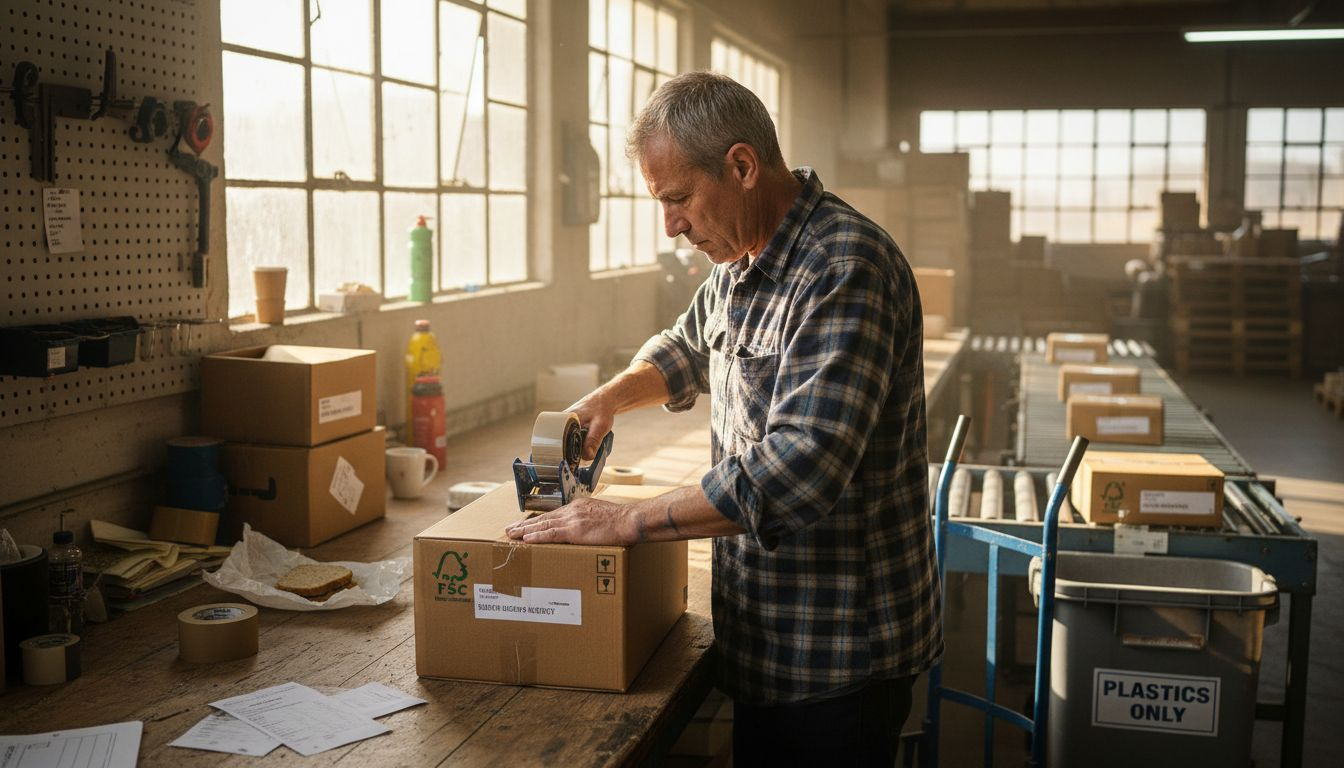
Recycled plastics deserve a closer look despite the material’s controversial reputation. Modern recycled plastic packaging diverts waste from landfills whilst maintaining the durability and protection that logistics require. The key is transparency: customers want to know what percentage of recycled content you’re using. Look for packaging with at least 50 per cent post-consumer recycled material to make a genuine impact.
Compostable and biodegradable films break down naturally, leaving no toxic residue. These work particularly well for food products and items that truly need a barrier against moisture. The catch is infrastructure. Your customers need access to industrial composting facilities, which aren’t universally available in every region yet.
Reusable containers flip the traditional packaging model on its head. Customers return containers for refilling or resale, creating a circular loop. This works brilliantly for businesses with repeat customers and strong logistics networks. Your brand essentially becomes a service that delivers products inside an asset you control.
Sustainable packaging design eliminates unnecessary materials whilst sourcing responsibly and optimising efficiency. When selecting materials, consider your product type, shipping requirements, customer location, and local recycling infrastructure. A beautiful, minimal design using the wrong material wastes both effort and resources.
Here’s how the main eco-friendly packaging options compare on crucial factors:
| Packaging Type | Environmental Benefit | Business Consideration | Best Use Case |
|---|---|---|---|
| FSC-certified cardboard | Protects forests, recyclable | Widely available, cost effective | General shipping, lightweight goods |
| Recycled plastics | Reduces waste, lower emissions | Requires disclosure of content | Durable goods, logistics-heavy needs |
| Compostable/biodegradable | Leaves no toxic residue | Needs local composting infra | Food, moisture-sensitive products |
| Reusable containers | Enables circular systems | Higher setup, strong logistics | Repeat customers, subscriptions |
Pro tip: _Choose packaging based on your actual product needs and customer behaviour, not just what sounds greenest. Test one material type with a subset of customers first, measure feedback and returns, then scale what works.
How Sustainable Materials Reduce Impact
The environmental cost of packaging extends far beyond what ends up in landfills. From resource extraction through manufacturing to transport and disposal, every material choice creates ripple effects across ecosystems and climate systems. Sustainable materials interrupt this cycle at multiple points, delivering measurable reductions in harm.
The most direct benefit comes from reducing dependence on virgin resources. Mining new fossil fuels for plastic production consumes energy, disrupts landscapes, and depletes finite reserves. Using recycled plastics significantly reduces fossil resource dependence whilst maintaining performance standards that customers expect. When you substitute recycled content for virgin material, you’re essentially saying no to extraction somewhere on the planet.
Carbon emissions plummet with sustainable materials. Production energy requirements drop substantially when you recycle existing plastics rather than synthesise new ones from crude oil. Transport emissions decrease too because recycled materials often come from local or regional sources, cutting shipping distances compared to virgin plastic sourcing. Over a product’s lifetime, these carbon savings compound.

Landfill diversion represents another critical impact area. Traditional packaging sits in landfills for centuries, creating methane emissions and leaching chemicals into groundwater. Compostable and recyclable materials close loops instead. They either return to manufacturing cycles or break down safely without toxic residue. Your packaging becomes a resource rather than permanent waste.
Energy consumption in production tells the complete story. Recycled plastic manufacturing requires approximately 50 to 60 per cent less energy than virgin plastic production. That’s not a marginal improvement, it’s transformative. Scale this across thousands of shipments annually, and you’re talking about genuine climate impact.
Sustainable materials also reduce water consumption and pollution in manufacturing. Fewer toxic chemicals enter water systems. Ecosystems near production facilities remain healthier. These benefits don’t appear on your profit and loss statement, but they matter enormously to your European and North American customers who increasingly factor corporate environmental responsibility into purchasing decisions.
Pro tip: _Calculate your current packaging’s carbon footprint using lifecycle assessment tools, then model how switching to recycled or compostable materials would change that number. Customers increasingly ask for this data, and having it ready builds trust immediately.
Legal Requirements in Europe and North America
Ignoring packaging regulations isn’t an option anymore. European and North American governments have moved from guidance to enforcement, with real penalties for non-compliance. Understanding what applies to your business prevents costly mistakes and positions you ahead of competitors still figuring out the rules.
Europe’s approach is the most comprehensive. The EU Packaging and Packaging Waste Regulation sets binding targets across member states, requiring businesses to prove that packaging is recyclable and contains specified amounts of recycled material. The framework isn’t just aspirational; it includes enforcement mechanisms and fines for violations. The PPWR mandates waste prevention and reuse targets that affect everything from design through end-of-life. If you ship to Europe, these requirements apply regardless of where your company is registered.
North America operates differently but with equally serious consequences. Extended Producer Responsibility schemes require manufacturers to take financial and physical responsibility for packaging throughout its lifecycle. You’re not just selling a product; you’re accountable for what happens to its packaging after delivery. EPR systems impose legal collection and recycling requirements that vary by province and state, creating a complex patchwork of obligations.
The key distinction? Europe focuses on product standards and material composition. North America emphasises producer accountability for the entire system. Both require documentation proving compliance. You’ll need certificates, material declarations, and often third-party verification of recycled content claims.
State and provincial variations add complexity. California, Quebec, and British Columbia have implemented stricter rules than federal standards. What’s compliant in one jurisdiction might violate rules in another. Shipping across multiple markets means meeting the strictest requirement that applies to any destination.
Non-compliance carries real consequences. Fines start in the thousands and escalate quickly. More importantly, regulatory bodies now actively investigate greenwashing claims. If your packaging claims recyclability without documented proof, expect scrutiny and potential enforcement action.
Pro tip: _Audit your packaging against both EU and North American standards immediately, even if you currently serve only one market. Document material sourcing, recycled content percentages, and end-of-life pathways. This preparation prevents expensive redesigns later and demonstrates due diligence if regulators call.
Costs, Pitfalls and Best Practice Strategies
Switching to sustainable packaging isn’t free. Upfront investment in materials research, supplier sourcing, and design modifications can stretch budgets. But understanding costs alongside common pitfalls helps you allocate resources strategically and avoid expensive mistakes that waste both time and money.
Initial costs cluster around three areas. Material sourcing typically costs 15 to 40 per cent more for sustainable alternatives compared to conventional plastic. Redesigning packaging for new materials takes time and expertise. Third-party certifications proving recyclability or recycled content add further expenses. For a typical ecommerce business, expect 50,000 to 200,000 pounds in setup costs depending on shipping volume and complexity.
The real pitfall? Greenwashing. Companies slap eco-labels on packaging without substantiation, damaging credibility when customers discover the truth. This approach backfires harder than doing nothing at all. Regulatory bodies now actively investigate claims, and failed audits result in fines plus reputational damage that affects sales for years.
The table below summarises key cost areas and pitfalls for sustainable packaging decisions:
| Cost/Pitfall Area | Impact on Business | Mitigation Strategy |
|---|---|---|
| Material sourcing costs | Up to 40% higher upfront spend | Partner with reputable suppliers |
| Packaging redesign expenses | Increases operational complexity | Pilot on limited product lines |
| Greenwashing risks | Regulatory fines, reputation loss | Verify claims with third parties |
| Recycling stream contamination | Reduces recycling efficiency | Customer education, clear labelling |
Sustainable packaging success depends on lifecycle assessment and supply chain collaboration rather than isolated changes. Optimising your supply chain prevents another common pitfall: contamination in recycling streams. If your packaging contaminates recyclables, it defeats the entire purpose and frustrates your customers.
Best practice strategies focus on three elements. Right-sizing packaging eliminates unnecessary material before switching materials. A smaller, lighter box in conventional cardboard beats an oversized compostable container. Second, integrate reverse logistics infrastructure. Sustainable e-commerce requires investment in recycling systems within fulfillment centres to reduce contamination and improve recovery rates. Third, adopt circular economy principles where possible. Reusable containers and take-back programmes build customer loyalty whilst reducing per-unit costs over time.
Collaborate across your supply chain. Work with material suppliers, logistics partners, and even competitors on shared standards. Shared infrastructure reduces individual cost burden. Communication with customers about proper disposal eliminates confusion and improves recycling outcomes.
Pro tip: _Start with a pilot programme targeting one product line or geography. Measure actual costs, customer response, and recycling outcomes before rolling out enterprise-wide. This approach reveals hidden costs and opportunities without betting your entire operation.
Elevate Your Brand with Sustainable Ecommerce Packaging and Custom Digital Solutions
Sustainable ecommerce packaging presents businesses with the urgent challenge of balancing environmental responsibility with practical logistics and brand impact. You want packaging that meets regulatory demands across Europe and North America while reducing costs and avoiding greenwashing pitfalls. At the same time, your brand story must reach customers who value transparency and measurable sustainability.
That is where intelligent digital transformation can make all the difference. CloudFusion specialises in creating tailored, scalable websites and digital experiences designed to highlight your sustainable business practices and packaging innovations. Whether you need a robust online platform to showcase your eco-friendly initiatives or seamless customer communication that educates and builds trust, our expert team supports your sustainability goals aligned with business growth. Explore how our web design and development services empower ecommerce brands to lead with authenticity.
Ready to transform your packaging commitment into a powerful online brand asset? Partner with us to develop custom digital solutions that reflect your sustainability values, improve customer engagement and meet compliance requirements. Start your journey today by requesting a personalised web design and development quotation at CloudFusion and make your sustainable ecommerce vision an inspiring reality.
Frequently Asked Questions
What is sustainable ecommerce packaging?
Sustainable ecommerce packaging refers to packaging that protects products while minimising environmental harm throughout its lifecycle, from sourcing to disposal. It uses renewable or recycled materials and balances environmental responsibility with practical business needs.
Why is sustainable packaging important for ecommerce businesses?
Sustainable packaging is vital due to the growing concerns about plastic waste generated from e-commerce. It not only helps reduce plastic dependency but also enhances brand perception, as consumers increasingly expect businesses to demonstrate environmental responsibility.
What are some popular types of sustainable packaging materials?
Popular sustainable packaging types include FSC-certified cardboard, recycled plastics, compostable films, and reusable containers. Each type offers unique benefits, such as recyclability, minimal environmental impact, and the ability to create circular systems.
How can switching to sustainable packaging impact my business costs?
While sustainable packaging may involve higher upfront costs, it can lead to long-term savings through improved brand loyalty and reduced waste. It’s essential to consider factors like material sourcing, redesign expenses, and potential risks of greenwashing when budgeting for the transition.
Recommended
- 7 Key Sustainable Business Practices for E-commerce Leaders
- Brand Credibility: a Key Ingredient to Improved Conversion Rates
- Influencer Marketing for Ecommerce – Driving Sales Globally
- Understanding Corporate Branding Strategies for Success
- 7 Critical Sustainable Office Solutions for Modern Businesses