Most digital teams think web analytics means counting clicks, yet south-african e-commerce companies know there is much more at stake. With nearly 70 percent of marketing spend influenced by website data, understanding advanced analytics separates thriving businesses from the rest. This article reveals how myths and outdated thinking could be holding back your team, showing practical ways to turn web data into strategic wins for any market.
Table of Contents
- Web Analytics Explained: Key Concepts And Myths
- Main Types Of Web Analytics Solutions
- How Web Analytics Powers E-Commerce
- Legal Compliance And Data Security Risks
- Common Pitfalls In Web Analytics Implementation
Key Takeaways
| Point | Details |
|---|---|
| Understanding Web Analytics | Web analytics transforms website data into actionable insights, going beyond basic metrics to understand user behaviour and engagement. |
| Types of Analytics Solutions | Organisations must choose from web-based, mobile app, or cross-platform analytics solutions based on their specific business needs. |
| E-Commerce Impact | Web analytics is crucial for e-commerce, enabling data-driven decisions that enhance customer experiences and boost sales. |
| Compliance and Security | Navigating legal regulations like GDPR is essential, alongside implementing robust data protection measures to safeguard user information. |
Web Analytics Explained: Key Concepts And Myths
Web analytics represents a powerful toolkit for understanding digital user behaviour, transforming raw website data into actionable business intelligence. At its core, web analytics enables organisations to track, collect, measure, and analyse website visitor interactions, providing deep insights into user engagement, navigation patterns, and conversion potential.
Traditionally, businesses misunderstand web analytics as simply counting page views or tracking visitor numbers. However, modern web analytics methodologies go far beyond basic metrics. These sophisticated systems capture complex user journeys, revealing nuanced interactions like scroll depth, time spent on specific content sections, click-through rates, and detailed conversion funnel performance. Advanced web analytics can help businesses understand not just what users do, but why they take specific actions.
Key web analytics concepts include fundamental metrics like page views, bounce rates, and session duration, alongside more advanced indicators such as user segmentation, conversion tracking, and behavioural flow analysis. Successful e-commerce businesses leverage these insights to optimise website design, personalise user experiences, and make data-driven marketing decisions. By understanding user behaviour patterns, organisations can strategically improve site performance, enhance customer experience, and ultimately drive higher conversion rates.
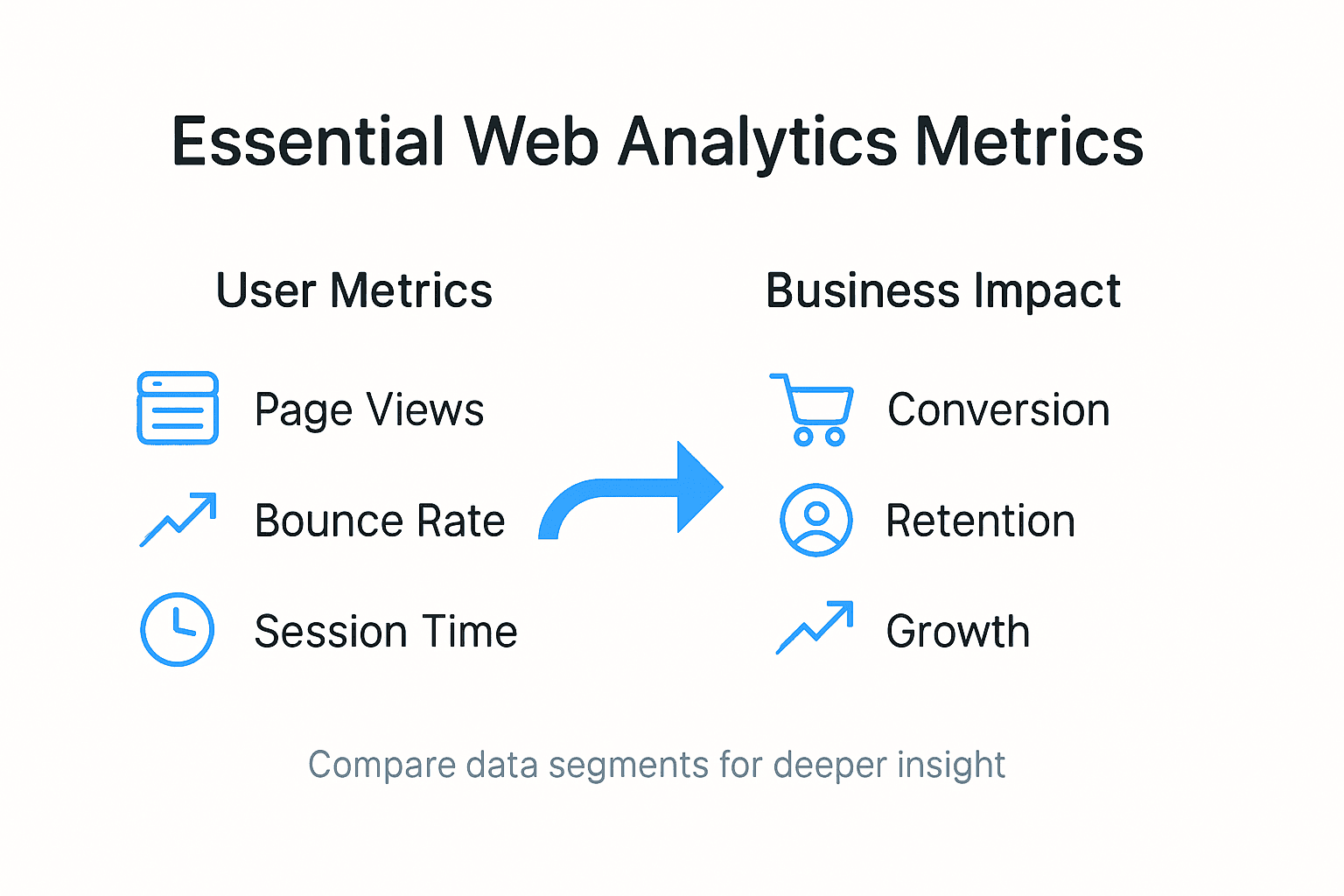
Here’s a summary of essential web analytics metrics and their business impact:
| Metric | What It Measures | Business Impact |
|---|---|---|
| Page Views | Number of pages seen | Gauges content interest |
| Bounce Rate | Single-page visits | Identifies engagement issues |
| Session Duration | Time spent per visit | Reveals content effectiveness |
| Conversion Rate | % completing desired actions | Tracks revenue opportunities |
| Behaviour Flow | User navigation paths | Informs site structure improvements |
Pro Tip - Analytics Insights: Always compare your web analytics data across different time periods and segments to identify meaningful trends and avoid drawing conclusions from isolated data points.
Main Types Of Web Analytics Solutions
Web analytics solutions span a diverse landscape of platforms designed to help businesses understand and optimise their digital performance. These solutions can be broadly categorised into three primary types: web-based analytics, mobile app analytics, and cross-platform tracking systems that provide comprehensive insights across multiple digital channels.
Traditional web-based analytics platforms like Google Analytics have long dominated the market, offering detailed insights into website visitor behaviour. However, modern web analytics vendors now provide increasingly sophisticated comparison tools that enable businesses to choose platforms matching their specific tracking and privacy requirements. These solutions differ significantly in their capabilities, ranging from basic traffic monitoring to advanced user journey mapping, conversion tracking, and real-time performance analysis.

The most advanced web analytics solutions now offer integrated features that go beyond simple metrics. They include behavioural analytics that track user interactions, cohort analysis to understand user retention, funnel visualisation to identify drop-off points, and predictive analytics that help forecast future user trends. Enterprise-grade platforms like Adobe Analytics and specialised solutions like Mixpanel provide granular segmentation, allowing businesses to dissect user behaviour across different demographics, device types, and engagement levels.
Below is a comparison of main types of web analytics solutions and their unique strengths:
| Solution Type | Key Focus | Ideal Use Case |
|---|---|---|
| Web-Based | Website traffic & actions | E-commerce and publishers |
| Mobile App | In-app user behaviour | Mobile-first businesses |
| Cross-Platform | Unified multi-channel view | Brands with web and app presence |
Pro Tip - Analytics Selection: Choose a web analytics solution that aligns with your specific business goals, considering factors like data privacy regulations, integration capabilities, and the depth of insights you require for strategic decision-making.
How Web Analytics Powers E-Commerce
E-commerce businesses rely on web analytics as a critical strategic tool that transforms raw digital interactions into actionable intelligence. By capturing and analysing user behaviour, these sophisticated systems provide unprecedented insights into customer journeys, enabling companies to make data-driven decisions that directly impact revenue and customer experience.
Advanced e-commerce management techniques reveal how web analytics can dramatically improve online retail performance. The technology allows businesses to track crucial metrics like shopping cart abandonment rates, conversion funnels, and user engagement patterns. This granular understanding helps organisations identify friction points in the customer experience, optimise product placement, and develop targeted strategies to increase sales and customer retention.
The most powerful applications of web analytics in e-commerce extend far beyond simple traffic tracking. Modern platforms enable businesses to create personalised customer experiences by segmenting users based on behavioural data, predicting purchase likelihood, and dynamically adjusting website content. Sophisticated analytics tools can help businesses understand complex user interactions, such as how different marketing channels contribute to conversions, which product recommendations drive the most sales, and how website design impacts user decision-making processes.
Pro Tip - Analytics Optimization: Regularly review and recalibrate your web analytics configuration to ensure you’re capturing the most relevant data points for your specific e-commerce goals and customer segments.
Legal Compliance And Data Security Risks
Web analytics platforms present complex legal and security challenges for organisations collecting and processing digital user data. Businesses must navigate an intricate landscape of global data protection regulations that demand rigorous standards for privacy, consent, and secure data management across different jurisdictions.
Global data governance frameworks reveal critical compliance requirements businesses must address when implementing web analytics. These include adherence to regulations like the General Data Protection Regulation (GDPR), California Consumer Privacy Act (CCPA), and local data protection laws that mandate transparent data collection practices, user consent mechanisms, and robust security protocols. Personal data protection has become a fundamental requirement, compelling businesses to implement sophisticated data anonymisation techniques and secure storage systems.
The risks associated with web analytics extend beyond regulatory compliance into broader cybersecurity domains. Organisations must develop comprehensive strategies to protect user data from potential breaches, implement encryption protocols, and establish clear data retention and deletion policies. This involves creating transparent privacy policies, obtaining explicit user consent, and maintaining comprehensive audit trails of data processing activities. Advanced analytics platforms now incorporate built-in compliance features that help businesses automatically align with evolving international data protection standards.
Pro Tip - Compliance Strategy: Conduct regular privacy impact assessments and stay updated on changing data protection regulations to proactively manage legal risks associated with web analytics data collection.
Common Pitfalls In Web Analytics Implementation
Web analytics implementation is a complex process fraught with potential errors that can significantly undermine the quality and reliability of digital insights. Businesses often approach analytics with good intentions but fall prey to systematic mistakes that compromise their data interpretation and strategic decision-making.
Common data analysis and modeling challenges reveal critical implementation mistakes that organisations frequently encounter. These include data contamination, improper tracking configuration, incomplete goal settings, and misaligned metric interpretations. Many businesses struggle with fundamental issues like incorrect event tracking, failing to filter out internal traffic, and not establishing clear conversion definitions, which can lead to dramatically skewed performance assessments.
The most significant pitfalls in web analytics stem from both technical and strategic shortcomings. Technical errors include incorrect tag implementations, not accounting for different device types, and neglecting cross-domain tracking. Strategic pitfalls involve over-relying on vanity metrics, failing to segment audience data effectively, and not connecting analytics insights to tangible business objectives. Successful web analytics requires a holistic approach that balances technical precision with strategic thinking, ensuring that data collection methods align closely with specific business goals and provide meaningful, actionable insights.
Pro Tip - Analytics Accuracy: Regularly conduct comprehensive analytics audits to identify and rectify tracking discrepancies, ensuring your data collection methods remain precise and aligned with your evolving business objectives.
Unlock Smarter E-Commerce Growth With Expert Web Solutions
Understanding the full power of web analytics is crucial to overcoming challenges like tracking user behaviour accurately and converting insights into real revenue growth. If you want to avoid pitfalls such as misconfigured tracking or data contamination while making data-driven decisions that improve bounce rates and conversion funnels, you need a partner who delivers tailored digital experiences grounded in analytics expertise.
At Cloud Fusion, we specialise in crafting custom websites that seamlessly integrate advanced analytics tools and user-focused design to ensure every digital interaction counts. Benefit from our deep knowledge in web development and strategic branding to enhance your e-commerce platform’s performance and deliver personalised user journeys. Start transforming your web presence today by getting a detailed Web Design and Development Quotation tailored to your specific business goals.
Take the informed step now Understand how expertly implemented analytics combined with scalable digital solutions from Cloud Fusion can unlock your full e-commerce potential. Visit our Web Design and Development Quotation page to begin your smarter digital journey.
Frequently Asked Questions
What are the key metrics used in web analytics for e-commerce?
Key metrics in web analytics for e-commerce include page views, bounce rates, session duration, conversion rates, and behaviour flow. These metrics help businesses understand user engagement, track revenue opportunities, and optimise website performance.
How can web analytics improve my online retail performance?
Web analytics improves online retail performance by providing insights into customer journeys, identifying friction points, and enabling personalised customer experiences. This data helps businesses optimise product placements and develop targeted strategies to increase sales and retention.
What are the different types of web analytics solutions available?
There are three main types of web analytics solutions: web-based analytics for website traffic and actions, mobile app analytics for in-app behaviour, and cross-platform tracking for unified insights across multiple digital channels. Each solution caters to specific tracking and analysis needs.
How do I ensure compliance with data protection regulations while using web analytics?
To ensure compliance with data protection regulations, businesses should implement transparent data collection practices, obtain explicit user consent, and use secure data management systems. Regular privacy impact assessments and staying updated on evolving regulations are also crucial.
Recommended