

Artificial Intelligence in Business – Driving Digital Growth
Artificial intelligence in business boosts operational efficiency, enables automated decisions, and transforms customer experience. Explore risks, costs, and compliance.
Start reading
More than eighty percent of global tech leaders expect Artificial Intelligence to reshape entire industries in the coming years. For south-african managers navigating digital transformation, understanding what defines AI in business is critical for unlocking operational efficiency. This guide breaks down how AI systems operate, demystifies major business applications, and covers key risks so you can make informed strategic decisions in a rapidly evolving market.
Table of Contents
- Defining Artificial Intelligence In Business
- Types Of AI Solutions For Enterprises
- Key Features And How AI Operates
- Major Applications Across Business Sectors
- Risks, Costs And Legal Compliance
- Avoiding Common AI Adoption Pitfalls
Key Takeaways
Point | Details |
|---|---|
Transformative Potential of AI | AI enables businesses to analyse data, predict outcomes, and optimise processes, offering substantial strategic advantages. |
Diverse AI Solutions | Enterprises can leverage various AI technologies tailored to address specific operational challenges and improve efficiency. |
Importance of Governance | Robust governance frameworks are essential for managing risks, ensuring ethical AI implementation, and maintaining regulatory compliance. |
Need for Continuous Learning | Successful AI adoption requires ongoing workforce training, data preparation, and adaptation to technological advancements. |
Defining Artificial Intelligence in Business
Artificial Intelligence (AI) represents a transformative technological paradigm where computer systems simulate human intelligence to perform complex tasks and make autonomous decisions. In business contexts, AI goes beyond basic computational processes, enabling organisations to analyse massive datasets, predict outcomes, and create intelligent solutions that drive strategic growth.
At its core, AI functions through sophisticated algorithms and machine learning models that can analyse complex operational environments with remarkable precision. These systems continuously learn from incoming data, adapting their decision-making frameworks to improve performance over time. Unlike traditional software, AI can recognise patterns, understand contextual nuances, and generate insights that human analysts might overlook.
Businesses leveraging AI can expect significant strategic advantages across multiple domains:
- Enhanced decision-making through predictive analytics
- Automated process optimization
- Personalised customer engagement strategies
- Intelligent risk management
- Real-time operational efficiency improvements
Pro Tip: Start small with AI implementation by identifying one specific business process where predictive insights could generate immediate value.
Types of AI Solutions for Enterprises
Enterprises are increasingly adopting diverse AI solutions that transform operational capabilities across multiple business domains. These sophisticated technologies enable organisations to streamline processes, enhance decision-making, and create more intelligent, responsive business models that adapt to complex market challenges.
One critical category of enterprise AI solutions includes intelligent automation technologies designed to optimise routine tasks and complex workflows. These solutions encompass several key technological approaches:
- Machine Learning Systems: Analyse historical data to predict future trends and outcomes
- Natural Language Processing Tools: Enable advanced communication and document management
- Predictive Analytics Platforms: Support strategic decision-making through data-driven insights
- Computer Vision Technologies: Provide advanced monitoring and infrastructure assessment capabilities
- Robotic Process Automation: Automate repetitive administrative and operational tasks
Enterprise AI solutions are not one-size-fits-all but are increasingly customised to address specific organisational challenges. From customer service chatbots to complex risk management algorithms, these technologies offer scalable intelligence that can dramatically improve operational efficiency and strategic responsiveness.

Pro Tip: Conduct a comprehensive audit of your current business processes to identify the most suitable AI solutions that align with your specific operational requirements and strategic objectives.
Key Features and How AI Operates
Artificial Intelligence functions through complex technological mechanisms that fundamentally transform data processing and decision-making capabilities. At its core, AI systems leverage sophisticated algorithms to analyse, interpret, and respond to intricate patterns within massive datasets, creating intelligent solutions that can adapt and learn autonomously.
The operational framework of AI involves systematic data processing mechanisms that encompass multiple critical stages:
- Data Ingestion: Collecting and aggregating relevant information from diverse sources
- Pattern Recognition: Identifying subtle correlations and trends within complex datasets
- Predictive Modelling: Generating insights and forecasting potential outcomes
- Continuous Learning: Adapting algorithms based on new information and feedback
- Autonomous Decision-Making: Generating intelligent responses without constant human intervention
Unlike traditional computing systems, AI technologies are characterised by their ability to learn, evolve, and make nuanced decisions that mimic human cognitive processes. These systems require robust governance frameworks, continuous monitoring, and strategic human oversight to ensure ethical and effective implementation across organisational environments.
Pro Tip: Develop a comprehensive AI governance strategy that balances technological innovation with human expertise and ethical considerations.
Major Applications Across Business Sectors
Artificial Intelligence is revolutionising business operations across multiple industries, offering transformative solutions that enhance efficiency, decision-making, and strategic capabilities. From healthcare to finance, AI technologies are creating unprecedented opportunities for organisations to reimagine their core functions and competitive strategies.
Businesses are implementing AI applications across diverse sectors with remarkable precision and impact:
- Healthcare: Advanced diagnostic support and predictive patient care
- Finance: Sophisticated fraud detection and risk management systems
- Manufacturing: Process automation and predictive maintenance
- Agriculture: Precision crop management and yield optimization
- Retail: Personalised customer experience and inventory forecasting
- Supply Chain: Real-time logistics optimization and demand prediction
Each sector leverages AI differently, but the underlying principle remains consistent: transforming complex data into actionable intelligence. These technological applications go beyond simple automation, creating intelligent systems that can learn, adapt, and generate strategic insights that were previously impossible to obtain.
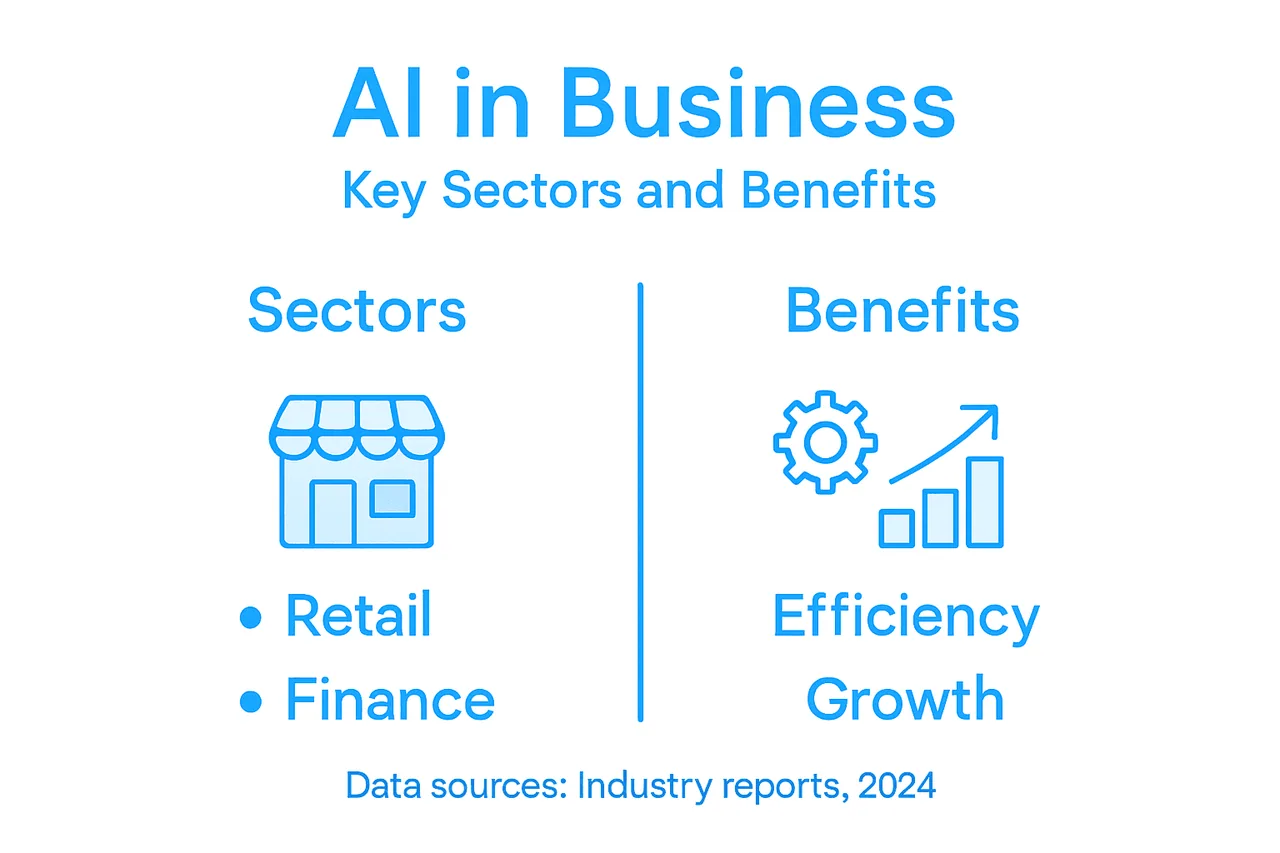
Here is a summary of how different business sectors strategically benefit from AI adoption:
Sector | Strategic Benefit | Typical AI Outcome |
|---|---|---|
Healthcare | Enhanced diagnostics | Improved patient outcomes |
Finance | Advanced fraud detection | Reduced financial risk |
Manufacturing | Predictive maintenance | Reduced downtime, cost savings |
Agriculture | Precision resource management | Higher yields, lower waste |
Retail | Personalised marketing | Increased sales and loyalty |
Supply Chain | Real-time logistics optimisation | Faster delivery, fewer delays |
Pro Tip: Conduct a comprehensive technology audit to identify specific AI applications most relevant to your organisation’s unique operational challenges and strategic objectives.
Risks, Costs and Legal Compliance
Artificial Intelligence introduces complex legal and financial challenges that businesses must carefully navigate to ensure responsible technological adoption. Understanding the multifaceted risks associated with AI implementation is crucial for organisations seeking to leverage these powerful technologies while maintaining ethical and regulatory standards.
Businesses face significant legal and regulatory challenges across multiple dimensions:
- Regulatory Compliance: Meeting diverse global AI governance requirements
- Data Protection: Ensuring privacy and security of sensitive information
- Algorithmic Bias: Mitigating discriminatory decision-making processes
- Transparency: Maintaining clear accountability for AI-driven decisions
- Liability: Managing potential legal responsibilities for AI system outcomes
- Ethical Considerations: Balancing technological innovation with human rights
The financial implications of AI adoption extend beyond direct implementation costs, encompassing potential legal penalties, reputational damage, and ongoing governance expenses. Organisations must develop comprehensive risk management strategies that proactively address these challenges, creating robust frameworks for responsible AI deployment.
The following table contrasts AI risks against suggested organisational safeguards for responsible deployment:
AI Risk | Potential Impact | Safeguard Strategy |
|---|---|---|
Algorithmic Bias | Discriminatory outcomes | Regular model audits |
Data Privacy Issues | Legal non-compliance | Strong data governance practices |
Lack of Transparency | Compromised accountability | Transparent algorithm reporting |
Ethical Concerns | Erosion of trust | Ethics oversight committees |
Liability | Financial/legal exposure | Clear responsibility frameworks |
Pro Tip: Invest in regular AI governance audits and develop a dynamic compliance strategy that can adapt to evolving regulatory landscapes.
Avoiding Common AI Adoption Pitfalls
Implementing artificial intelligence is not a straightforward technological upgrade but a complex organisational transformation that requires strategic planning and nuanced understanding. Many businesses stumble by approaching AI as a simple technical solution rather than a comprehensive strategic initiative that demands holistic organisational readiness.
Organisations frequently encounter challenges when implementing public sector AI solutions due to several recurring strategic mistakes:
- Treating AI as Static Technology: Viewing AI as a one-time implementation instead of an evolving ecosystem
- Neglecting Workforce Capability: Failing to invest in employee reskilling and AI literacy
- Insufficient Data Preparation: Deploying AI without robust, clean, and structured data infrastructure
- Overlooking Governance Frameworks: Implementing AI without clear ethical guidelines and accountability mechanisms
- Unrealistic Expectations: Anticipating immediate, transformative results without understanding AI’s gradual learning curve
- Ignoring Change Management: Underestimating the cultural shift required for successful AI integration
Successful AI adoption requires a multidimensional approach that balances technological innovation with human-centric strategies. Organisations must create adaptive frameworks that continuously evaluate AI performance, address emerging challenges, and align technological capabilities with broader business objectives.
Pro Tip: Develop a comprehensive AI roadmap that includes ongoing skills development, regular technology assessments, and clear performance benchmarks.
Unlock the Power of Artificial Intelligence for Your Business Growth
Artificial Intelligence offers groundbreaking ways to transform your business operations through intelligent automation, predictive analytics, and strategic insights. Yet as highlighted in “Artificial Intelligence in Business – Driving Digital Growth,” many enterprises face challenges such as data readiness, governance, and customised solution development. If your organisation is seeking to overcome these hurdles and leverage AI’s full potential, developing a tailored digital presence is essential.
At Cloudfusion, we specialise in creating scalable, custom web and mobile applications that integrate seamlessly with AI-driven processes. Whether you need dynamic websites, intuitive mobile apps, or cloud services designed to support continuous learning algorithms and data-driven strategies, our expert team delivers solutions aligned to your unique business objectives. Don’t let complex AI transformation slow your progress. Explore how a bespoke digital solution can accelerate operational efficiency and customer engagement today by requesting a web design and development quotation.
Take control of your digital future now by partnering with a technology provider who understands the importance of AI governance, ethical frameworks and ongoing innovation. Visit Cloudfusion, and take the first step towards embedding intelligent, adaptive technology into your business systems.
Frequently Asked Questions
What is Artificial Intelligence (AI) in business?
Artificial Intelligence in business refers to technologies that simulate human intelligence to perform tasks, analyze data, and make decisions autonomously, driving strategic growth and operational efficiency.
How can AI enhance decision-making in organisations?
AI enhances decision-making through predictive analytics, allowing businesses to analyse data trends and forecast outcomes, which leads to informed strategies and improved operational responses.
What are the main types of AI solutions for businesses?
The main types of AI solutions include Machine Learning Systems, Natural Language Processing Tools, Predictive Analytics Platforms, Computer Vision Technologies, and Robotic Process Automation, all designed to optimise various business processes.
What are the risks associated with adopting AI in business?
The risks of AI adoption include regulatory compliance issues, data protection concerns, algorithmic bias, lack of transparency, potential liability, and various ethical considerations that organisations must manage responsibly.