

Choosing a digital innovation company in 2026
Discover how to choose a digital innovation company in 2026. Unlock new value with the right partner to stay competitive and drive growth.
Start reading
TL;DR:
- Digital innovation involves creating new products, services, or models that drive competitive advantage beyond simple system upgrades. It emphasizes designing entirely new capabilities using technology, rather than merely optimizing existing operations, which is the focus of digital transformation. Successful partnerships require strategic alignment, strong governance, technical depth, and continuous discipline, especially in managing AI trust and fostering organizational digital literacy.
Most business leaders instinctively know they need to do something with digital technology, but the term “digital innovation company” often gets conflated with IT support, software vendors, or basic website builders. The distinction matters enormously. A genuine digital innovation company does not simply upgrade your existing systems. It helps you create new business value through novel products, processes, and models that competitors cannot easily replicate. For South African businesses navigating an increasingly competitive global market, understanding this distinction is the difference between staying relevant and falling behind.
Table of Contents
- Key takeaways
- What a digital innovation company actually does
- Why digital innovation is a boardroom priority in 2026
- Real-world examples of digital innovation at work
- How to choose the right digital innovation partner
- My perspective on what businesses consistently get wrong
- How Cloudfusion can help your business innovate
- FAQ
Key takeaways
| Point | Details |
|---|---|
| Innovation vs. transformation | Digital innovation creates new value; digital transformation optimises what already exists. Confusing the two leads to misaligned investments. |
| CEO priority signal | 79% of CEOs now rank digital transformation among their top three strategic priorities through 2028, signalling urgency. |
| AI trust balance matters | Over-trusting AI reduces human oversight and weakens innovation outcomes. Balanced trust combined with intellectual capital produces better results. |
| Governance drives results | Setting clear governance and standards proactively, rather than reacting to risk, allows innovation programmes to move faster and more confidently. |
| Evaluate partners carefully | Assess a digital innovation partner on strategic alignment, governance maturity, and their track record of taking ideas from concept to live implementation. |
What a digital innovation company actually does
Here is something worth clarifying upfront: digital innovation vs transformation are not interchangeable, even though the two concepts are closely related. Digital transformation typically refers to optimising and digitising existing operations. Digital innovation goes further. It involves creating entirely new products, services, or business models using technology as the vehicle for value creation.
Many organisations mistake optimisation for innovation, and this misunderstanding shapes how they select technology partners. They end up hiring IT vendors when they actually need strategic innovation partners.
A genuine digital innovation company typically spans several capability areas:
- Strategic consulting: Mapping the link between technology investments and measurable business outcomes
- Custom software and application development: Building products tailored to your specific market needs rather than adapting generic off-the-shelf tools
- Cloud-native architecture: Designing systems that scale without the constraints of legacy infrastructure
- AI and automation integration: Embedding machine learning and process automation into core workflows to reduce cost and improve speed
- Digital marketing and brand positioning: Ensuring that new digital products reach the right audiences effectively
- Data and analytics platforms: Turning operational data into decision-making intelligence
What separates a true digital innovation company from a standard digital transformation services provider is the emphasis on new value creation. You are not just making existing processes faster. You are building capabilities your business did not previously have.
Why digital innovation is a boardroom priority in 2026
The numbers are difficult to ignore. 79% of CEOs prioritise digital transformation as a top-three strategic concern through 2028, according to a 2025 Deloitte report. That figure reflects a fundamental shift in how executives view technology: not as a back-office function, but as a core driver of competitive advantage and operational efficiency.
The South African business context adds further urgency. With energy constraints, skills shortages, and intensifying competition from global digital-first competitors, local businesses need to be agile in ways that traditional IT investments simply cannot support. Digital innovation creates the capacity to respond faster, serve customers better, and reduce operational drag simultaneously.

Artificial intelligence sits at the centre of this shift, but it demands careful handling. Research published in Nature confirms that trust in AI follows an inverted U-shape: too little trust stifles adoption, but over-trust leads to cognitive bias and reduced human oversight, ultimately weakening innovation outcomes. The businesses that get the most from AI are those that treat it as a tool that augments human judgement rather than replaces it.
Pro Tip: Before selecting any digital innovation partner, ask them directly how they balance AI automation with human oversight in client projects. Their answer will tell you a great deal about their maturity and approach.
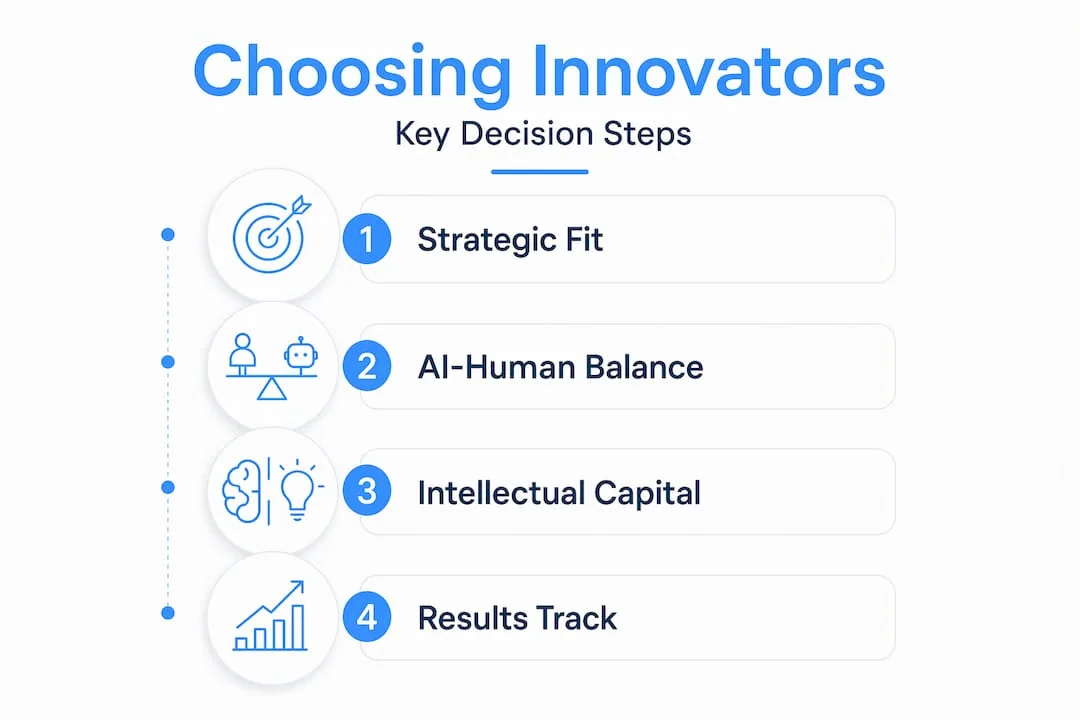
This balance also connects to the role of intellectual capital in managing AI risk. Businesses with strong internal digital literacy are better positioned to evaluate AI outputs critically and maintain the oversight necessary for responsible innovation. Investing in your team’s digital skills is not optional. It is a prerequisite for getting real value from any innovative tech solutions you adopt.
Real-world examples of digital innovation at work
The most instructive case studies in digital innovation come from sectors where speed and precision directly affect outcomes. Medtech provides a compelling example. Digital Anatomics, a cloud-native platform transforming spine surgery, demonstrates what is possible when AI is applied with discipline. Their system improves surgical accuracy by 16%, reduces radiation exposure by 75%, and saves an average of 37 minutes per surgical procedure. These are not marginal improvements. They represent a fundamental change in how surgical teams operate.
The efficiency gains in production are equally significant. Personalized surgical guides that previously took 15 to 30 days to produce are now delivered within 48 to 72 hours through AI-automated radiological analysis. That kind of cycle time reduction does not happen through incremental optimization. It requires a purpose-built digital innovation architecture.
At the infrastructure level, the Span and Nvidia collaboration illustrates a different kind of disruption. Their approach uses smart home electrical panels as distributed compute nodes, effectively creating AI data centres from existing residential infrastructure. A network of 50,000 such nodes could represent $50 billion in infrastructure value while bypassing the capital expenditure of traditional data centres entirely. This is span digital innovation in its most disruptive form: using underutilised assets in a new configuration to unlock economic value that did not previously exist.
| Sector | Innovation applied | Key outcome |
|---|---|---|
| Medtech (Digital Anatomics) | AI-automated surgical guide production | Production time reduced from weeks to 48 hours |
| Energy/Infrastructure (Span x Nvidia) | Distributed home compute nodes for AI workloads | $50 billion infrastructure value from existing assets |
| General business | Cloud-native application development | Scalable digital products without legacy constraints |
These examples share a common thread: the gains come not from automating existing workflows but from redesigning the process entirely around what digital technology makes possible.
Pro Tip: When evaluating digital innovation case studies from potential partners, look for cycle time reductions and new capability creation, not just cost savings. Cost savings are a by-product of genuine innovation, not the goal.
How to choose the right digital innovation partner
Selecting the right partner requires more rigour than most businesses apply. The market includes genuine technology innovation firms as well as vendors who use the language of innovation to sell commodity services. Here is a practical framework for making a sound decision.
-
Assess strategic alignment first. A credible digital strategy agency will spend time understanding your business model, competitive position, and growth goals before proposing any technology solution. If the conversation starts with tools rather than business problems, treat that as a warning sign.
-
Examine their innovation funnel discipline. Internal innovation programmes see only about 10% of ideas progress to implementation, as evidenced by Orange Jordan’s structured innovation programme. A mature partner will have a clear, documented methodology for validating ideas before investing significant resources. Ask them how they decide which projects to kill.
-
Evaluate governance maturity. The World Economic Forum has made a clear case that proactive governance standards produce better innovation outcomes than reactive risk management. Ask potential partners how they approach data privacy, AI accountability, and regulatory compliance from the start of a project, not as an afterthought.
-
Check their delivery track record. Proposals are easy to produce. Completed projects are what matter. Review portfolios carefully, speak to reference clients, and ask specifically about projects where things did not go to plan and how the team responded.
-
Confirm technical depth across the full stack. A digital innovation company that only covers one layer of technology, such as front-end development or digital marketing, cannot deliver integrated solutions. Look for partners with proven capability across software development, cloud infrastructure, and digital strategy.
For a deeper grounding in how these principles apply in practice, the digital transformation strategies guide covers implementation frameworks in detail, and understanding digital adoption strategies is equally relevant when you are preparing your organisation to actually use what gets built.
Pro Tip: Request a structured discovery workshop rather than a generic proposal from any shortlisted partner. The quality of their questions during that process reveals far more about their capability than a polished slide deck.
My perspective on what businesses consistently get wrong
I have observed a recurring pattern across client engagements at Cloudfusion: businesses invest in the right technology and still fail to realise the gains they expected. In my experience, the root cause is almost always strategic misalignment, not technical failure.
What I have found is that many leaders treat the selection of a digital innovation company as primarily a procurement decision. They compare quotes, evaluate feature lists, and choose the option that appears most cost-effective on paper. The businesses that succeed do the opposite. They treat the partner selection as a strategic decision and invest time in establishing shared understanding of goals before a single line of code is written.
The other mistake I see repeatedly is what I would call innovation theatre: organisations that launch digital initiatives with significant fanfare but without the governance structure to sustain them. The World Economic Forum’s position that early-set governance standards produce better outcomes than reactive intervention aligns exactly with what I have seen on the ground. When governance is an afterthought, projects lose momentum and die quietly.
The businesses that extract genuine competitive advantage from digital innovation share one characteristic: they treat it as an ongoing discipline, not a once-off project. That shift in mindset, from project to capability, is where the real value lives.
— Anton
How Cloudfusion can help your business innovate
Cloudfusion is a full-service digital innovation company based in South Africa, with a track record of delivering custom web development and mobile application development for businesses that need more than a generic off-the-shelf solution. From strategy through to deployment, the team brings both technical depth and local market knowledge to every project. Whether you are building your first digital product, replacing a legacy system, or expanding into new digital channels, Cloudfusion works with you to align technology investments with your actual business goals. Give us a shout and let’s talk about what digital innovation could mean for your organisation specifically.
FAQ
What does a digital innovation company do?
A digital innovation company helps businesses create new products, services, or business models using technology, going beyond optimising existing processes. The focus is on generating new competitive value rather than simply digitising what already exists.
How is digital innovation different from digital transformation?
Digital transformation refers to improving and digitising existing operations. Digital innovation involves creating entirely new capabilities or business models that did not previously exist, using technology as the primary vehicle.
Why do so few digital innovation projects succeed?
Evidence from structured innovation programmes shows that only 10% of ideas typically progress to implementation. The most common failure points are weak governance, poor strategic alignment, and insufficient discipline in validating ideas before committing resources.
How should I evaluate a digital innovation partner?
Assess partners on strategic alignment, governance maturity, delivery track record, and technical capability across the full stack. Ask them specifically how they manage the transition from idea to implementation and how they handle projects that encounter problems.
Is AI central to digital innovation in 2026?
AI is a critical enabler, but the research confirms that balanced trust in AI produces better outcomes than full reliance on automated systems. The most effective digital innovation programmes combine AI capability with strong human oversight and solid internal digital literacy.