

Future of Mobile Commerce – Key Trends for South African Businesses
Future of mobile commerce: discover innovations, security trends, and opportunities for South African businesses. Explore omnichannel, AI, and mobile payments.
Start reading
Every day, more South African shoppers use smartphones to buy everything from groceries to gadgets. In fact, mobile commerce now accounts for over 60 percent of digital purchases in South Africa. As technology changes how we shop and pay, companies must rethink their approach to reach consumers on the go. This guide breaks down what mobile commerce means today and why understanding its trends, security needs, and business opportunities is essential for anyone seeking success in the digital economy.
Table of Contents
- Defining Mobile Commerce In A Digital Age
- Emerging Technologies Transforming M-Commerce
- Omnichannel Customer Experiences And Integration
- Data Protection, Security And Regulatory Requirements
- Business Opportunities And Market Entry Strategies
Key Takeaways
| Point | Details |
|---|---|
| Mobile Commerce Evolution | Mobile commerce is transforming business-consumer interactions, necessitating robust mobile strategies focused on user experience and security. |
| Emerging Technologies | Technologies like AI, AR, and blockchain are reshaping m-commerce, creating personalised and secure shopping experiences. |
| Omnichannel Integration | Effective omnichannel strategies are vital for delivering a seamless customer journey across various digital and physical platforms. |
| Data Protection and Compliance | Strong data protection measures and regulatory compliance are essential for building trust in the mobile commerce landscape. |
Defining Mobile Commerce in a Digital Age
Mobile commerce represents a fundamental transformation in how businesses and consumers interact in the digital economy. At its core, mobile commerce or m-commerce describes the process of conducting financial transactions and business activities directly through mobile devices like smartphones, tablets, and portable digital platforms. These technologies enable consumers to purchase products, process payments, and engage in comprehensive commercial interactions without traditional physical or desktop computer limitations.
The evolution of mobile commerce goes beyond simple online shopping. Mobile technologies are reshaping consumer behaviour by providing unprecedented convenience, accessibility, and personalised shopping experiences. Modern consumers expect seamless digital interactions that allow them to research, compare, and purchase products from anywhere at any time. This shift means businesses must develop robust mobile strategies that prioritise user experience, security, and intuitive design.
Key characteristics of modern mobile commerce include:
- Instant digital payments through mobile wallets
- Location-based personalised marketing
- One-click purchasing capabilities
- Real-time product information and reviews
- Integrated social media purchasing options
Understanding mobile commerce requires recognising it as more than a technological trend - it represents a fundamental restructuring of commercial interactions in the digital age. South African businesses that optimise their mobile interfaces and embrace these technological shifts will be best positioned to meet emerging consumer expectations and drive digital growth.
Emerging Technologies Transforming M-Commerce
The landscape of mobile commerce is rapidly evolving, driven by transformative technologies that are fundamentally reshaping how businesses and consumers interact digitally. Emerging technologies are creating unprecedented opportunities for more intelligent, personalised, and seamless commercial experiences across mobile platforms.

Artificial intelligence and machine learning are at the forefront of this technological revolution, enabling advanced personalisation and predictive capabilities in mobile commerce. These technologies can analyse consumer behaviour patterns, predict purchasing preferences, and create highly targeted marketing strategies that adapt in real-time. South African businesses can leverage these insights to develop more responsive and intuitive mobile commerce solutions that anticipate customer needs before they even articulate them.
Key emerging technologies transforming m-commerce include:
- Artificial Intelligence (AI) for personalised recommendations
- Augmented Reality (AR) for immersive shopping experiences
- Blockchain for secure, transparent transactions
- Internet of Things (IoT) for interconnected shopping ecosystems
- Voice Commerce powered by advanced speech recognition
The convergence of mobile technologies is creating a more dynamic and interactive commercial landscape. Businesses that rapidly adopt and integrate these emerging technologies will gain significant competitive advantages, enabling them to offer more sophisticated, secure, and engaging mobile commerce experiences that meet the evolving expectations of digital consumers.
Omnichannel Customer Experiences and Integration
Omnichannel integration represents a transformative approach to customer engagement, creating seamless experiences across multiple digital and physical touchpoints. Modern businesses must develop strategies that allow customers to interact effortlessly whether they’re browsing on a mobile app, website, social media platform, or in a physical store.
Enterprise app integration has become critical in delivering consistent customer experiences. By implementing sophisticated backend systems that communicate across different platforms, businesses can ensure that customer data, preferences, and interaction histories are synchronised in real-time. This approach enables personalised marketing, targeted recommendations, and a unified customer journey that feels intuitive and responsive.
Key components of effective omnichannel integration include:
- Unified customer profile management
- Seamless data synchronisation across platforms
- Consistent branding and messaging
- Intelligent cross-channel communication
- Personalised customer interaction tracking
The future of mobile commerce demands more than just technical integration. It requires a holistic approach that prioritises customer experience, leveraging technologies that create meaningful, contextual interactions across every possible engagement point. South African businesses that master this approach will differentiate themselves in an increasingly competitive digital marketplace.
Data Protection, Security and Regulatory Requirements
Data protection and security have become paramount concerns in the rapidly evolving mobile commerce ecosystem. Regulatory compliance is no longer an optional consideration but a critical requirement for businesses operating in the digital marketplace. South African organisations must navigate a complex landscape of legal obligations that protect consumer data while maintaining robust technological infrastructure.
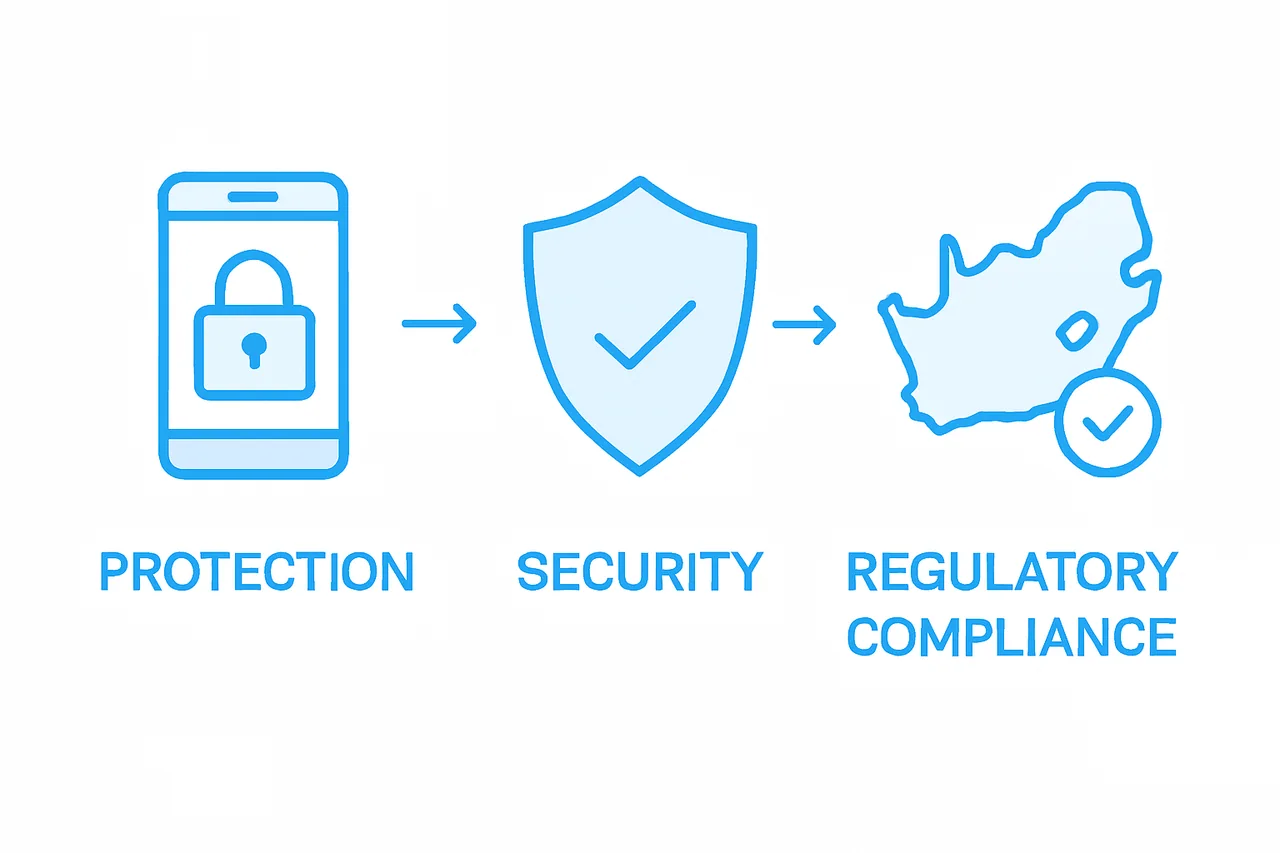
Online business security demands a comprehensive approach that integrates multiple layers of protection. Emerging technologies like blockchain and advanced encryption are transforming how businesses manage and secure sensitive information. These technologies provide innovative solutions for creating transparent, immutable transaction records while ensuring individual privacy and meeting stringent regulatory standards.
Key data protection and security considerations include:
- Comprehensive data encryption protocols
- Rigorous user consent and permission management
- Regular security vulnerability assessments
- Transparent data handling practices
- Compliance with local and international privacy regulations
The future of mobile commerce hinges on building trust through demonstrable commitment to data protection. South African businesses must proactively invest in sophisticated security infrastructure, implement comprehensive privacy policies, and maintain ongoing compliance with evolving regulatory frameworks. This approach not only mitigates legal risks but also builds crucial consumer confidence in digital transaction environments.
Business Opportunities and Market Entry Strategies
The mobile commerce landscape in South Africa presents an exciting frontier for innovative businesses seeking to capitalise on digital transformation. Market entry strategies have become increasingly sophisticated, requiring a nuanced understanding of technological trends, consumer behaviours, and strategic positioning in a rapidly evolving digital ecosystem.
Digital transformation strategies are crucial for businesses looking to successfully penetrate the mobile commerce market. Emerging opportunities exist across multiple sectors, from financial services and retail to transportation and personal services. Successful market entrants will leverage technologies that create seamless, personalised user experiences while addressing specific local market needs and challenges.
Key market entry strategies for mobile commerce include:
- Developing mobile-first solutions tailored to local consumer preferences
- Creating flexible, scalable technological infrastructure
- Implementing localised payment and authentication mechanisms
- Building strategic partnerships with existing digital platforms
- Investing in user experience and intuitive design
The future of mobile commerce in South Africa demands agility, innovation, and a deep understanding of technological trends. Businesses that can rapidly adapt, understand local market nuances, and create value through intelligent digital solutions will be best positioned to capture emerging opportunities in this dynamic marketplace.
Empower Your South African Business with Future-Ready Mobile Commerce Solutions
Mobile commerce is rapidly reshaping how businesses connect with customers through instant payments, personalised experiences and seamless omnichannel integration. If you want to overcome challenges like data protection, regulatory compliance and the need for smart, scalable digital platforms your business cannot wait to adapt. At Cloud Fusion, we understand that adopting emerging technologies like AI, blockchain and mobile-first design is vital to thriving in this competitive market.
Explore how our tailored web design and development quotation services empower South African companies to build secure mobile commerce platforms that captivate users and boost engagement. With expertise in intuitive user experience, cloud-based hosting and seamless app development we help you translate evolving mobile commerce trends into actionable business growth. Don’t let your competitors take the lead. Visit Cloud Fusion and start transforming your mobile commerce approach today.
Frequently Asked Questions
What is mobile commerce?
Mobile commerce, or m-commerce, refers to the business transactions conducted directly through mobile devices, allowing consumers to purchase products and engage in transactions without needing traditional desktops.
How are emerging technologies changing mobile commerce?
Emerging technologies like artificial intelligence, augmented reality, and blockchain are enhancing personalisation, improving customer experiences, and ensuring secure transactions in mobile commerce.
What are the key characteristics of modern mobile commerce?
Key characteristics include instant digital payments, location-based marketing, one-click purchasing, real-time product information, and integrated social media purchasing options.
Why is data protection important in mobile commerce?
Data protection is crucial in mobile commerce to safeguard consumer data, ensure compliance with regulations, and build trust in digital transaction environments, ultimately protecting businesses from legal risks.