

Static vs Dynamic Websites – Impact on Business Success
Static vs dynamic websites explained—core differences, benefits, risks, costs, and use cases for business digital growth. Authoritative, up-to-date insights.
Start reading
Most businesses overlook how their website’s architecture shapes their success, yet nearly 90 percent of online experiences start on sites built with either static or dynamic frameworks. For a South-African entrepreneur, choosing between these two options is crucial. The right choice affects everything from site speed and security to digital growth. Unpacking the unique strengths and challenges of each approach helps you make smarter decisions for your brand’s future.
Table of Contents
- Defining Static and Dynamic Websites Clearly
- Key Technical Differences Explained
- Use Cases for Static vs Dynamic Sites
- Performance, Scalability, and Security Factors
- Cost Considerations and Maintenance Needs
- Choosing the Right Option for Your Business
Key Takeaways
Point | Details |
|---|---|
Static Websites | Offer rapid load times and require minimal hosting, making them ideal for businesses with stable content. |
Dynamic Websites | Provide personalised experiences and real-time interactions but demand more robust infrastructure and higher maintenance costs. |
Scalability and Security | Static sites present fewer vulnerabilities, while dynamic sites necessitate comprehensive security measures to protect user data. |
Cost Considerations | Static websites incur lower initial development costs, whereas dynamic websites require ongoing investment in technical support and maintenance. |
Defining Static and Dynamic Websites Clearly
Websites fundamentally come in two primary architectural designs: static and dynamic websites, each offering distinct capabilities for businesses seeking online presence. At their core, these web design approaches determine how content is generated, served, and experienced by users. While they might seem similar at first glance, their underlying technologies create significant differences in performance, flexibility, and user interaction.
A static website consists of prebuilt HTML, CSS, and JavaScript files that remain consistent for every visitor. These websites deliver identical content directly from the server without any real-time processing. Imagine them like digital brochures: fixed, straightforward, and presenting information that rarely changes. They excel in scenarios requiring simple, unchanging content such as company information pages, portfolios, or basic product showcases. The primary advantages include lightning-fast load times, minimal hosting requirements, and enhanced security since there are fewer points of potential vulnerability.
Conversely, dynamic websites generate content in real-time through server-side scripting languages like PHP or Node.js. These websites interact with databases, allowing for personalised user experiences, content updates, and interactive features. Think of dynamic websites as living, breathing digital platforms that can adapt to individual user preferences, display personalised recommendations, and enable complex functionalities like user accounts, e-commerce transactions, and real-time data processing. While they offer tremendous flexibility, they typically require more sophisticated hosting infrastructure and can have slightly slower load times compared to static sites.
Understanding the distinctions between static and dynamic websites helps businesses make strategic decisions about their digital presence. The difference between website and web app further illustrates how technological choices impact online performance and user engagement. Your specific business requirements, target audience expectations, and long-term digital strategy will ultimately guide which approach best serves your organisational goals.
Key Technical Differences Explained
The technical architecture of static and dynamic websites represents a fundamental divergence in web development strategies, with profound implications for performance, functionality, and user experience. Computer network technologies reveal critical distinctions in how these web platforms generate, store, and serve content to users.
In a static website, content remains fixed and unchanging. Each webpage is a pre-constructed HTML file stored precisely as it will be displayed, meaning every visitor receives identical information. The server’s role is straightforward: retrieve and transmit these pre-existing files without additional processing. This approach yields remarkable advantages such as incredibly rapid load times, minimal server resource consumption, and enhanced security since there are no complex server-side interactions. Static sites excel for businesses requiring stable, infrequently updated content like corporate brochures, portfolios, or informational landing pages.
Conversely, dynamic websites operate through complex server-side scripting that generates content in real-time. Dynamic web pages are constructed through sophisticated interactions between web servers, databases, and scripting languages like PHP, Python, or Node.js. Each user request triggers a sequence of computational processes: retrieving data from databases, processing user-specific parameters, and dynamically assembling personalised webpage content. This approach enables rich, interactive experiences such as user account systems, real-time content updates, e-commerce platforms, and personalised recommendation engines.

The technical differences extend beyond mere content generation. Static websites typically leverage lightweight hosting solutions and content delivery networks, resulting in superior global performance and lower infrastructure costs. Dynamic websites require more robust server infrastructure, database management systems, and potentially more complex security protocols. Understanding these nuanced technical distinctions empowers businesses to select web architectures that align precisely with their operational requirements, target audience expectations, and long-term digital strategy.
Use Cases for Static vs Dynamic Sites
Selecting the appropriate website architecture is a strategic decision that directly impacts a business’s online effectiveness. Website development strategies reveal distinct scenarios where static or dynamic sites prove most advantageous, depending on specific organisational requirements and digital objectives.
Static websites are ideally suited for businesses with relatively stable content and predictable user interactions. These include professional portfolios, corporate information sites, event landing pages, and small business brochure-style websites. Typical scenarios favouring static sites involve organisations that require:
- Minimal content updates
- Simple informational presentations
- Rapid page load speeds
- Lower hosting and maintenance costs
- Basic security requirements
Conversely, dynamic websites become essential for businesses demanding sophisticated, interactive online experiences. These platforms excel in scenarios requiring complex user interactions, real-time data processing, and personalised content delivery. Ideal use cases include:
- E-commerce platforms with product catalogues
- Social media networks
- Banking and financial service websites
- Customer relationship management portals
- Learning management systems
- Booking and reservation platforms
- Websites with user authentication and personalised dashboards
The difference between website and web app further illustrates the nuanced requirements of modern digital platforms. Ultimately, the choice between static and dynamic websites hinges on understanding your specific business model, target audience expectations, content complexity, and long-term digital strategy. Businesses must carefully evaluate their unique operational needs to select the most appropriate web architecture that balances performance, functionality, and user experience.
Performance, Scalability, and Security Factors
Business digital strategies demand rigorous evaluation of website architectures across critical technological dimensions. Web design research reveals nuanced trade-offs between static and dynamic websites that profoundly impact organisational digital performance.
Performance Metrics represent the most immediate distinguishing factor between website architectures. Static websites inherently deliver superior loading speeds due to their simplified structure. Each webpage exists as a pre-constructed HTML file, eliminating complex server-side processing. This translates to microsecond response times, reduced bandwidth consumption, and exceptional user experience. Businesses with content that rarely changes benefit tremendously from this approach, enjoying lightning-fast webpage rendering that can significantly improve search engine rankings and user engagement.
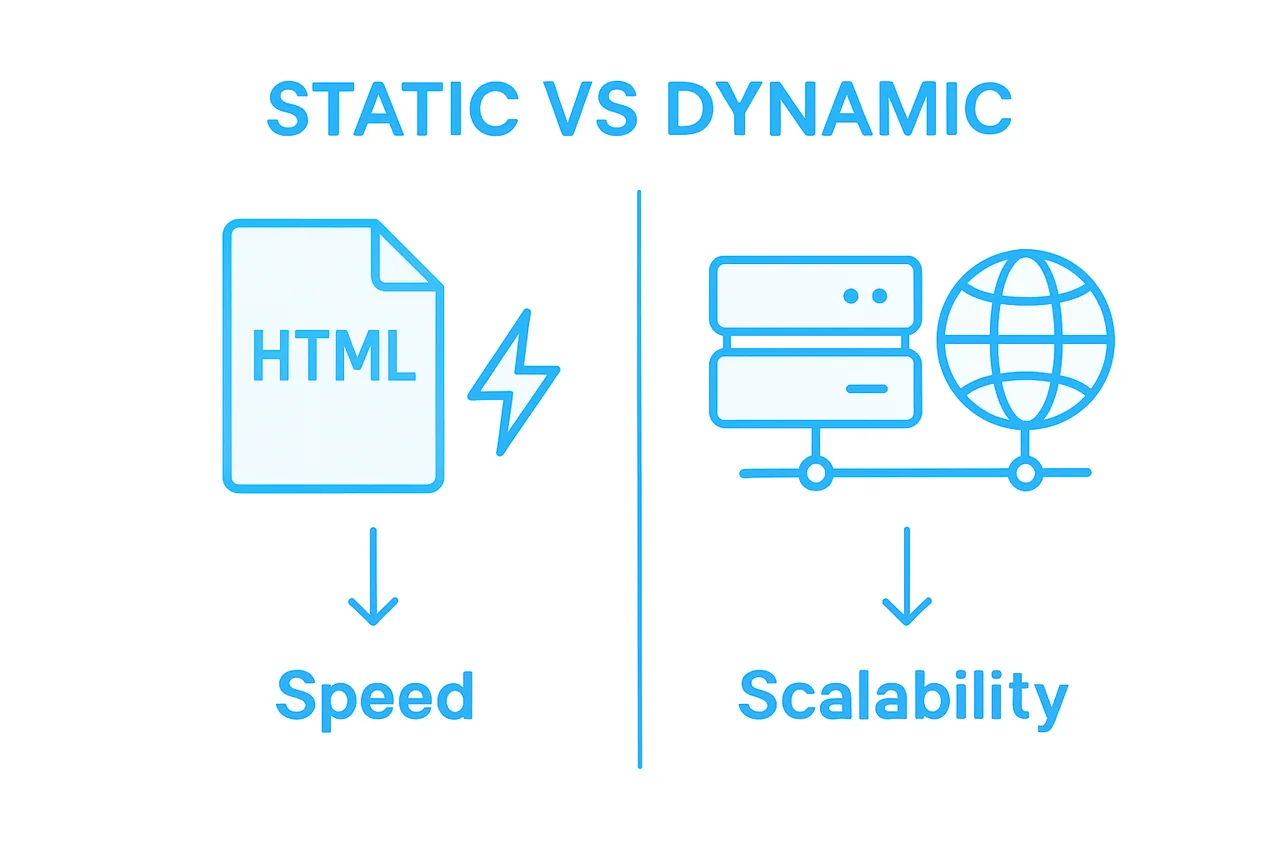
Scalability and security considerations introduce more complex evaluation criteria. Dynamic websites, while offering remarkable interactive capabilities, require more sophisticated infrastructure to manage increasing computational demands. They necessitate robust database management, advanced caching mechanisms, and sophisticated server configurations to maintain performance under escalating user loads. Scalable software solutions become critical for businesses anticipating growth and requiring flexible digital platforms that can adapt to changing operational requirements.
Security landscape varies dramatically between static and dynamic website architectures. Static websites inherently present fewer vulnerability points since they lack complex server-side interactions and database connections. Dynamic websites, conversely, must implement multilayered security protocols to protect against potential database breaches, SQL injection attacks, and user authentication vulnerabilities. Businesses must carefully assess their specific security requirements, understanding that increased functionality often correlates with elevated cybersecurity complexity. Strategic website selection demands comprehensive evaluation of performance, scalability, and security factors to ensure alignment with organisational digital transformation objectives.
Cost Considerations and Maintenance Needs
Business digital strategies demand comprehensive financial and operational evaluations when selecting website architectures. Website performance monitoring reveals critical insights into the long-term economic implications of static versus dynamic website implementations.
Initial Development Costs represent the first significant financial consideration. Static websites typically require lower upfront investments due to their simplified architectural requirements. Development teams can construct these sites using standard HTML, CSS, and minimal JavaScript, reducing both design complexity and labour expenses. Small businesses and startups with constrained budgets often find static websites an economically attractive initial digital presence strategy. The streamlined development process translates to:
- Reduced design complexity
- Lower initial development expenses
- Faster time-to-market
- Minimal hosting infrastructure requirements
- Predictable maintenance trajectories
Long-term Maintenance Expenses introduce more nuanced financial dynamics. Dynamic websites demand ongoing technical support, regular security updates, and sophisticated hosting environments. These requirements necessitate continued investment in skilled development resources, database management, and advanced server configurations. Businesses must budget for:
- Regular security patch implementations
- Database management and optimization
- Continuous performance monitoring
- Potential scaling infrastructure investments
- Advanced cybersecurity protocols
The performance optimization strategies underscore the importance of strategic technological decision-making. While dynamic websites offer remarkable interactive capabilities, they simultaneously introduce escalating operational costs. Organisations must conduct meticulous cost-benefit analyses, evaluating not just immediate financial implications but long-term digital infrastructure sustainability. Ultimately, the most prudent approach involves aligning website architecture precisely with specific business objectives, budgetary constraints, and anticipated digital transformation trajectories.
Choosing the Right Option for Your Business
Strategic digital transformation demands meticulous evaluation of website architectures that align precisely with organisational objectives. Website development strategies reveal critical decision-making frameworks for businesses navigating technological infrastructure choices.
Strategic Assessment Criteria involve comprehensive analysis across multiple dimensions. Businesses must conduct a thorough diagnostic of their specific digital requirements, considering factors such as:
- Current content update frequency
- Required user interaction levels
- Budget constraints
- Anticipated growth trajectories
- Technical skill availability within the organisation
- Complexity of desired digital experiences
Small businesses and startups with relatively static information requirements typically benefit from static website architectures. These platforms offer predictable performance, minimal maintenance overhead, and cost-effective deployment. Organisations with straightforward digital presence needs - such as professional portfolios, informational landing pages, or basic corporate websites - find static sites particularly advantageous.
Hosting provider selection becomes pivotal in translating architectural choices into tangible digital performance. Dynamic websites demand sophisticated hosting infrastructure capable of managing complex computational requirements, database interactions, and scalable user experiences. Enterprises with evolving digital strategies, e-commerce platforms, or those requiring personalised user interactions will invariably gravitate towards dynamic website architectures. The ultimate decision transcends technological capabilities, representing a strategic alignment between digital infrastructure and broader organisational vision.
Unlock Your Business Potential with the Right Website Solution
Choosing between a static and dynamic website is more than just a technical decision — it is a vital step that directly affects your business success. If you are facing challenges with performance, scalability, or crafting a user experience that truly engages your audience, understanding these differences can help you avoid costly mistakes. The article highlights critical pain points including maintenance costs, security concerns, and content flexibility. These factors are essential when aiming for a website that not only looks professional but also drives growth and meets your specific business goals.
At CloudFusion, we specialise in delivering custom web development solutions tailored precisely to your needs. Whether you require a fast, secure static website for your business profile or a scalable dynamic platform to support e-commerce and interactive features, our expert team ensures your digital presence is both effective and future-proof. Discover how our Web Design and Development Quotation service can help you make the right choice now with clear insights and transparent pricing. Don’t let uncertainty hold back your online potential. Visit CloudFusion’s main website to explore our full range of solutions and start transforming your digital strategy today.
Frequently Asked Questions
What is the primary difference between static and dynamic websites?
Static websites serve pre-built content that remains unchanged for every visitor, while dynamic websites generate content in real time based on user interactions and database queries.
When should my business choose a static website over a dynamic website?
Choose a static website when your business requires stable content that doesn’t change often, such as informational pages or portfolios. They offer faster loading times and lower maintenance costs.
What are the advantages of using dynamic websites for my business?
Dynamic websites provide personalized user experiences, real-time content updates, and enable complex functionalities like e-commerce transactions and user accounts, making them ideal for businesses needing interactivity.
How do static and dynamic websites impact website performance and security?
Static websites typically offer superior performance with faster load times and lower security risks, while dynamic websites require robust security measures and can face performance challenges due to real-time data processing.