Over 80 percent of South African businesses now rely on digital infrastructure to support daily operations. Choosing between traditional and cloud hosting remains a critical decision impacting everything from cost to security. Understanding these models helps South African organisations align technology investments with long-term growth and resilience, especially as flexible cloud options reshape what business infrastructure can deliver.
Table of Contents
- Defining Cloud and Traditional Hosting Models
- Key Features and Core Technologies Compared
- Scalability, Performance, and Business Use Cases
- Security, Compliance, and Risk Management Factors
- Cost, Maintenance, and Long-Term Implications
Key Takeaways
| Point | Details |
|---|---|
| Cloud Hosting Offers Scalability | Businesses can dynamically adjust computational resources, enhancing operational efficiency and enabling rapid scalability. |
| Cost Efficiency with Cloud Solutions | Cloud models transition organisations from capital expenses to operational expenses, allowing for predictable costs and reduced maintenance. |
| Enhanced Security in Cloud Environments | Centralised security management in cloud hosting provides advanced protections, automated threat detection, and easier compliance with regulations. |
| Performance Advantages of Cloud | Instantaneous resource allocation available in cloud hosting allows organisations to swiftly meet fluctuating demands without major financial commitment. |
Defining Cloud and Traditional Hosting Models
Hosting represents the foundational infrastructure that powers digital businesses, with two primary models emerging as critical choices: traditional hosting and cloud hosting. Traditional hosting operates through physical servers dedicated to a single organisation, where businesses purchase or rent specific hardware located in data centres. In contrast, cloud services represent a more dynamic, flexible approach to computational resources.
Traditional hosting models typically involve fixed infrastructure with predetermined computational capacity. Organisations purchase specific server hardware, configure networking equipment, and manage physical infrastructure themselves. This approach requires significant upfront capital investment, dedicated IT personnel, and ongoing maintenance expenses. Businesses must predict their computational needs years in advance, potentially leading to over-provisioning or under-provisioning of critical digital infrastructure.
Cloud hosting fundamentally transforms this paradigm by offering scalable, on-demand computational resources. Instead of purchasing physical hardware, businesses can access virtualised infrastructure through remote data centres. These platforms allow organisations to dynamically adjust computational resources based on real-time requirements. Key advantages include:
- Instant scalability of computational power
- Pay-per-usage billing models
- Reduced capital expenditure on physical infrastructure
- Geographic redundancy and improved disaster recovery capabilities
- Advanced security protocols managed by specialised providers
Understanding these hosting models becomes crucial for businesses seeking optimal digital infrastructure strategies. Web hosting solutions now represent more than mere technological choices - they directly impact operational efficiency, financial performance, and competitive positioning in an increasingly digital marketplace.
Key Features and Core Technologies Compared
The technological landscape of hosting infrastructure reveals profound differences between traditional and cloud models, driven by fundamental architectural approaches. Utility-oriented cloud technologies fundamentally transform how computational resources are conceived, delivered, and managed across digital ecosystems.
Architectural Differences define the core technological distinctions. Traditional hosting relies on monolithic hardware infrastructure with fixed computational capacities, requiring organisations to predict resource needs years in advance. Cloud technologies, by contrast, introduce virtualisation and resource abstraction - enabling dynamic allocation of computational power across distributed network environments. Auction-driven cloud delivery models represent a sophisticated approach that allows real-time resource optimisation, dramatically improving infrastructure efficiency.
Key technological features distinguishing these models include:
- Virtualisation: Cloud platforms use advanced hypervisor technologies to create multiple virtual machines on single physical hardware
- Elastic Scaling: Immediate computational resource adjustment without physical infrastructure modifications
- Distributed Computing: Multiple interconnected data centres providing geographic redundancy
- Automated Resource Management: Intelligent systems monitoring and reallocating computational resources dynamically
- Microservices Architecture: Modular software design enabling independent service deployment and scaling
These technological capabilities transform hosting from a static infrastructure model to a flexible, intelligent computational ecosystem. Understanding cloud solutions becomes crucial for businesses seeking competitive technological advantages in an increasingly digital marketplace.
Scalability, Performance, and Business Use Cases
Business technology requirements demand infrastructure solutions that can dynamically adapt to changing computational needs. Enterprise cloud adoption strategies have revolutionised how organisations approach scalability, performance, and infrastructure management, moving far beyond traditional hosting limitations.

Performance Metrics represent a critical differentiator between cloud and traditional hosting models. Traditional infrastructure typically requires significant capital investment and lengthy procurement processes for performance upgrades. Cloud technologies, by contrast, enable instantaneous computational resource allocation. Cloud infrastructure simulation frameworks demonstrate remarkable capabilities in dynamically adjusting computational resources based on real-time business requirements, providing unprecedented flexibility.
Business use cases highlighting cloud infrastructure advantages include:
- E-commerce Platforms: Handling sudden traffic spikes during promotional events
- Financial Services: Providing secure, scalable transaction processing
- Media Streaming: Managing fluctuating bandwidth and storage demands
- Healthcare Systems: Ensuring robust data management and compliance
- Startup Ecosystems: Enabling rapid technological deployment without massive upfront investments
Scalable software solutions have transformed how businesses approach technological infrastructure, shifting from rigid, expensive hardware models to flexible, on-demand computational resources that adapt precisely to organisational needs.
Security, Compliance, and Risk Management Factors
Security represents a critical battleground where cloud and traditional hosting models diverge significantly. Cloud adoption frameworks have fundamentally transformed how organisations approach digital security, moving beyond traditional perimeter-based defence strategies towards more sophisticated, intelligent protection mechanisms.
Compliance Challenges create substantial differentials between traditional and cloud hosting environments. Traditional infrastructure requires organisations to independently manage complex security protocols, invest in specialised hardware, and maintain rigorous internal compliance frameworks. Cloud technologies introduce centralised security management with advanced encryption, automated threat detection, and continuous monitoring capabilities. Federated cloud security models demonstrate remarkable capabilities in providing multi-layered security approaches that adapt dynamically to emerging digital threats.
Key security and compliance considerations include:
- Encryption Standards: Advanced data protection mechanisms at rest and in transit
- Access Control: Granular user permission management
- Regulatory Compliance: Built-in frameworks for industry-specific regulations
- Threat Detection: Automated monitoring and rapid incident response
- Data Sovereignty: Managed data location and jurisdictional controls
- Continuous Security Updates: Automatic patch management and vulnerability mitigation
App performance improvements increasingly depend on robust security infrastructures that can protect digital assets while maintaining operational efficiency and regulatory compliance.
Cost, Maintenance, and Long-Term Implications
Financial strategy represents a pivotal consideration when comparing cloud and traditional hosting models. Cloud adoption frameworks reveal profound economic transformations, shifting organisations from capital-intensive infrastructure investments to more flexible, operational expense models.
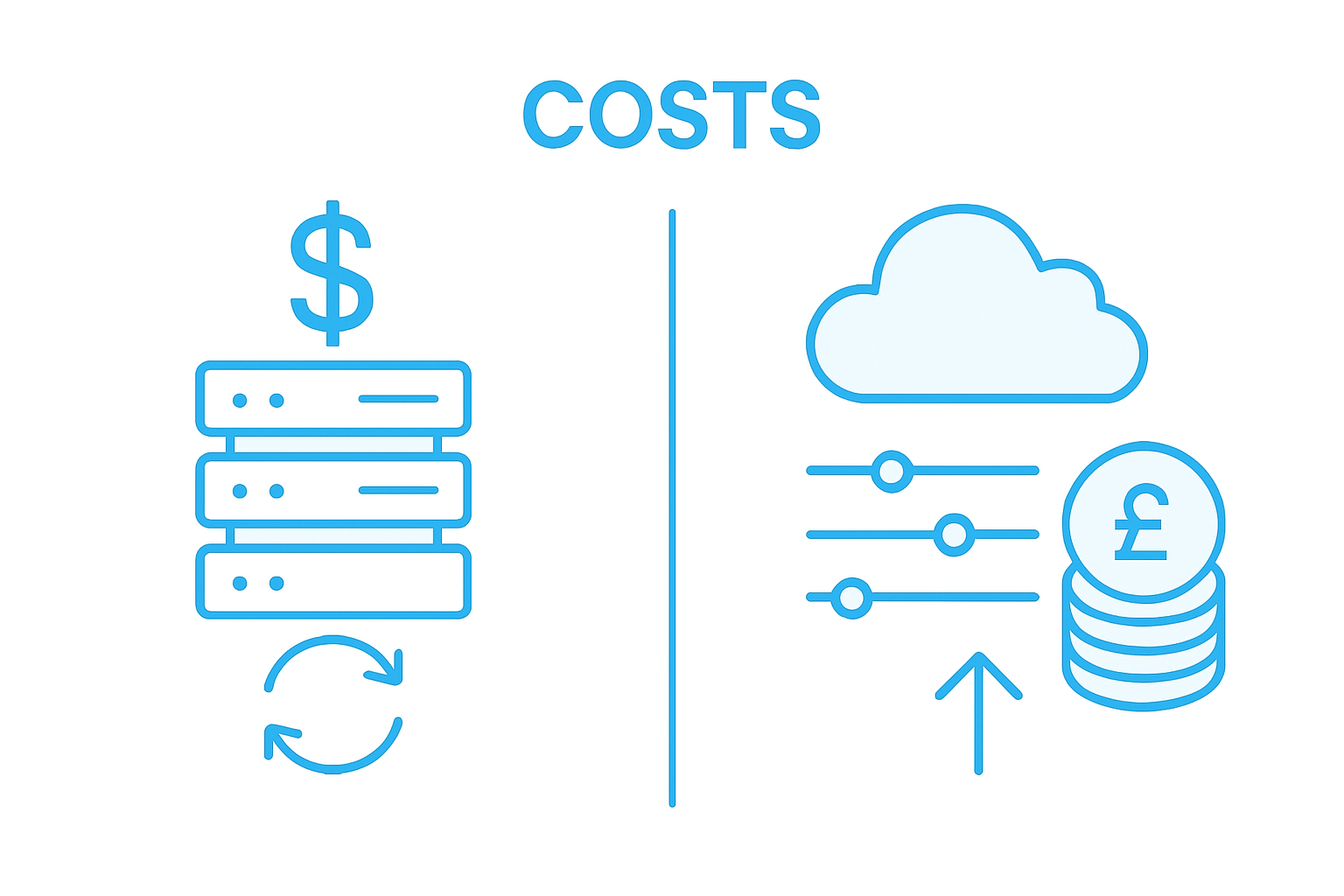
Financial Implications extend far beyond immediate procurement costs. Traditional hosting demands substantial upfront capital expenditure for hardware, infrastructure, dedicated personnel, and continuous maintenance. Cloud technologies introduce a consumption-based economic model that allows businesses to pay precisely for computational resources consumed. Federated cloud economic models demonstrate remarkable flexibility in cost management, enabling organisations to scale resources dynamically without massive financial commitments.
Key long-term cost and maintenance considerations include:
- Predictable Operational Expenses: Monthly subscription models replacing unpredictable infrastructure investments
- Reduced Hardware Maintenance: Eliminating costs associated with physical server management
- Automatic Infrastructure Updates: Continuous technological upgrades without additional procurement
- Talent Cost Reduction: Minimising specialised IT infrastructure personnel requirements
- Scalable Resource Allocation: Precise computational resource purchasing
- Energy Efficiency: Lower power consumption compared to traditional data centre models
Scalable ecommerce solutions increasingly demonstrate how dynamic cost models can transform technological infrastructure from a financial burden to a strategic business enabler.
Accelerate Your Business Growth with Scalable Cloud Solutions
The article highlights key challenges businesses face when choosing between traditional and cloud hosting models such as scalability, cost management, and security compliance. If you struggle with unpredictable infrastructure expenses or need agile digital platforms that adapt instantly to changing demands, understanding these technological differences is essential. Cloud hosting offers dynamic resource allocation, advanced security, and flexible pay-as-you-grow plans that empower your business to thrive in a competitive digital landscape.
At Cloud Fusion, we specialise in delivering custom, scalable web and mobile solutions that integrate seamlessly with cloud infrastructure. Explore our Web Design and Development Quotation to discover how our tailored services address your unique operational needs and support sustainable growth. Don’t let outdated hosting models limit your business potential. Take the next step now by visiting Cloud Fusion and unlock the power of intelligent digital transformation.
Frequently Asked Questions
What are the main differences between cloud hosting and traditional hosting?
Cloud hosting offers scalable, on-demand resources accessed through virtualised infrastructure, while traditional hosting relies on fixed physical servers dedicated to a single organisation.
How does cloud hosting benefit businesses in terms of cost?
Cloud hosting operates on a pay-per-usage model, allowing businesses to avoid significant upfront investments in hardware and reducing overall maintenance costs compared to traditional hosting.
What are the security advantages of using a cloud hosting model?
Cloud hosting provides advanced security features such as centralized security management, automated threat detection, and built-in compliance frameworks that enhance data protection compared to traditional hosting.
How can cloud hosting impact business scalability?
Cloud hosting allows businesses to instantly adjust computational resources based on real-time needs, making it ideal for enterprises that experience fluctuating demands or need to scale quickly.
Recommended
- What Is Web Hosting? A Simple Guide for Businesses 2025
- Understanding Cloud Computing for Business: A Comprehensive Guide
- Understanding Cloud Solutions for Businesses
- Understanding Cloud Services Overview for Businesses
- Tech for Small Businesses: Complete Guide for 2025 - Projector Display
- Che Cos’è la Sicurezza Cloud: Guida Completa - Security Hub