
How to Choose a Domain Name for Business Success
Learn how to choose a domain name for your business with this step-by-step guide. Ensure brand impact, global reach, and optimal online presence with expert methods.
Start reading
Choosing the perfect domain name can be the difference between standing out and getting lost online. For any south-african business, your domain is your digital storefront, shaping first impressions and driving customer trust. In fact, research shows that businesses with clear and relevant domains experience up to 33 percent more direct website traffic than those with confusing names. This guide breaks down every step, helping you craft a domain strategy that connects with your audience and protects your brand from the start.
Table of Contents
- Step 1: Define Your Business Goals And Audience
- Step 2: Research Relevant Keywords And Competitors
- Step 3: Brainstorm And Shortlist Domain Name Ideas
- Step 4: Check Domain Name Availability And Trademarks
- Step 5: Test Ease Of Use And Memorability
- Step 6: Register And Secure Your Chosen Domain Name
Quick Summary
Key Insight | Explanation |
|---|---|
1. Align Domain with Business Goals | Ensure your domain name reflects your core business objectives to attract and engage your target audience effectively. |
2. Conduct Keyword and Competitor Research | Use keyword analysis tools to uncover relevant search terms and analyse competitor domains for effective naming strategies. |
3. Test Domain Name for Usability | Evaluate potential domain names by testing their recall, pronunciation, and clarity with your target audience. |
4. Verify Availability and Trademarks | Check domain name availability and conduct trademark searches to avoid legal disputes and brand confusion. |
5. Register Securely with Privacy Measures | Choose a reputable registrar and implement security features to protect your domain from cybersquatting and identity theft. |
Step 1: Define your business goals and audience
Choosing the right domain name requires a strategic approach that starts with understanding your core business objectives and target market. Your domain name serves as the digital address for your brand and must align closely with your business’s fundamental purpose and target audience characteristics.
Begin by conducting a comprehensive assessment of your business goals using Management by Objectives (MBO) principles. This means clearly defining what you want to achieve with your online presence. Are you aiming to sell products directly? Provide professional services? Build a thought leadership platform? Each goal demands a different domain strategy. Map out specific, measurable objectives that will guide your domain selection process.
When identifying your target audience, dig deeper than basic demographics. Consider their online behaviours, pain points, and digital expectations. A tech startup targeting young professionals will require a different domain approach compared to a local artisan business serving community markets. Research your audience’s preferred online language, search patterns, and the keywords they typically use. This insight will help you craft a domain name that resonates authentically and feels immediately recognisable to your potential customers.
Warning: Avoid generic or overly complicated domain names that might confuse potential visitors. Your domain should be memorable, concise, and directly reflective of your brand’s core value proposition.
Step 2: Research relevant keywords and competitors
Researching keywords and competitors is a critical step in developing a strategic domain name that will effectively position your business online. By understanding the digital landscape, you can craft a domain that stands out and attracts your ideal customers.
Begin by exploring market segmentation techniques to identify the specific audience niches most relevant to your business. Analyse competitor domain names within your industry, paying close attention to their naming conventions, keyword usage, and overall branding approach. Use tools like Google Keyword Planner, SEMrush, or Ahrefs to uncover high traffic keywords that potential customers are using to search for services or products similar to yours. Look for keywords that are not only relevant but also have reasonable search volumes and competition levels.
Develop a comprehensive marketing plan that includes a strategic keyword analysis. Consider long tail keywords that are more specific and less competitive, which can help you target niche market segments more effectively. Pay attention to regional search trends, local language nuances, and industry specific terminology that might influence your keyword selection. Your goal is to choose a domain name that incorporates these strategic keywords while remaining memorable, pronounceable, and aligned with your brand identity.
Warning: Avoid keyword stuffing or choosing domain names that are too complex or lengthy. The most effective domains are concise, intuitive, and easy to communicate verbally.
Step 3: Brainstorm and shortlist domain name ideas
Brainstorming effective domain name ideas requires creativity, strategic thinking, and a deep understanding of your brand’s unique identity. This process will help you generate a list of potential domain names that capture the essence of your business and resonate with your target audience.
Start by exploring comprehensive business naming strategies that align with your brand identity. Begin with a mind mapping exercise where you write down keywords related to your business mission, core values, services, and unique selling propositions. Consider incorporating descriptive words, your business name, industry terms, or geographical references that reflect your brand’s personality. Generate at least 20 to 30 potential domain name variations to ensure you have a robust list to work with.

Narrow down your domain name options by applying critical evaluation criteria from business naming best practices. Test each potential domain name against key principles such as memorability, pronunciation, length, and potential misinterpretations. Read each name aloud to check its verbal flow, and ask trusted colleagues or potential customers for feedback. Consider registering multiple variations to protect your brand and prevent competitors from acquiring similar domain names.
Warning: Avoid domain names that are too similar to existing brands, include complex spellings, or could be easily misunderstood. The most effective domain names are clear, concise, and immediately communicative of your business purpose.
Step 4: Check domain name availability and trademarks
Verifying the availability and legal status of your potential domain name is a crucial step in protecting your brand and avoiding potential legal complications. This process involves comprehensive research to ensure your chosen domain is unique and legally secure.
Begin by conducting a thorough search of domain registrars to check the availability of your preferred domain names. Use multiple domain registration platforms to confirm that your desired web address is not already registered. Simultaneously, explore trademark search resources to verify that your proposed domain name does not infringe on existing trademark protections. This dual approach helps prevent potential legal disputes and brand confusion that could arise from using a name already associated with another business.
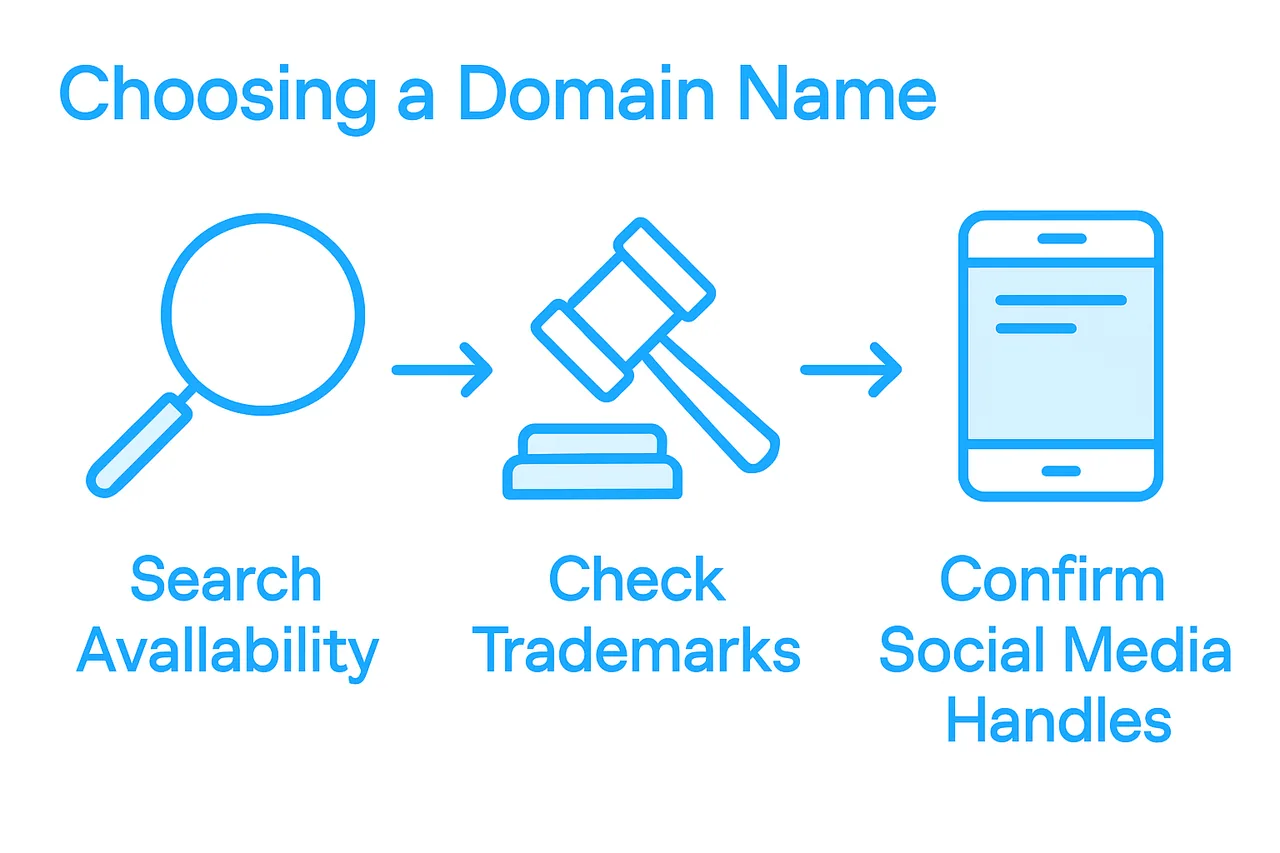
Expand your research beyond simple domain availability by investigating social media platforms, business registries, and industry specific databases. Check for potential conflicts with existing businesses in your sector, including variations of your proposed name. Consider registering multiple domain extensions to protect your brand comprehensive protection strategy. This might include securing .co.za, .com, .net, and other relevant top level domains to prevent competitors from using similar web addresses.
Warning: Failing to conduct thorough trademark and domain availability checks can result in costly legal challenges, forced rebranding, or potential trademark infringement lawsuits. Invest time in comprehensive research to safeguard your business identity from the outset.
Step 5: Test ease of use and memorability
Evaluating the effectiveness of your potential domain name requires a systematic approach to understanding how easily people can recall, pronounce, and interact with your chosen web address. This critical step ensures that your domain name will serve as a powerful branding tool rather than a potential barrier to customer engagement.
Apply usability heuristics to assess your domain name critically. Conduct a series of informal tests with potential customers, colleagues, and friends by speaking the domain name aloud and asking them to repeat it or write it down. Pay attention to how quickly they comprehend and recall the name. Test for potential misunderstandings in spelling or pronunciation that might prevent customers from finding your website. Consider creating a shortlist of 3 to 5 domain name variations and conduct blind tests to determine which resonates most effectively with your target audience.
Delve deeper into user experience principles by examining your domain name across different contexts. Write the domain on various materials like business cards, marketing collateral, and digital platforms to see how it looks and sounds. Check its performance in different scenarios such as verbal communication, text messages, email signatures, and social media profiles. Assess whether the domain name remains clear and recognisable across these diverse communication channels.
Warning: A domain name that requires constant explanation or correction can significantly undermine your brand’s professional image. Choose a name that speaks for itself and requires minimal additional context to be understood.
Step 6: Register and secure your chosen domain name
The final stage of your domain selection journey involves officially registering your preferred web address and implementing critical security measures to protect your digital identity. This process transforms your carefully selected domain name from a concept into a tangible online asset for your business.
Begin by selecting an authorised domain name registrar that meets international standards for reliability and security. Compare registration services across multiple platforms, paying attention to pricing, additional features, domain transfer policies, and customer support. Consider registering multiple domain extensions like .co.za, .com, and .net to prevent potential brand hijacking and protect your intellectual property across different digital territories. Ensure you provide accurate contact information during registration and opt for domain privacy services that shield your personal details from public WHOIS databases.
Implement additional security measures by enabling domain registry lock features, which prevent unauthorized transfers or modifications to your domain settings. Set up automatic renewal to avoid accidental domain expiration, which could result in losing your web address to another party. Configure robust domain management settings, including setting up email forwarding, DNS management, and connecting your domain to web hosting services. Consider purchasing registration terms of 2 to 5 years to demonstrate long term commitment and stability to potential customers and search engines.
Warning: Failing to secure your domain comprehensively can leave your online brand vulnerable to cybersquatting, trademark disputes, and potential digital identity theft. Invest time and resources in thorough domain registration and protection strategies.
Secure Your Business Success with the Perfect Domain and Expert Web Solutions
Choosing the right domain name is a critical step that shapes your brand identity and online presence. This process involves tackling challenges like defining clear business goals, understanding your audience, and ensuring your domain is easy to remember and legally sound. At Cloudfusion, we understand these pain points and the importance of a strategic domain choice that aligns with your business objectives and resonates well with customers.
A domain decision also needs a clear account owner and a plan for email, DNS and renewals. Discuss your domain and business technology setup with Cloudfusion before registering or moving the service.
Frequently Asked Questions
How do I determine my business goals when choosing a domain name?
To determine your business goals, assess what you want to achieve online, such as selling products or providing services. Clearly define measurable objectives that guide your domain selection process, ensuring it aligns with your brand’s purpose.
What should I consider when researching keywords for my domain name?
When researching keywords, focus on terms relevant to your business and check their search volume and competition level. Use this information to inform your domain name selection, applying long-tail keywords that resonate with your audience’s search behaviours.
How can I brainstorm effective domain name ideas?
To brainstorm domain name ideas, relate keywords to your business mission and values in a mind mapping exercise. Generate a list of 20 to 30 potential names, then evaluate them based on clarity, pronunciation, and brand alignment, seeking feedback from trusted individuals.
What steps do I take to check domain name availability and trademarks?
To check availability, search multiple domain registrar platforms to see if your desired name is unique. Simultaneously, verify trademark resources to ensure your chosen name doesn’t infringe on existing trademarks, preventing legal disputes down the line.
How can I test if my domain name is memorable and easy to use?
To test memorability, conduct informal tests where potential customers repeat or write down your proposed domain name. Observe if they can recall it easily and check for any spelling or pronunciation issues that could hinder online searches.
What are the key actions to secure my chosen domain name?
To secure your domain name, select a reliable domain registrar and register your chosen name along with relevant extensions. Enable domain security features, set up automatic renewal, and ensure you have accurate contact information to protect your digital identity.