TL;DR:
- Web hosting is essential for ensuring your website’s uptime, speed, and security, directly impacting customer experience and revenue. Choosing the appropriate hosting type—shared, VPS, managed, or cloud—aligns with your business growth, security needs, and traffic fluctuations to prevent costly disruptions. Proactively monitoring, testing backups, and planning upgrades enable businesses to scale smoothly and maintain competitive online visibility.
Web hosting is defined as the service that stores your website’s files on a server and delivers them to visitors on demand, making it the direct foundation of your business’s online presence. Most business owners treat hosting as a back-office expense, but its role in web hosting for business operations is far more consequential. Your hosting environment determines whether your site loads in two seconds or ten, whether it stays online during a product launch, and whether customer data remains secure. Shared hosting plans start at entry-level costs, while managed and VPS options scale to match growth, each with distinct trade-offs in performance, security, and control.
How does web hosting impact business efficiency and customer experience?
Web hosting is the single infrastructure layer that touches every customer interaction your website facilitates. When that layer underperforms, the consequences are measurable and immediate.

Uptime and the real cost of downtime
Reliable hosting providers typically guarantee 99.9% uptime through redundant infrastructure, and even a few minutes of downtime can translate to lost sales and lasting damage to brand trust. For a South African e-commerce business processing transactions during peak hours, an hour of downtime during a Black Friday campaign is not a technical inconvenience. It is a direct revenue loss with a reputational tail.
Page load speed and conversion rates
Speed is not a luxury feature. A one-second delay reduces conversions by up to 7%, which means a site generating R100,000 per month in online revenue could lose R7,000 for every second added to its load time. This figure makes the cost difference between a budget shared plan and a quality managed plan look negligible by comparison.
Security and data protection
Quality hosting includes malware scanning, automated backups, SSL certificates, and server-level firewalls. These are not optional extras. They are the baseline protection that keeps customer data safe and your business compliant with South Africa’s Protection of Personal Information Act (POPIA). A hosting environment without these controls exposes your business to breaches that carry both financial and legal consequences.
Resource contention in shared environments
Shared hosting environments can suffer resource contention that causes unpredictable slowdowns, because performance can degrade instantly due to other sites’ traffic spikes on the same server. This is a risk that sits entirely outside your control. Monitoring tools like UptimeRobot or Pingdom can alert you to degradation, but they cannot prevent it. The only reliable solution is choosing a hosting type that isolates your resources.
Pro Tip: Set up a free UptimeRobot monitor for your site today. It checks your site every five minutes and emails you the moment it goes down, giving you visibility that most business owners simply do not have.
What types of web hosting suit different business needs?
Choosing the right hosting type is one of the most consequential technical decisions a business makes. The difference between VPS and shared hosting alone can determine whether your site holds up under traffic or collapses at the worst possible moment.
| Hosting type | Best for | Typical cost (ZAR/month) | Key benefit | Key risk |
|---|---|---|---|---|
| Shared hosting | Startups, brochure sites | R50 to R200 | Low cost, easy setup | Resource contention, limited control |
| VPS hosting | Growing SMEs, developers | R300 to R1,200 | Dedicated resources, more control | Requires technical management |
| Dedicated server | High-traffic, data-sensitive | R2,000 to R8,000+ | Full resource isolation | High cost, complex management |
| Managed hosting | SMEs without IT teams | R400 to R2,000 | Expert management, built-in security | Higher cost than unmanaged |
| Cloud hosting | Scalable, variable traffic | R200 to R5,000+ | Pay-per-use, high availability | Cost unpredictability at scale |
Shared hosting suits businesses that are just starting out or running simple brochure websites with modest traffic. The trade-off is that you share server resources with dozens or hundreds of other sites, which creates the resource contention risk described above.
VPS (Virtual Private Server) hosting allocates dedicated resources to your site within a shared physical server. You get the performance benefits of isolation without the full cost of a dedicated machine. However, unmanaged VPS hosting introduces significant operational risk if your business lacks dedicated IT resources to maintain security and backups. A misconfigured VPS is often more vulnerable than a well-managed shared environment.
Managed hosting removes that risk entirely. Managed plans include built-in security, expert management, and automated updates, which can outweigh the cost savings of unmanaged alternatives. For South African SMEs without in-house IT teams, this is frequently the most practical and cost-effective choice when total risk is factored in. The key benefits of managed hosting extend beyond convenience to genuine business continuity assurance.
Cloud hosting platforms like AWS, Google Cloud, and Microsoft Azure offer elastic scaling, meaning your resources expand automatically when traffic spikes and contract when it drops. This suits businesses with variable demand, such as seasonal retailers or event-driven platforms.
Pro Tip: If you are running WordPress, choose a managed WordPress hosting plan rather than generic shared hosting. Platforms optimised for WordPress handle core updates, caching, and security at the server level, which generic plans do not.
How does web hosting affect SEO and online visibility?
Hosting quality affects SEO through server response times, uptime reliability, and site stability, influencing crawl efficiency and ranking factors indirectly. This connection is often underestimated by business owners who focus SEO budgets on content and backlinks while neglecting the infrastructure those efforts depend on.
Here is how hosting directly shapes your search visibility:
- Server response time (TTFB): Google uses Time to First Byte as a signal of server performance. A slow TTFB, typically caused by underpowered shared hosting, signals poor infrastructure and can suppress rankings.
- Uptime and crawl budget: Search engine bots crawl your site on a schedule. If your site is frequently down or slow, bots may crawl fewer pages per visit, leaving new content unindexed for longer periods.
- HTTPS and SSL: Search engines treat HTTPS as a ranking signal. Quality hosting includes SSL certificates as standard. Sites still running on HTTP face both ranking penalties and browser security warnings that deter visitors.
- Hosting location and local SEO: Hosting location can impact website speed for local customers and compliance with regional data laws. For South African businesses targeting local audiences, hosting on servers located in Johannesburg or Cape Town reduces latency and signals geographic relevance to search engines.
- Digital marketing campaign support: When you run a Google Ads or Meta campaign driving traffic to a landing page, that page must load fast and stay online. A hosting failure during a paid campaign wastes every rand spent on that traffic.
The practical implication is clear: your SEO strategy is only as strong as the infrastructure it runs on. Businesses that treat hosting as a strategic investment experience smoother scalability and improved marketing ROI, because they eliminate the technical bottlenecks that undermine campaign performance.
What practical steps help businesses manage hosting effectively?
Most businesses fail to align their hosting plan to future growth, which leads to disruptive migrations and performance bottlenecks that affect competitive positioning. A proactive approach prevents this.
-
Assess your current and projected needs. Before choosing or renewing a hosting plan, document your average monthly traffic, peak traffic events, storage requirements, and any compliance obligations under POPIA. This baseline prevents both over-provisioning and under-provisioning.
-
Implement uptime and performance monitoring. Tools like UptimeRobot (free tier available), Pingdom, or New Relic provide real-time visibility into availability and response times. Without monitoring, you are often the last person to know your site is down.
-
Schedule regular backups and test them. Automated daily backups stored off-server are non-negotiable. More importantly, test your restore process at least quarterly. A backup you have never tested is a backup you cannot trust.
-
Keep software and security patches current. Outdated WordPress installations, plugins, and server software are the most common entry points for attacks. Quality managed hosting handles this automatically. On unmanaged plans, this responsibility falls entirely on you. Reviewing website security best practices gives you a clear framework for what needs to be in place.
-
Plan your upgrade path before you need it. Traffic growth is a good problem to have, but only if your hosting can accommodate it. Identify the traffic thresholds at which you would need to upgrade from shared to VPS, or from VPS to managed cloud, and set those as triggers in your growth plan.
-
Consult a managed hosting provider for complex environments. If your site runs e-commerce, processes payments, or handles sensitive customer data, the cost of expert management is justified. A single security incident or extended outage will cost far more than a year of managed hosting fees.
Pro Tip: When choosing a hosting provider, ask specifically about their data centre location, backup frequency, and average response time for support tickets. Vague answers to these questions are a reliable signal of a provider to avoid.
Key takeaways
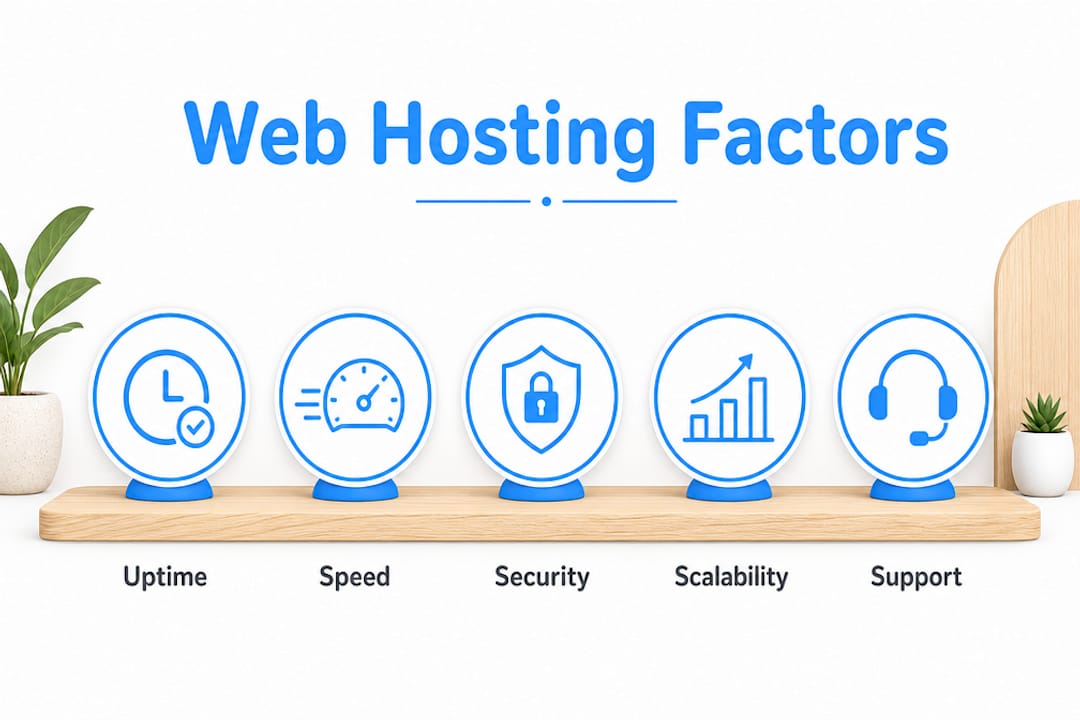
Web hosting is a direct operational and strategic asset, not a commodity purchase, and the quality of your hosting environment determines your site’s uptime, speed, security, SEO performance, and capacity to scale.
| Point | Details |
|---|---|
| Uptime is revenue-critical | Even brief downtime causes lost sales and brand damage; target providers with 99.9% uptime guarantees. |
| Speed directly affects conversions | A one-second delay reduces conversions by up to 7%, making hosting performance a direct revenue lever. |
| Hosting type must match business stage | Shared hosting suits startups; managed or VPS hosting suits growing SMEs with higher security and performance needs. |
| Hosting quality shapes SEO outcomes | Server response time, uptime, SSL, and server location all influence search rankings and crawl efficiency. |
| Proactive management prevents costly disruption | Regular backups, monitoring, and planned upgrade paths prevent the migrations and outages that derail growth. |
Why I think most South African businesses are underinvesting in hosting
Here is what I have observed working with South African SMEs across retail, professional services, and hospitality: the hosting decision is almost always made once, at the point of launch, and then forgotten. The business grows, traffic increases, and the site quietly degrades until a crisis forces a rushed migration.
The uncomfortable truth is that a R150-per-month shared plan that made sense for a five-page brochure site in 2022 is actively harming a business that now processes online bookings or sells products to customers across the country. The cost of staying on the wrong plan is not just slow page loads. It is lost customers who bounced before the page finished loading, SEO rankings that slipped because the server was too slow, and a security incident that could have been prevented by a managed environment.
Hosting is not glamorous. It does not generate the excitement of a new website design or a social media campaign. But reliable hosting underpins nearly every online customer interaction, and businesses that treat it as a strategic investment rather than a line-item expense are the ones that scale without the drama. My advice: review your hosting plan annually, the same way you review your insurance or your software subscriptions. The few hours that review takes will pay for itself many times over.
— Anton
How Cloudfusion supports your hosting and web presence
Cloudfusion offers managed and scalable web hosting packages designed specifically for South African businesses, with local server infrastructure, automated backups, SSL certificates, and expert support built in. Whether you are launching a new site or migrating away from an underperforming plan, the team handles the technical complexity so you can focus on running your business. Cloudfusion also provides custom web development that is architected to work efficiently within your hosting environment, ensuring your site performs at its best from day one. Give us a shout to discuss your hosting requirements or get a quote tailored to your business.
FAQ
What is the role of web hosting in business?
Web hosting stores your website’s files on a server and delivers them to visitors, making it the direct foundation of your site’s availability, speed, security, and performance. Without reliable hosting, no other digital investment, including SEO, paid advertising, or web design, can deliver its full value.
How does web hosting affect SEO?
Hosting influences SEO through server response time, uptime reliability, HTTPS availability, and server location, all of which are factors search engines use to evaluate site quality. Frequent downtime and slow response times reduce crawl efficiency and can suppress rankings over time.
What hosting type is best for small businesses in South Africa?
Managed hosting is the most practical choice for South African small businesses without dedicated IT resources, as it includes security management, backups, and updates as part of the service. Shared hosting works for simple brochure sites, but businesses processing transactions or handling customer data should invest in a managed or VPS environment.
How much does business web hosting cost in South Africa?
Entry-level shared hosting typically starts at R50 to R200 per month, while managed and VPS plans range from R400 to R2,000 per month depending on resources and support levels. The right investment depends on your traffic volume, security requirements, and growth trajectory.
When should a business upgrade its hosting plan?
A business should upgrade when it experiences consistent slowdowns during traffic peaks, when it begins processing online payments or sensitive customer data, or when its traffic grows beyond the resource limits of its current plan. Planning this upgrade proactively avoids the disruption of an emergency migration.
Recommended